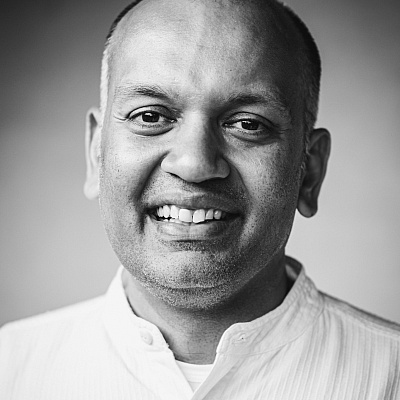
When students at an elite Silicon Valley high school got to choose their graduation speaker, they picked someone unexpected: Nipun Mehta, a guy who walked away from a lucrative tech career to start ServiceSpace, a nonprofit built entirely on generosity. No ads, no monetization—just giving. His speech tackled something you've probably felt but maybe couldn't name: we're drowning in connections but starving for connection.
Here's the paradox he laid out: The world is better than ever in measurable ways—less poverty, longer lives, more access to education. Yet your generation has been labeled "Me Me Me," suicide rates are climbing, and we've handed you climate crisis, collapsing ecosystems, and a world where the average adult reports having just *one* real friend they can count on. One. Despite billions of Facebook "connections" and 4.5 billion daily likes.
"At the core of all of today's most pressing challenges is one fundamental issue: we have become profoundly disconnected," Mehta told them. And honestly? You already know this. You feel it when scrolling makes you lonelier, when group chats buzz but nobody really *talks*, when mental health struggles feel like the norm rather than the exception.
But here's where it gets interesting. Mehta offered three keys to reconnecting—and they challenge everything we're told about success.
**First: Give.** Not because it looks good on college applications, but because humans are literally wired for generosity. When Harvard researchers gave people unexpected money and made them decide *instantly* whether to keep it or give it away, most gave it away. Greed, it turns out, is the calculated afterthought. Generosity is instinct. He shared the story of six-year-old Ruby Bridges, the first Black girl to attend an all-white school in 1960, who prayed daily for the people throwing things at her and shouting threats: "Please, God, try to forgive these people. Because even if they say those bad things, they don't know what they're doing." A six-year-old chose love over hate. What does that say about human capacity?
**Second: Receive.** This one's tricky. Two fourteen-year-olds did a 30-day kindness challenge—different acts every day. Eventually, one asked Mehta: "I felt so good helping those special needs students dance at prom. Was I being selfish?" That's the paradox: when you give, you receive. Not in a transactional way, but because generosity literally changes your brain chemistry. Science shows that when people feel connected, their heartbeats synchronize—even without touching. Mirror neurons mean we actually feel each other's pain and joy. Joy isn't zero-sum. The more you smile, the more you *can* smile.
**Third: Dance.** Stop tracking who owes what. A successful entrepreneur would secretly pay for couples' meals at restaurants, always staying anonymous. Once, a woman sobbed when she learned—she and her husband worked at a nonprofit, had saved all year for this anniversary dinner, and his generosity renewed their faith that "what goes around comes around." They all cried. They became friends. So who was the giver? Who was the receiver? Does it matter? The real reward isn't what's exchanged—it's the connection itself.
Mehta ended with this moment: He bought ice cream for a homeless woman. As they left, she emptied her pockets—one nickel—and asked, "Can I buy you something?" In that awkward, beautiful silence, he said yes. They tipped the cashier together. She beamed.
"No matter what you have, or don't have, we can all give," he said, quoting Dr. King: "Everyone can be great, because everyone can serve. You don't need to make your subject and verb agree to serve. You only need a heart full of grace. A soul generated by love."
**Here's your reflection:** Think about your last week. When did you feel most connected to someone—and what made that moment different from your usual interactions? Now flip it: When did you feel most isolated, even while surrounded by people or notifications? What would it look like to choose one small act of generosity tomorrow, not for recognition or reciprocity, but just to practice giving? And here's the harder question: Could you receive generosity from someone unexpected—maybe someone you'd usually overlook—and really let it matter?
The crisis of disconnection is real. But so is your capacity to rebuild connection, one genuine moment at a time. The question isn't whether you *can*. It's whether you *will*.
COMMUNITY REFLECTIONS
SHARE YOUR REFLECTION
3 PAST RESPONSES
It is not easy to find this kind of attitude.
After the COVID it seems that Pandoras box, was opened again, and even hope isn't in the box,