
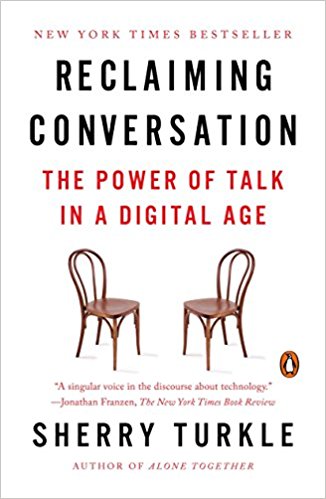
¿Qué sucede cuando nos volvemos demasiado dependientes de nuestros teléfonos móviles? Según la socióloga del MIT Sherry Turkle, autora del nuevo libro Reclaiming Conversation , perdemos la capacidad de mantener conversaciones más profundas y espontáneas con los demás, lo que altera la naturaleza de nuestras interacciones sociales de forma alarmante.
 Turkle ha dedicado los últimos 20 años a estudiar el impacto de la tecnología en nuestro comportamiento, tanto a solas como en grupo. Si bien al principio le entusiasmaba el potencial de la tecnología para mejorar la sociedad, cada vez le preocupa más cómo las nuevas tecnologías, en particular los teléfonos móviles, están erosionando el tejido social de nuestras comunidades.
En su libro anterior, el bestseller Alone Together , expresó sus temores de que la tecnología nos hiciera sentir cada vez más aislados, aun cuando prometía conectarnos más. Desde la publicación de ese libro en 2012, la tecnología se ha vuelto aún más omnipresente y se ha entrelazado con nuestra existencia moderna. Reclaiming Conversation es el llamado de Turkle a analizar más de cerca los efectos sociales de los teléfonos celulares y a reivindicar el papel de la conversación en nuestra vida cotidiana para preservar nuestra capacidad de empatía , introspección, creatividad e intimidad.
Entrevisté a Turkle por teléfono para hablar sobre su libro y algunas de las preguntas que plantea. Aquí tienen una versión editada de nuestra conversación.
Jill Suttie: Su nuevo libro advierte que los teléfonos celulares y otras tecnologías de comunicación portátiles están acabando con el arte de la conversación. ¿Por qué quiso centrarse específicamente en la conversación?
Sherry Turkle: Porque conversar es lo más humano y humanizador que hacemos. Es donde nace la empatía, donde nace la intimidad: por el contacto visual, porque podemos oír el tono de voz de la otra persona, sentir sus movimientos corporales, sentir su presencia. Es donde aprendemos sobre los demás. Pero, sin quererlo, sin haber hecho un plan, nos hemos alejado de la conversación de una manera que, según mi investigación, nos perjudica.
JS: ¿Cómo nos dañan los celulares y otras tecnologías?
ST: El ochenta y nueve por ciento de los estadounidenses dice que durante su última interacción social sacó un teléfono y el 82 por ciento dijo que eso deterioró la conversación que estaban teniendo. Básicamente, estamos haciendo algo que sabemos que está perjudicando nuestras interacciones.
Les mostraré un estudio. Si usas un celular en una interacción social, tiene dos efectos: primero, disminuye la calidad de lo que hablas, porque hablas de cosas en las que no te importaría que te interrumpieran, lo cual tiene sentido; y segundo, disminuye la conexión empática que las personas sienten entre sí.
Así que, incluso algo tan sencillo como ir a almorzar y poner un celular sobre la mesa disminuye la importancia emocional de lo que las personas están dispuestas a hablar y disminuye la conexión que sienten entre sí. Si multiplicas eso por todas las veces que tienes un celular sobre la mesa cuando tomas un café con alguien, desayunas con tu hijo o hablas con tu pareja sobre cómo te sientes, nos lo hacemos 10, 20 o 30 veces al día.
JS: Entonces, ¿por qué los humanos somos tan vulnerables al atractivo del teléfono celular, si en realidad está perjudicando nuestras interacciones?
ST: Los celulares nos hacen promesas que son como regalos de un genio benévolo: que nunca estaremos solos, que nunca nos aburriremos, que podremos concentrarnos donde queramos y que podremos realizar múltiples tareas, que es quizás la más seductora de todas. Esa capacidad de concentrarnos donde queramos se ha convertido en lo que más deseamos en nuestras interacciones sociales: esa sensación de no tener que comprometernos al cien por cien y de evitar el terror de que llegue un momento en una interacción en que nos aburramos.
Permitirse un momento de aburrimiento es crucial para la interacción humana y también para el cerebro. Cuando te aburres, tu cerebro no se aburre en absoluto; se está reponiendo y necesita ese tiempo de inactividad.
Somos muy susceptibles a los teléfonos celulares, e incluso obtenemos un subidón neuroquímico por la estimulación constante que nuestros teléfonos nos brindan.
 He pasado los últimos 20 años estudiando lo atractiva que es la tecnología, pero ¿saben qué? Aún podemos cambiar. Podemos usar nuestros teléfonos de maneras que sean mejores para nuestros hijos, nuestras familias, nuestro trabajo y para nosotros mismos. Decir que somos adictos a la tecnología es una analogía equivocada. No es heroína.
JS: Algo que me llamó la atención de tu libro fue que muchas de las personas que entrevistaste hablaron sobre los beneficios de gestionar conflictos o problemas emocionales difíciles en línea. Dijeron que podrían ser más cuidadosos con sus respuestas y ayudar a reducir las tensiones interpersonales. Eso parece positivo . ¿Cuál es el problema con esa idea?
ST: Fue una gran sorpresa cuando hice la investigación para mi libro descubrir cuántas personas quieren reducir las peleas o lidiar con problemas emocionales difíciles con su pareja o con sus hijos haciéndolo en línea.
Pero tomemos el ejemplo del niño. Si haces eso con tu hijo, si solo lo tratas de esta manera controlada, básicamente estás alimentando su peor miedo: que su verdad, su rabia, sus sentimientos no reprimidos, son algo que no puedes manejar. Y eso es precisamente lo que un padre no debería decirle a un hijo. Tu hijo no necesita escuchar que no puedes aceptar y honrar la intensidad de sus sentimientos.
La gente necesita compartir sus emociones; esto es algo muy importante para mí. Entiendo por qué la gente evita los conflictos, pero quienes usan este método terminan teniendo hijos que creen que lo que sienten no está bien. Existe una variante interesante: los padres les dan robots a sus hijos para que hablen o quieren que hablen con Siri, porque de alguna manera será un lugar más seguro para expresar sus sentimientos. De nuevo, eso es precisamente lo que tu hijo no necesita.
JS: Algunos estudios parecen demostrar que un mayor uso de las redes sociales en realidad incrementa la interacción social fuera de línea. Me pregunto cómo encaja esto con tu tesis.
ST: Mi interpretación de estos datos es que, si eres una persona sociable, activa socialmente, el uso de las redes sociales se convierte en parte de tu perfil social. Y eso me parece genial. Mi libro no está en contra de la tecnología; está a favor de la conversación. Así que, si descubres que el uso de las redes sociales aumenta el número de conversaciones cara a cara, estoy totalmente a favor.
Otra persona a la que podrían beneficiar las redes sociales es a quien las usa para dar los primeros pasos y conversar cara a cara. Si eres así, te apoyo totalmente.
Me preocupa más la gente para la que las redes sociales se convierten en una especie de sustituto, que literalmente publican algo en Facebook y se sientan allí a observar si obtienen 100 "me gusta" en su foto, cuya autoestima y enfoque quedan dictados por cómo son aceptados, queridos y deseados por las redes sociales.
Y me preocupan muchas otras situaciones en las que tú y yo estamos hablando en una cena con seis personas más, y todos están enviando mensajes de texto mientras comen, aplicando la "regla de las tres personas": tres personas deben estar con la cabeza en alto antes de que alguien se sienta seguro de bajar la cabeza para escribir. En esta situación, donde todos prestan atención y no la prestan, terminamos sin que nadie hable de lo que realmente piensa de forma seria y significativa, y terminamos con conversaciones triviales, sin sentirnos conectados.
JS: También escribes sobre cómo la conversación afecta el ambiente laboral. ¿No son las conversaciones simplemente distracciones para realizar el trabajo? ¿Por qué fomentar la conversación en el trabajo?
ST: En el trabajo, es necesario crear espacios sagrados para la conversación porque, en primer lugar, la conversación realmente mejora los resultados. Todos los estudios demuestran que cuando las personas pueden hablar entre sí, se desempeñan mejor: son más colaborativas, más creativas y logran más resultados.
Es muy importante que las empresas creen espacio para la conversación en el lugar de trabajo. Pero si un gerente no les enseña a sus empleados que está bien dejar de usar el correo electrónico para conversar, no se logrará nada. Visité un lugar de trabajo que tenía máquinas de capuchino cada 3 metros y mesas del tamaño ideal para conversar, donde todo estaba diseñado para la conversación. Pero la gente creía que la forma más importante de demostrar devoción a la empresa era responder al correo electrónico de inmediato. No se puede conversar si se tiene que estar constantemente con el correo electrónico. Algunas de las personas que entrevisté estaban aterrorizadas de estar lejos de sus teléfonos. Eso se traduce en llevar el celular al desayuno y no desayunar con los hijos.
JS: Si la tecnología es tan omnipresente y al mismo tiempo tan problemática, ¿qué recomendaciones hace para mantenerla en un nivel manejable sin volverse demasiado adicto?
ST: El camino a seguir no es prescindir de la tecnología, sino vivir en mayor armonía con ella. Uno de los primeros pasos que veo es crear espacios sagrados —la cocina, el comedor, el coche— libres de dispositivos y reservados para la conversación. Cuando almuerces con un amigo, un compañero de trabajo o un familiar, no pongas un teléfono en la mesa entre ambos. Haz que las comidas sean un momento para escuchar y ser escuchado.
Cuando entramos y salimos de conversaciones con nuestros amigos en la habitación y con toda la gente con la que podemos contactar por teléfono, nos perdemos el tipo de conversaciones donde nace la empatía y prospera la intimidad. Conocí a una sabia estudiante de tercer año de universidad que habló sobre la "regla de los siete minutos": se necesitan siete minutos para saber si una conversación va a ser interesante. Y admitió que rara vez estaba dispuesta a dedicarle sus siete minutos. En el primer "momento de calma", miraba su teléfono. Pero es cuando tropezamos, dudamos y tenemos esos "momentos de calma" que nos revelamos más el uno al otro.
Así que permita esos momentos humanos, acepte que la vida no es un “alimento” constante, y aprenda a saborear el ritmo de la conversación: la empatía, la comunidad, la creatividad.
COMMUNITY REFLECTIONS
SHARE YOUR REFLECTION
9 PAST RESPONSES
Recently, my wife's brother and sister-in-law visited us for a few days. Along with them came their smart-phones (my wife and I have one antiquated "dumb-phone" that we use for traveling or for certain occasions only). Of course, wherever my in-laws were, their smart-phones came along, with the requisite browsing and texting. One day we went to a beautiful botanical garden for a stroll and some picture-taking. And of course, along came the smart-phones. Well, my brother-in-law decided to separate himself from the rest of us and proceeded to text his every move to his wife, who was with the rest of us. Every few minutes of peaceful silence and enjoyment of the wonderful sights was interrupted by a barrage of texts, with their accompanying screams for attention. A wonderful outdoor moment in nature ruined. And oh, they are in their late 60s!
What we are now experiencing has been aptly termed, "Persistent Interruption Technology," and from what I can see, quite addicted to it.
I'm 61 and glad I'm on the far side of the PITs.
[Hide Full Comment]Putting private thoughts (or "feelings") into the cloud feels *safer* than discussing them privately? Is that like saying that not using a seat belt in a car feels "safer" because buckling up makes someone feel claustrophobic? DUH.
To use technology in a right way sounds a good idea for those who have enough intelligence
and strength to do that the reality is that that group of community is usually the smallest
Look at the planet now and see what is going on. Majority is helplessly following dictation of economy ,knowing that those who have some compassion should help humanity how to live in harmony with our natural world of which we are part and then we may have a chance to use any technology for our benefit .
May all beings be happy.
,
One general rule I make an effort to enforce with loved ones, friends. When we set down to a meal, we set down to a meal. My rule states no discussion of the following:
politics
religion
economics
money
business
sex
Further, all phones & gadgets are either off, on silent, not given interaction. If pressed I excuse the rule to help aid with digestive troubles from stress. Generally, people then, understand and comply. "Oh, yeah I guess that makes sense. If it helps us digest our food better, alright."
You might think eliminating all the above from conversation will not leave much to discuss. You're thought would err. I will tolerate discussion of spirituality, this is not religion but how a person relates to our world. I'll handle it that as long as it remains topical and doesn't get too in depth or begin to sound like proselytizing.
I'll even give a little wiggle room to politics, so long as it again stays highly topical. If someone goes to far I will kindly remind us all. "Hey, that's all good for corporations to set policies. We're having a meal. How about the quality of this food?"
Business & money talk? No, I do not want it when we eat. That kind of stuff is peddling death usually. When we eat, we're celebrating life. Even if I'm supposed to be doing some business, or having to deal with money issues. "This can wait until we've eaten. I'll bring it back up when the time is right. Thanks,"
We can also talk about gardening, household tips, health concerns. There is plenty to chit chat about. I simply prefer to not have all the normally crappy, well, crap invade a nice meal with those I love. That crap has no place in our circle. I find once others come to "break bread" with me and they get a "feel" of my rule/s of eating, they seem to appreciate and respect that. If they do not, I slide them out into outfield. I'll not waste valued time on them. They get a cold shoulder, if i even let them see the shoulder.
I do not have a cell phone, "smart" or otherwise. My wife has her phone. I just don't "get" that kind of stuff. I also do not get too enthused about gaming. I like very few puzzle types of games, a few rpg. But I'm moderate in playing even these. Don't do a lot of Facebook either. I'm on there merely to give my wife a pointer. "Oh, look, my husband!"
No, I'm not exactly a Luddite either. I'm just not "getting" a lot of stuff any more. Might be I need a college degree. Although, I'm sure it would do no good for me. There's already a lot I'm overqualified to do work wise, and I'm only a high school graduate. And there's a lot I seemingly need a college degree to do.
Well, I can grow beans & peas. :) People like eating those. People will offer help for beans & peas, they'll offer the money stuff too for my wife. She can then pay that darned Bill guy who comes monthly to collect his share.
[Hide Full Comment]Maybe it's because I am 63, but I've been in the computer field since I left college (tho retired now), so it's not like I've been a Luddite all my life. But I, too, have begun to abhor the fascination with cellphones. I look around public spaces, like my gym, and it's almost comical how all eyes are glued to their devices. I'm not a big socializer, either, but I don't use a cell phone as the mask others do to avoid even meeting the eyes of a person across a room.
But my biggest disappointment involves being called by people on their cell phones, when they are obviously driving, or walking, or shopping, etc. At first I tried to rationalize my disturbed feelings away, knowing how much "it makes sense" to use time like that to make calls or handle things. They were still talking completely to me, just getting something else done.
But the feelings persisted. Finally, I pinpointed the problem. It was ME that was the "something else to get done". Can check off the "keeping in touch with friends/family" box, without it actually taking up any of one's time.
One particular friend, who I've known for about 30 years and was very, very close to, seems puzzled by my seeming to distance him, not always answering his calls, or calling him back. But I remember when we used to sit for hours together, sharing deep conversations, including our feelings about important issues in our lives. (We happened to be going thru marital breakups at the same time, so naturally found it nice to have someone to share deep feelings with.)
What he doesn't seem to get, is that every time he calls me while he's food shopping, or driving, pausing while he looks for a street, or a brand of cereal, or whatever, our conversations never get past the "rained hard today, didn't it?" or "yeah, work is a pain" stuff. I especially noticed it because he remarried in those years, and happens to be divorcing again, and I thought maybe he could use someone to talk to, so I was trying to be there and not ignore his calls. But I finally gave up, and have gone back to checking off my own box, something like "have I gone too many calls in a row without answering?" so give him the chunk of time ... until his shopping trip is over, or he's found the location he was driving to.
I find it very sad. But I've accepted it. It's an introspective time for me, so it's fine that many of my friends are so "busy". Maybe if they seemed happier I'd be convinced it was a good thing, but too many of them seem to recognize there's a lack, but have no clue the connection to how they've reduced their conversations to something they can check off while they do something else.
Sad.
[Hide Full Comment]Thank you Jill for expressing my feelings so well. I'm 65 (retired) and will NOT allow technology to dominate my life. I'm on the computer to read newsletters and write. I do check e-mail but not constantly. I'd rather pick up the phone to talk with someone but some in my age group have become e-mail or texting adopters. The younger set - I am concerned for them. Not only is communication an issue, but their posture, eyes, and use of thumbs is not good for the body. I am personally offended when someone uses their phone or tablet when I am talking with them. So rude! It's like saying I am less worthy of their attention than whatever potential 'life--changing' thing they HAVE to see RIGHT NOW is to them. End of rant. I do hope this attitude of 'receiving a feed' changes. It's unhealthy is so many ways.
Revealing article and frightening, but we need to embrace phones/technology bc it is not going away. We need to rethink their usage and as author states create sacred space and limits. Nothing is more sacred than human face to face interaction.