Unpublished Film Footage
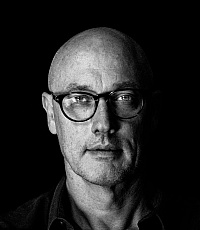
A few months ago I was asked to give an observation on storytelling for a group that was considering storytelling’s part in the evolution of this world. This is the recording of what was said. Raw footage straight out of the camera.
There’s a binary nature to where words are spoken from. To where stories are told from. And what they need. That they need.
I believe it to be profoundly important to know where words have been spoken from -- their origin point -- particularly if we’re to address the meta-crises of this world and our lives.
Perhaps we’re not the writer of our story but the page on which it is written.
If you recall from past comments over the years, I have struggled with this concept simply because I value free will and autonomy in ways that I am able to do so. Perhaps you simply mean this at the beginning of an Inner View session rather than 'at all times', which I wonder if that is entirely possible to do. I've been wondering about this though, and this is what felt true at least for me.
We can take the time to let truth land on the page, then choose, with integrity, what becomes the published line.
For me, this allows me the freedom to be open to what comes, to intentionally take time to set down preconceived notions, beliefs, emotions and wait for what arises. In this case, something meaningful and true. Then act on it. Rather than simply abdicating free will and living passively. Perhaps that is simply my personal nature and not necessarily everyone else's. :)
Video Transcript: On Storytelling
There is no one who doesn't carry this deep interior life around with them, always.
There's a piece of everyone that is there. It never wasn't there. It's always been there. Yet it seldom reveals itself. And there are environments and opportunities that encourage that. But the possibility is that because it's always there, it never wasn't there, that it could just be seen if we were to allow it.
So what happens? Why don't people do that? Why do people hold something else up?
And I'll link this back to story, but I want to read you something. It was an encounter I had. I wrote the words after. Usually, I write about mysterious things that just kind of appear in me, but this actually happened. It's a small piece called, "The Entrance Hall," because I was in an entrance hall.
I'll read the words, and I'll explain it. And then I want to tell you about the possibility of if this character was to sit in front of the camera and to see the camera as the metaphor -- the camera is just something that captures it -- but the possibility of how this character might tell a story. And there were two possibilities. So this is what happened one weekday morning:
The Entrance Hall
I'm in an entrance hall and I look towards the furthest doorway. I see her. She looks up and immediately cast her eyes downwards. She assumes that I can see her. I can, but what she believes I can see, she's ashamed of. She doesn't wish for it to be seen by anyone. She spent a lifetime holding up a facade -- a burdonsome untruth -- forever against the weight of gravity. But what I see is not that. And if she could see what I see, I imagine that her life would be so very different.
I wish that for her.
I wish she'd look up.
It happened. It happens all the time. And maybe it's a stark example. Maybe this is a story if you liek, a representation of someone over there. Or maybe not. Maybe it's a representation or a reflection of a piece of us that sometimes happens.
So then I bring myself to the metaphor of the camera. I suppose I'm a filmmaker -- I do own a camera or two. I have sat with thousands and thousands of people over many, many decades and paid very close attention. And I'd seldom talk -- so this is kind of unusual in the fact that I'm the only one talking here.
So if this character was to come and sit in front of my camera --whether it was myself and her or myself and her and a thousand people in an auditorium, it matters not.
What would happen? What story would tell?
Invariably, what someone would do is they would tell you a story. And that story would need something. She would speak to me. She would tell me something. She would be speaking to me, or to us, if there were more than one person there. And the story would very much come from here [points to head]. It would come from what she believes should be told -- to, dot dot dot, fill in the blank, to move the world on, to make herself feel okay.
What I've noticed in front of a camera is the origin point of words is the most critical thing. And if there's nothing else to take away from these few minutes, know this: that words are only spoken from one or two places. They're spoken by someone to someone. So by me to you. And I kind of would like something to happen; I'd like you to learn something. I'd like to contribute to you. Or I'd like to get something from you. Or they have needs. Or, all that disappears, and it's as if I'm spoken through -- stream of consciousness. This is not as unusual or as rare as one thinks.
But if you were to think of the origin point of words, where would you point to? Where is it? There's a geography to it. I'm not sure that's the nature of awareness. There's no geography or timing to it. Yet, the experience happens readily under certain conditions, and the conditions are very, very simple. Almost too simple to believe. And this is what I found myself always saying, always, always, when I have the camera up. And sometimes when I don't have the camera up. But the camera makes it kind of easy.
It's very simple. It's just someone sitting there, you know, you could imagine yourself in the chair, if you like, thinking, Well, what story do I tell?
And I would say, "Well, for this moment, let's be still. We'll start with nothing, by which I mean, no thing -- no act on your part. And we'll let it. We'll let the experience find us -- not us [find] it. It's almost for this moment, let yourself be undone and speak from what remains."
Trust the field.
Trust life itself.
And there's usually no rush to speak. In fact, sometimes people don't speak. And I'm really good with that as well. Things don't always need to be said out loud. They're experienced, anyway.
But, invariably, people do speak. But where they speak from their origin point is different. And I think it's really important to know that -- something that's spoken through you -- because we're so ready to tell stories, to, almost metaphorically, write our story -- the story -- on the page, when all along I have this idea that we're not really the writer of our stories. We're the page on which a story is written.
The origin point of words spoken from me to you, or through me, I noticed the pattern is the same with life itself. It seems that we're the ones writing the story. We're the ones living a life. But what if that wasn't entirely correct? What if life was essentially, patiently waiting to live itself through us? And if that were a possibility, would you let it? And that changes every story that was ever told, because it is told from a universal place that emerges out of you as a way to address the predicaments of the world: all those systemic meta crises that people talk about, or the predicaments of your life, of my life.
If we don't know that, we're going to address all those predicaments from the very same place that kind of created them: the mind. If we know that there's this kind of state of being out of which something can come, then at least we stand the chance of, in a still moment, recognizing that and acting on it.
That's how I like to notice stories. That's how stories that move -- that truly connect with us -- that's where they come from. They don't come from this muscular sense of a story that will get to a particular result, I don't believe. You'll move the world in favor of one, not the other, but I'm not sure that's a very useful thing.
It's an observation. Is it true? I think so, but I don't suppose it's for me to say. It's for anyone to consider. To strike upon a moment where almost you feel -- let's call it a story -- you feel something and you don't know what it is, but you're prepared to have the courage to just let it, no matter the consequence, and not only to become aware of it and say it out loud, but to act on it as well. That is an extraordinary thing. And I think the more that we can encourage others to do that, the better.
And the encouraging of people to do that is, in my understanding, best done with nothing, with no act. If you were to sit with someone, you don't even wish that they would change or wish that they would come to a resolution on something, it's just nothing.
Sit there.
And it emerges soon enough.
COMMUNITY REFLECTIONS
SHARE YOUR REFLECTION
4 PAST RESPONSES