
Emanuel Kuntzelman has spent a lifetime building movements for social transformation. But long before any of that, he was a boy in a small town who made a promise to an apple tree. This story comes from a Story Booth conversation with Paulette Pipe, told in his own words. View 8 clips from the conversation.
 In the winter of 1973, I was riding the all-night trains around Europe. I had a Eurail pass, and if you took a night train you saved yourself a hostel bill — you could just sleep on the train. I woke up at dawn somewhere in northern Italy, approaching Genoa, and I was standing in the passageway looking out at the rising sun over the sea when a tall, dark stranger approached and started chatting me up. He said, you look like a pretty serious person. What's your gig? What are you up to?
And for once in my life — I hardly ever said this, because I didn't want to face the consequences — I told him. I said, "Well, I'm on a search for truth."
He said, "Deep subject, man."
Before I tell you what happened next, I should say something about where that search began.
A Weird Kid
My friends at school used to say I was a weird kid. I didn't really think I was weird. I thought I was just a normal guy, but I did feel like I had a special purpose in life. And I think there's nothing special about my purpose, other than this:
We all have a special purpose in life. Maybe some of us don't heed that call, or we try and set it aside. I just didn't let it drop.
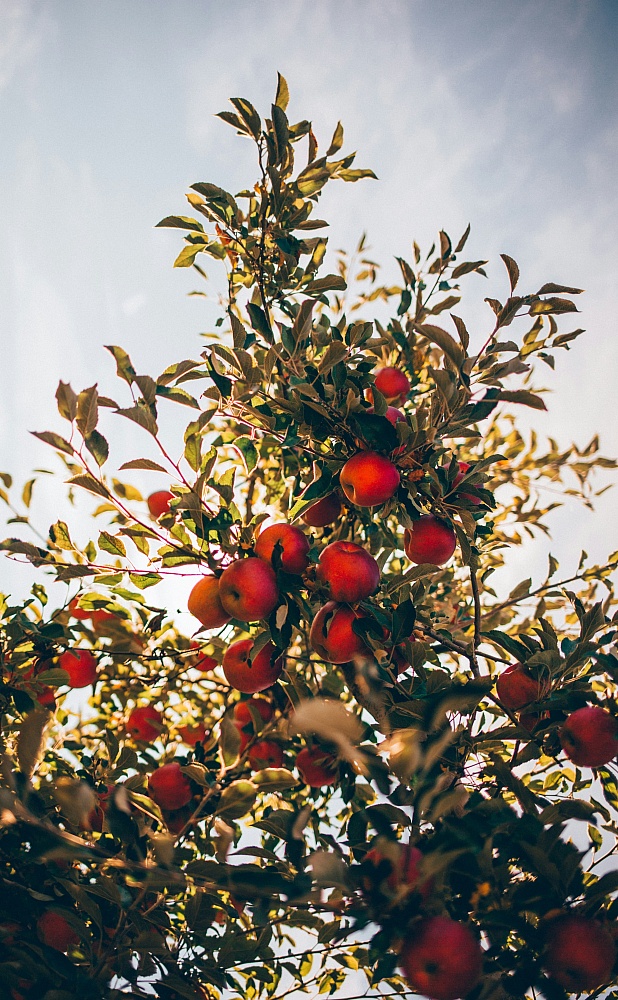 The first realization of a meaning in my life came when I was in first grade, six years old. I lived in a very small town, a rural community. There wasn't much to do there, but I thought a lot. One beautiful spring day in April, I came walking home from school, and there was a large apple tree in front of our house. I was very good friends with that apple tree. That particular day it was in full bloom — blue sky, bees buzzing on the blossoms, the sun suffused through them — and I was lured up to my little perch where a couple of branches came together.
That day at school, the teacher had written on the blackboard that the population of planet Earth had reached three billion people. As a first grader, I didn't quite know what all those extra zeros meant, but it seemed like a lot. So I was lying up there staring at the sky, thinking — I was raised Catholic, studying for my first communion, so I thought in those terms — 'Gosh, if God went to all the trouble of creating three billion souls, and we're all different, yet we're all alike at the same time, that's a very extraordinary thing. And that means you have to be faithful to that. You owe it to serve God, the universe, whatever, to the best of your capacity. Figure out what you're meant to do, and do it.'
So I said, okay, I get it. I dedicate my life to being the best I can and serving the universe. I never forgot it. I felt obligated to be loyal to the oath I'd given to the sky, and the apple tree, and the sunlight. And that kind of turned me into a weird kid at a very early age.
We Are Running Out of Time
In 1970, I got a scholarship to Tulane University, where I was able to design my own curriculum, and I opted to study sociology — to figure out how people could work together and be more collaborative. The very first class, the very first day, Professor Jeffrey Hadden, head of the sociology department, drew on the blackboard what are very familiar now: graphs of exponential change over time, going back to the year zero and approaching the year 2000. Population. Overkill — the growth of armaments. Environmental deterioration. Technology. He used those terms so he could get an acronym — P. O. E. T. — and he called it the POET Graph. Lines growing very slowly, turning upward around the seventeenth century, and as we approach the twentieth century, going straight up.
And he said: what this graph shows you, this generation, is quite literally that we are running out of time. What would you do to create solutions for this pending crisis? And I'll give you one hint — it does not have a standard, logical, linear solution. That's why I've called it the POET Graph. It's a kind of pure poetry. You're going to have to read your intuition, you're going to have to be very creative.
I was so moved that I went out after class and sat down under one of those big live oaks on the quad, Spanish moss hanging down — I know, I keep running into these tree moments; I've always been a tree hugger at heart, I guess — and I got a powerful, powerful download. The equivalent of the apple tree, multiplied. I told myself: Okay, I dedicate my life to service to humanity, to solving the conundrum of the POET Graph. I'm not sure what that means. I don't know how to go about it. That is the rest of my life. When I finally got up from under that tree, the first thing I did was walk into the dean's office and say, I need to change everything. I need to see the world, understand other cultures, otherwise I can't do anything.
For Dr. Hadden's class, I wrote a paper on how to get people to collaborate. I designed it as a wheel: the spokes are organizations working together, and the hub is a kind of iron ring with an empty center — that's the key that holds it together, so we're not all in our individual silos.
He liked the paper, but he said, "You've got to have a name for this wheel."
I said, "I don't have the name yet. I'll work on it."
Hold that thought. It took about fifteen years.
See You at the Next Crossroads
 Which brings me back to that train at dawn, a few months later. "Deep subject, man," the stranger said. "So what's your line of truth?" Since I carried everything on my back in those days, I had a rule: only one book at a time — but always big, complicated ones. The book on top of my backpack right there was In Search of the Miraculous, by P.D. Ouspensky, who took Gurdjieff's system and tried to put it into everyday language for mere mortals like myself. Gurdjieff's great contribution, at least from my point of view, was the Law of Seven — that nature has a default for flowing in phases of seven: seven colors in the visible rainbow, seven notes on the Western scale, seven rows in the periodic table, seven days in the week, waves flowing in sevens turning into octaves. I was very intrigued with that.
The stranger looked down at the book and said, "Oh, you're into that stuff, are you? Then I know where your next stop should be. There's a chain of islands off the coast of Spain, and way south, there's a tiny one called Formentera. On that island there is the Hotel Casbah, owned and operated by probably the foremost authority on the Gurdjieff–Ouspensky work — a gentleman named Ronimund von Bissing."
 I turned around to get my pack together, and when I turned back, the guy was gone. I sat there on the train and thought: Okay. Formentera, here we come.
Four or five days later — trains, ferries, Barcelona, Mallorca, Ibiza, and finally a little tub boat over to Formentera — I got off the boat in the middle of winter, 1973. I didn't speak a word of Spanish, didn't know where I was, and hadn't had a decent night's sleep in five days. I propped my backpack against a wall and was sitting there in a half doze when a little Fiat 500 pulled to a stop right in front of me. A woman rolled down the window and said, in this beautiful British accent: "Oh my gosh, I have never seen anyone looking so like a woe-begone hippie suffering from an overdose of wanderlust."
I rubbed my eyes and said, "Beg your pardon? Sorry, I probably haven't tidied up in a few days — but actually, I'm here on quite serious business. I'm looking for the Hotel Casbah."
Her whole tone changed. "And why might we be looking for the Hotel Casbah?"
I explained about von Bissing and the Gurdjieff work — "See, I've got the book right here."
And she pushed open the passenger door and said, "Get in! Hello, I'm Jackie van Bissing, Ronimund's wife. I shall take you to the Hotel Casbah."
Sometimes the universe makes things so easy for us — if you're on that quest for truth, and you're willing to say it here and there.
I felt like the red carpet had been thrown out for a wandering hippie suffering from an overdose of wanderlust. I ended up spending years there, off and on; I managed the hotel for the van Bissings. That was the real start of my endeavors to understand the Law of Seven, the flow of waves, what it all meant.
Never Give Up
Around 1984, I ran into another mentor, Dr. David Tiedeman, a specialist in career theory, who created what he called the Lifecareer Foundation. He said we all have a life career — most of us have trouble finding it or keeping it, but we do have this divine path in life, and if we're loyal to it, it will unveil itself and unfold for us. I told him my story, including the wheel I'd designed at Tulane, and he said, let me ask you this — what do you know about quantum physics? Absolutely nothing, I said. He said, first thing you've got to do is give yourself an education in quantum physics, and sent a whole box of books to my doorstep. And in there was one tiny little volume: Wholeness and the Implicate Order, by David Bohm.
I was reading it under a weeping willow tree outside my little townhouse — yes, there was a tree involved. Bohm said: there is the implicate order: everything under the surface we cannot measure, and the explicate order: everything we can see and sense. That sounds dualistic, he said, but it's totally the contrary — because the universe is undivided, unbroken wholeness. So if we have implicate and explicate, there's got to be something that ties it all together. And we will call that the holomovement.
The fireworks went off, the light bulbs flashed. "Aha," I said. "That's the name of the wheel."
Then came multiple iterations, ups and downs, rounds and bouts, until the real time and place had come. It wasn't until 2019 that I said, you know, at this point I don't care if anybody's going to ask or not — I'm getting too old. I've got to get something done before I run out of time myself.
And the key thing I realized is that the Holomovement is a movement, not an organization. It can't be owned by anybody or operated by a board. It has to be a true spirit of collaborative effort, with Bohmian dialogue as the guideline for how we listen to each other. That's the only way it can be anything close to true and authentic.
At the end of our conversation, Paulette asked me what I would say if I could climb up and meet that six-year-old in the apple tree now. I would tell him: never give up.
You hear the call? The call is real. It doesn't mean you're anything special or different — we all have the call. But when you hear it, be loyal to it. Stick to it. Have confidence in yourself.
 Whatever you have to go through — all the obstacles, tribulations, pitfalls on the path — you can do it. Don't give up. The world needs us all to live our purpose, to stay on our own personal quest for truth, which is how we all work together, collaborate, and serve the undivided wholeness — so that life on planet Earth can carry forward, and we'll have a future beyond those graphs. It has to be the firmest conviction your heart and soul has ever sensed. With that, the day will come.
Half a century on, I'm still keeping the oath I gave to the sky and the apple tree and the sunlight — still, when somebody on a dawn train asks what my gig is, I'm willing to say it out loud. And if the question ever comes to you — what are you up to, really? — try answering it truthfully just once, and see what little car pulls up, and who's waiting at the next crossroads.

COMMUNITY REFLECTIONS
SHARE YOUR REFLECTION
4 PAST RESPONSES