Imagine you're in a heated argument online. Someone's saying things that make your blood boil. You could fire back with something equally cutting, or you could block them and walk away. But what if there's a third option—one most of us never even consider?
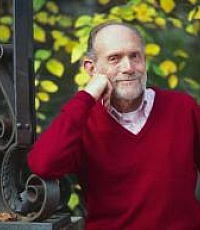
A professor once got asked point-blank: "What is violence?" His answer? "A failure of imagination." At first, that sounds almost too simple. But think about it. When we can't imagine that someone else's experience is as real and valid as our own, when we can't see past our differences to recognize our shared humanity—that's when things turn ugly.
An Indian spiritual teacher named Swami Ramdas put it this way: "Ignorance is the cause of all quarrel and strife in the world. Ignorance is not a crime. It does not deserve to be condemned, but it has to be removed. And by the power of your love, you can remove ignorance."
This isn't about calling people stupid. It's about recognizing that we all have blind spots—moments when we can't see beyond our own perspective. And here's the thing: those blind spots can be healed.
Gandhi understood this deeply. He said there are two kinds of power: "One is obtained by fear of punishment, and the other by acts of love. Power based on love is a thousand times more effective and permanent than the one derived from fear of punishment."
We see the fear-based power everywhere—in cancel culture, in threats, in the way people try to force others into compliance. It might work temporarily, but it always creates backlash. People who are forced to change don't actually change inside; they just wait for their chance to push back.
Real nonviolence works differently. Gandhi described it this way: "What Satyagraha does is not to suppress reason but to free it from inertia and to establish its sovereignty over prejudice, hatred, and other baser passions." In other words, it doesn't force people to think differently—it helps them wake up to truths they couldn't see before.
Think about the moment that changed Gandhi's life. In 1893, he was thrown off a train in South Africa because of his race. He was furious. But instead of making it about personal revenge ("they can't do this to ME"), he saw something bigger: "How can we do this to one another?" That shift—from personal offense to shared human tragedy—opened up a completely different path forward.
Here's what matters for us: whatever we believe is possible tends to become self-fulfilling. If we think violence and coercion are the only real forms of power, that's the world we'll create. But if we recognize that there's another force—one that changes hearts instead of just behavior—we can tap into something transformative.
Gandhi pointed out something we rarely notice: "The fact that there are so many men still alive in the world shows that it is based not on the force of arms but on the force of truth or love. Little quarrels of millions of families in their daily lives disappear before the exercise of this force." History records the wars and conflicts, but it doesn't record the countless moments when people choose understanding over anger, connection over division.
That force is always available to us. The question is: will we use it?
Think about it: When was the last time someone changed your mind about something important? Did they force you, threaten you, or shame you into it? Or did they help you see something you couldn't see before? What made the difference?
COMMUNITY REFLECTIONS
SHARE YOUR REFLECTION
1 PAST RESPONSES