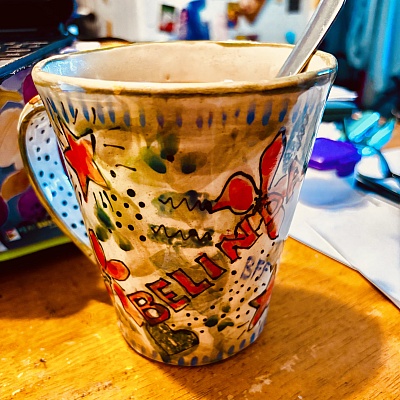
Belinda Manning is a poet, multidisciplinary artist, Yin Yoga teacher, and lifelong community volunteer and activist. She marched in the civil rights movement as a teenager, and she has never stopped — only the medium has changed. In August 2026, days after entering hospice care for cancer, her body failing quickly, her spirit unmistakably soaring, she shared gems of learnings from her life's journey in an intimate conversation.
We Die of Life
When I was born, no one told me I was terminal. And actively dying! I think I spent the first half of my life not realizing it — most of that perpetrated by the culture I lived in, and my religion. I thought of life as something with a beginning and an end, but I didn't understand that life itself was the terminal condition. So when someone asks, "What did they die of?" — we all die of the same thing. We die of life.
The cancer that lives in my body — it lives in my body. It's on this journey of life with me. It's not going anywhere. It is part of who I am. Cancer is also something that is helping me live — part of what is helping me flourish in life at this time. Every cell I scratch off my body, every one I comb out of my hair, was alive. It was terminal too. Even the cancer cells in me are as terminal as the ones in my kidney or my lung.
During my first cancer journey, there were something like thirty armed conflicts taking place around the globe. And I kept thinking: how do people sit in a room and decide where to bomb? What to excise, what to take over? And I thought about my body, and the cells in it, including the cancer cells. How do you choose who to bomb? They're just trying to live. That may sound like pie in the sky — this woman is out of her mind — but that's where I've come down to.
Truth and Reality
People say to me: that's not reality, Belinda. You have to live in reality. But I'll tell you a story I know about the difference between truth and reality.
I was raised by a man who loved deeply — deeply — everything he touched. He learned to love it, and it grew in his presence. As a child he loved baseball; he would play with nothing but a sock tied in string. When he got to high school, in a mostly white community, his father told him: they're not going to let you play. He tried out anyway. And the two men who coached that team said, "No — he's going to play. And not only is he going to play, he's going to pitch." Because he was that good. That was the truth. So he stood on that mound, game after game, while people taunted him and called him names — until they won the championship. And then he was great. Because that was the truth.
He went away to college, and he and his roommate — who happened to be Monte Irvin, if any of you know baseball — went to try out for the Negro Leagues. The Negro Leagues existed because a man named Rube Foster had decided that the major leagues, which disallowed Black players, might be the reality at the time — but it wasn't the truth. The truth was larger than that--so were the "Major Leagues". People came from everywhere just to see how magical Negro League players were.
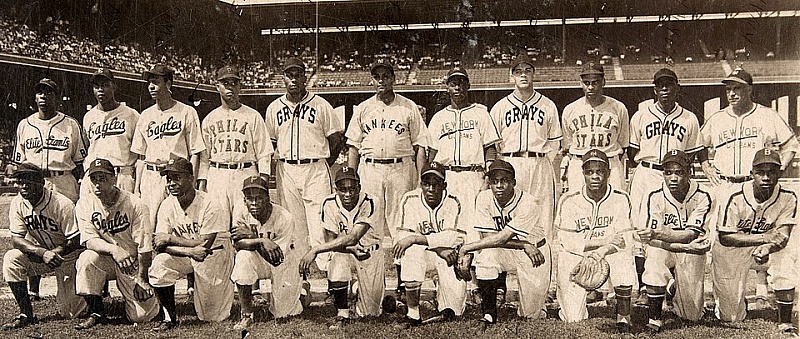
Then, in 1949, baseball's Major Leagues began to rob the Negro Leagues of their best players. When they came to my father, he said he was not going. Everyone told him: face reality. The money is with the Major Leagues, the fame is with the Major Leagues. But the woman who owned his team was the only woman owner in the league, and he was not going to leave her. Major League owners were paying pennies to owners for contracts. In some cases they asked players to leave and sign with them. What was happening around him was supposedly reality. But there was nothing true about it.
He went on to teach school for thirty-three years, and wherever he stood, he was magic. Everything he did may not have looked like much. But it always echoed the truth.
I'm always looking for what is true in something, as opposed to what we call real. If we can shorten the distance between what is real and what is true — not the economics of it, not the ego of it, but the truth of it — that is the work.
It's the same when we sit in temples and synagogues and churches. As long as we don't get down in the weeds, in the quicksand, it's the same thing. Truth resonates across the perceived boundaries. We can go anywhere, and Spirit can enter.
The Warmth of the Dark
I have lived with depression, majorly, for most of my life. I attempted suicide for the first time when I was eleven years-old, and I have tried to take my life more than once, because I was in so much pain. As a child, I could never see anybody else crying and not cry. I never learned to let it pass through me. People said, "She's just overly sensitive, something's wrong with that kid" — which also wasn't true.
For a long time, I would go into these dark places not recognizing that the dark place is where the growth is. I was always trying to escape it. I did not recognize the beauty of darkness until the second half of my life.
We talk about light all the time — bringing in the light. But a lot of times we get blinded by the light. The light can obscure the truth; we even talk about light pollution now. I remember the first time I lay on my back on a mountain in Goldendale, Washington, under a pitch-black sky — darker than any I had ever seen, because I'd always lived where there were streetlights. I watched the first star come out. Wow, look at that. Then another. And another. And then, all of a sudden, an explosion — more stars than I had ever seen in my life. And, like the stars and the planets, I was held gently in the dark.
I could not have seen those stars but for the dark. The beauty of what exists in the vastness of life is not visible but in the dark. So why are we afraid of it? Why do we create these stories about the dark that are not true?
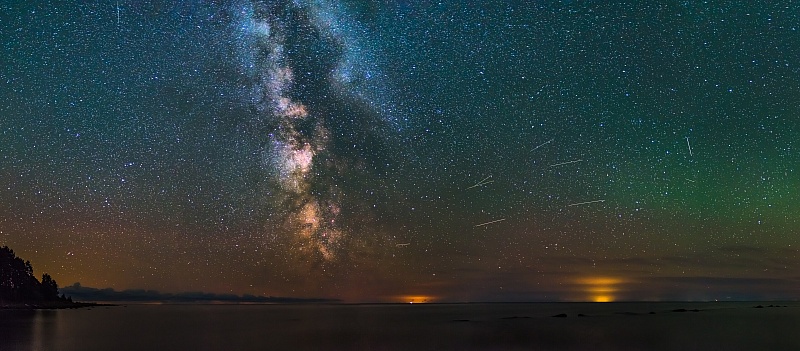
I had to learn to walk out of the dark — and to walk into it when I needed to. To choose it, and even enjoy it, when I needed to find an answer. Because what sits in front of me in the light is often too blinding. The world can just be too loud. The place to find solace and understanding is in the dark. The beautiful warmth of the dark. There is warmth in the dark.
And what helps, in those places? The only thing I can say is: to be loved unconditionally. When I was a kid going through my depression, my father would come lie on the bed next to me and just rub my back. As I got older, he would say, "You just have to keep moving, honey — they can't hit a moving target." My husband and my children love me unconditionally. Even in those places, they hold me. Sometimes you don't have to say anything to be with somebody; you don't even have to know what they're going through. There are a million people walking around depressed, God knows, right now. Heck, even the mother earth appears to be depressed these days. Who could blame her. But if you meet every living thing with a sense of love and wonder, it comes back. It is reflective...And it has the capacity to move mountains the next time.
Loving, Not Just Sitting
I grew up in the sixties. In my hometown I was usually the only Black child in my college-prep classes, so when I got to Hampton--an HBCU-- I thought I'd died and gone to heaven — nothing there but Black folks! I actually had my first date. But there was still division. There are always ways to slice up something; we always find ways to slice up stuff.
And there were so many restrictions on young Black girls in those days, because of what the outside world assumed about us. Downtown, we had to wear gloves. A dress, always; pants only on Saturdays, only on campus, and back in the dorm by six o'clock. That seemed real crazy to me. So in my first protest, we slept out in front of the dorm — and we got change for the women. In my next protest, we took over the administration building, and I got put on social probation for a year.
 Which ended up being the best thing for me, what I did with that year was go South. I was nineteen; I was going to help "liberate" folks. I had absolutely no idea what was happening in the streets of the South.My first march was in front of a shoe store — so that Black people could try on shoes before buying them. You could buy shoes; you just couldn't try them on, and you couldn't bring them back. That march did not go well at all.It was the first time I saw someone beaten over the head, and I still don't have words for the contempt and hatred in people's eyes as they wielded blows indiscriminately. It was hard then, and it's hard now, to comprehend that that exists in the world. Man's inhumanity to man... There's nothing true about that. We are better than that. That is truth..
But those difficult years were also years of real learning. It was the time of the Black Arts movement — James Baldwin, Nikki Giovanni, Mari Evans, Amiri Baraka — and I was with the Free Southern Theater and Black Art South in New Orleans, traveling and performing in plays and writing poetry. When the theater began closing down in the early seventies, I was sitting in Dooky Chase's with the other artists, all of them packing up to go North, and Gilbert Moses said to me: "We are not leaving you here by yourself. Go call your people."
The last thing I wanted to do was call my people. But I did — and the person I called was my grandmother, Lucy. Because my grandmother was a seer. She was a knower. She picked up the phone almost immediately and the first thing she said was, "Where are you?"
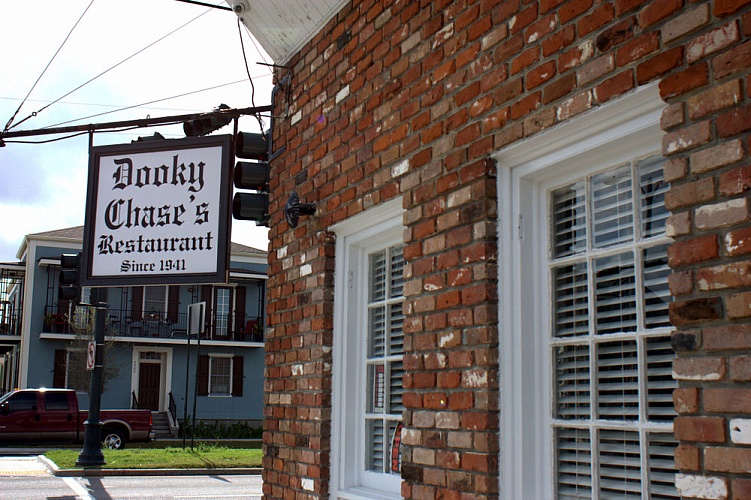
"A restaurant in New Orleans," I told her.
And she said: "Go back to your apartment, because your grandfather is waiting for you."
When I got there, my grandfather was standing by the car with my uncle. He looked at me — there was no weight on me, it had been a rough time — and said, "You look like hell. Get in the car."
My grandmother had told him, "Go to New Orleans, and don't come back without her."
I believe there are realms functioning in this world that we have absolutely no idea about. There is something in the space between my hands, and something is happening there. I don't have to prove it with science. That's ancient wisdom, honey. My grandmother knew it was time to send the net out, and she timed it just right — or I wasn't coming back.
One more story from those years: the year II returned to Hampton there was another protest that shut down the campus, everyone was ordered off the campus by seven o'clock. I called my father in New Jersey. "Well, I guess I'll be there in a couple of hours."
It was a six-hour drive. I told him I had a friend from Georgia whose father had passed, and we didn't know how she would get home. He said, "Tell her to pack."
He drove to Virginia, shipped her trunk to Georgia and mine to New Jersey, and took her home with us. She wasn't my roommate. She wasn't my best friend. She was somebody that I knew. But my father loved deeply anything he touched, and he was not going to leave that young girl on that campus trying to figure it out alone.
After everything I have witnessed in my lifetime, do I still believe love can transform hatred and violence? Absolutely -- to the very core of my being, down to the last bit of marrow in my bones. It is the only thing that can. Nonviolent social change, built with love, is the only thing that has ever created lasting human change. It is the only thing that creates a carpet for us all to stand on. That's true. And I believe we can make it real.
Catching Yourself with the "Oh"
The trick — and I suffer from this a lot myself — is to catch yourself with the oh. Somebody cuts in front of you in line. Somebody yells a racist slur at you from a truck and tells you to get out of the street — that happened to me, walking down my own streets. And yes, sometimes I fail; sometimes I say exactly what you'd imagine. But that's not who I want to be, and that's not what I want to create. And if that's not what I want to create, then I've got to create something different. We cannot abdicate our responsibility to create not from a place of fear...or ego...from the place we know to be true. The place of love. But we have to take the time to be — to take the bite out of an interaction.
The oh is the apology — sometimes just a thought — and it isn't only to the other person. It's to myself, and to the universe, because I've created something I didn't want to create...a moment in time...a disruption in the natural flow and peace of the universe. Those little oh moments can be really transformative. To really be with someone, no matter how briefly — to take the sting out of the interaction — transforms it. And the only ones who can transform it are us.My husband asks me, when I go into one of my rants, "Okay, who are you mad at today?" I'm not mad at anybody. I'm having a moment! I'm just trying not to let it last too long. These moments call me to remember who I really am.
That's how I got to the heart boxes...mycellium I've been making and sending as gifts for others — and the monarch wings, and the notes in cards from previous years. We...humans...don't send letters anymore; we barely make a phone call. Our heart boxes are like mycellium...small boxes with gifts of positive energy and thoughts. Connections to others who offer thougts and acts of resilience and joy. Passing them along the super highway of love connecting humanity. It makes a difference. Take a look at a forest.
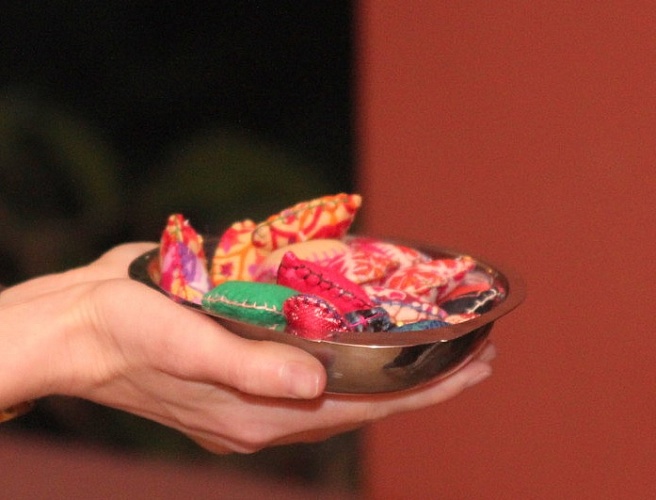 Just this week, a young man came to install an air conditioner in our home. When he finished, I asked him to pick a heart out of my box — one of the little stitched hearts made by women in India, where love is sewn into every stitch. He picked a green one, read the story that comes with it, and said: thank you so much. I'm having a hard time. And then he stood in my kitchen and talked about his life — his business partner's accident, his little girl, his wife. It created a moment, one heart to another, that started all the way on the other side of the world.
I double dare you to talk about any part of your life that doesn't become a part of mine.
So now I get to hold Ryan — right here. And I get to take him with me.
The Jug
As this time gets shorter, I believe preparation for transitions is important. Who you want to be here — and who you want to be hereafter. What I ingest, who I ingest, what I give out: it all matters so much to me now. That's why I'm finishing my heart boxes. My husband and I have been making them — small boxes of love and care, filled with hearts and monarch wings and things I have made and gathered — to send as gifts to people who have touched my life. It's like mycelium, spreading below the surface of the earth. We are doing this even now, with me just admitted to hospice and him just starting his own cancer journey. I have about ten boxes left to fill, and I'm collecting addresses, because I am sending boxes across this entire planet. I'm sending boxes to Japan, okay? I don't care whether folks think it's too hard to send them to Japan or not. They're going to Japan.
Years ago, Tonya, a former student of mine — an exchange student who had lived with a family in India — brought me a water jug. The little girl of that family where she lived used to carry it on her head to gather water, and the jug still holds the imprint of the child's head on its side. It is worn smooth and I touch it often. When Tonya brought it to me, over 30 years ago, she said, "When I thought about what to bring you, I thought: this would be perfect." She was right. I have kept it all these years, because I didn't know what it was for. Until now."
 All my life, people have brought me soil and rocks from the places they've walked — I have soil from every continent except Antarctica and the Arctic. When I hold it, I think of the generations who have walked on it. These things heal me. And now I know what the jug is for. It is going to hold all of that soil — the places I have stepped, the earth others have embraced and carried back to me, the dried flowers I have saved from the funerals of people I love, including those of my father and mother. And my soil will embrace that soil. My body will rest in soil, in flowers, in that vase. When the body is leaving, the spirit takes over. I want to know those people in a different way. I want to know that earth, every bit of it. That is where I want to rest.
When my father died, the depth of grief didn't come at the funeral — at the funeral I laughed out loud, because he had always said, "I don't want a whole lot of people just looking down at me, okay?" It came the first morning I went to his home, as I had done every morning, and he wasn't there. I still have moments when I wish I could touch his body. That's the thing about this life: when they asked in our pod what I would miss most, the only thing I could think of was my body — because my body is what provides presence--here. It is my connection to life as I know it--here. It is all translated first through the experience of my body. My initial experience of my father was through his body. The touch of his hands...and the gentleness of his voice. But the memory of him, the things that allow me to still access him lie in the spaces between the living cells. It is the depth of his love, the purity of his thought, and the peace in his presence that allowed me to rest. Assured. Somebody was saying how thin the veil is. It is thinner than we think. I have enough presence with my father now that I know from him when it is time to do something.
My brother, who transitioned early on, I hold differently. He was always a wanderer — we'd go somewhere and he would just wander off. So I know he's wandering, and I'll have to catch up with him at some point. But my father? My father is waiting for me.
Although — I'll tell you the truth. The ancestors aren't waiting. They're sitting around here in the room. My house is so full.
My Beg
Is there anything left to say? Just this. My beg — not a hope, a beg. I'm begging.
I'm begging that we all become mycelium. That we look at nature, the mirror, and see what it's telling us about how to love and support one another. Because a little goes a long way. A little bit of love, a little bit of care goes so far. I've never had a platform where I could beg before, so I'm begging. And I'm hoping everybody else is begging, too: the one sitting next to you, the one standing behind you, the one in front of you.
Get some hearts. Hand them out in the grocery store, and be surprised at what people say. Because Ryan, in my kitchen this week, blessed me — with a heartfelt share I couldn't have gotten from any place else, at any other time. And the hearts he took with him? Every stitch, every bit of DNA in those fibers, contains nothing but love.
Nothing but love.
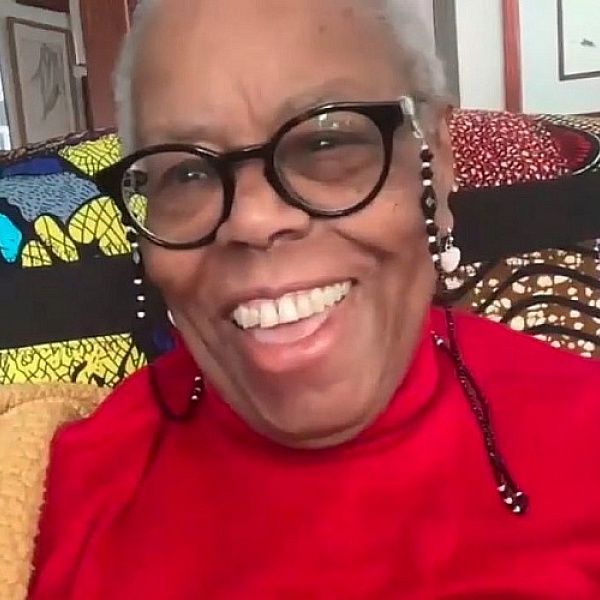 Belinda Manning is a poet, multidisciplinary artist, Yin Yoga teacher, and lifelong community activist and volunteer in Atlantic County, New Jersey. A graduate of Hampton University and a veteran of the civil rights movement, she spent her career in the corporate and nonprofit worlds before retiring into a life of art and service. In late 2025, she gathered a cross-section of her community to build a Peace Installation for the Atlantic City Arts Foundation's ARTeriors show, insisting it be created together, using what she called "seeds of peace" — cooperation, forgiveness, acceptance, humility, generosity. "None of us could own it," she said. "It can only happen working together. And courage is key." Belinda and her husband send
COMMUNITY REFLECTIONS
SHARE YOUR REFLECTION
18 PAST RESPONSES
I am carrying this reminder with me: that presence itself can be an act of love, compassion, and service. Thank you for sharing this wisdom.
Just 'Oh'
Thank you so much
.
It is nice to read Belinda’s story that she spent time being cared for but could also share her story around loved ones. Also to hear of her acceptance even embrace of that which was killing her.
I wish more be of our elders could be cared for in this way and not shuffled off for convenience.
How can we change this in a culture that does support those who are journeying differently?