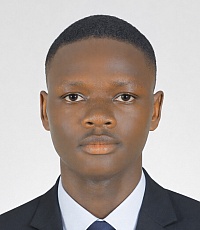
How about a kid
It was in the afternoon. I had just finished high school, in 2023, and in 2024, I sat inside my room, trying to write whatever was in my mind on the paper. But I got stuck, because I was asking myself some difficult questions. I remember writing one sentence: How about a kid that was born in 2021 in Tambura?
That is where I stopped. I did not complete the sentence on paper. But I completed it in my mind. That child born in 2021, would be around four years old by 2024. They would be ready to start schooling, yet the environment round them has not provided a safe or stable oppurtunity to attend school. That child is now speaking. But what has that child learned about life? Apart from killing, violence, hatred, bloodshed, and living in a camp, what else had they been exposed to if not negative things. What kind of understanding of life would they develop if these were the experiences surrounding their childhood? They might grow up knowing far more about violence than about peace.
I felt tears running down my face. I could not hold back my emotions to have imagined this kid.
That question gave me a sense of purpose that I have carried ever since.
We, the youth, have been both victims and instruments of the violence taking places.
And something inside told me why: we are the space to speak for ourselves — what is in our heart, what we need, our desire. The environment has not provided that space. The environment that exists is the environment that has created fear, making us afraid to speak because we know that doing so could put us at risk.
I should say that this is the first time I am sharing my story in this way, in a conversation with people across borders, seas, rivers and oceans. I feel it deeply, and at certain moments, I become emotional. I once thought storytelling had little value. But when I began sharing my story, speaking about it and putting it into writing, I discovered the power of storytelling. There are so many young people back home, especially in my hometown of Tambura, whose stories deserve to be heard, yet they have no safe space in which to share them.
We cannot all be here
South Sudan is often described as the world's youngest nation. We gained independence from Sudan in 2011, following more than two decades of liberation struggle. Yet, since independence, the country has continued to struggle with instability. Young people make up a significant proportion of our population, often estimated at around 70%.
I am a young person, and I have already experienced a great deal. I have to acknowledge that.
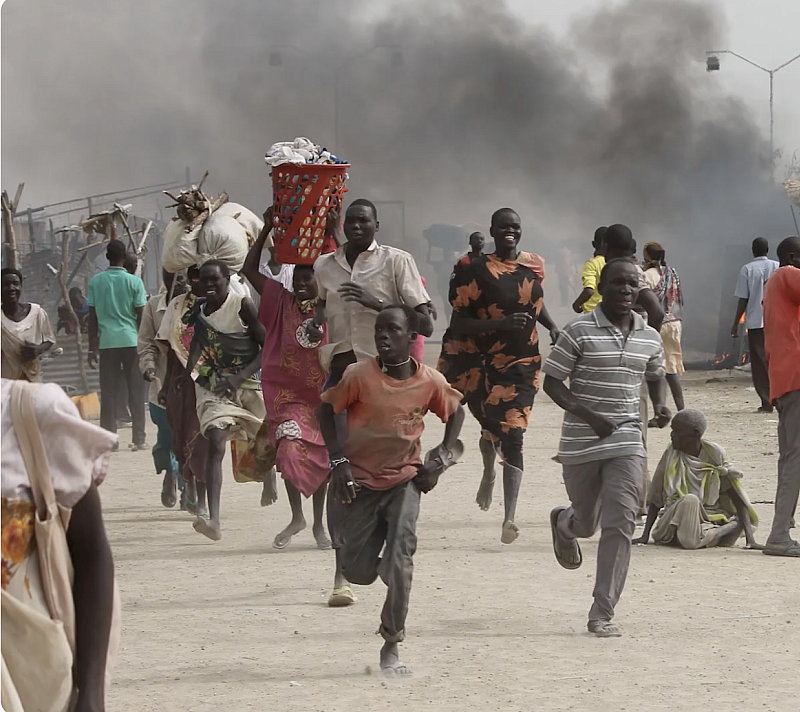 COVID-19 came when I was in my first year of high school, and schools were closed. Then, in 2021, we began to hope that we would resume our education. But just as we were looking forward to returning to school, conflict broke out in my community. It was a devastating outbreak of intercommunal violence. My dad told me, "We cannot all be here and die. It is important for you to go and continue your studies." So I fled Tambura for Juba, under a very difficult and risky circumstances.
But my mind remained back home. I had witnessed what was happening. Young people were being targeted. Some were being manipulated or forced into armed groups. Others were living in fear, divided from one another and choosing silence as a way to survive because speaking out could put their lives at risk. I had witnessed deeply disturbing scenes, including the sight of a dead person. That image stayed with me. I carried it with me to Juba and into my new school environment.
I was far from my parents, staying with relatives, including my maternal uncle. Sometimes, a whole month could pass before I managed to speak with my family back home. My father was a small-scale trader, and when the conflict broke out, he could no longer travel to neighbouring Uganda to buy goods and bring them back to sell. He also had many children to care for. I therefore began taking responsibility for myself. On weekends, I would hustle to earn some money and save it. But I realised that this could not sustain me for long. I decided to become more involved in school leadership. I contested for the position of Debate Prefect and was elected. I began serving the school and representing it in debate competitions. After that term, I was also elected as the Head Prefect, which gave me onother opportunity to continue serving the school through co-curricullar activities beside my academic. Through my commitment and service, I was eventually awarded a bursary towards my school fees. That was how I managed to complete high school.
Throughout this period, I kept asking myself questions.
How could two communities in my hometown, which had lived together for good years, even before my father was born, suddenly turn against each other? These were communities that had shared the same environment,  lived peacefully, shared cultures and even intermarried. I had grown up among them, and I had never imagined that such violence could happen. What could have gone wrong? Were there underlying factors or interests fueling the conflict behind the scenes?
I continued questioning the nature of conflict.
With time, I began asking another question: What about peace? Is peace a condition that every human being needs? And if it is, what kind of condition should peace create for people?
I became deeply obsessed with understanding peace. I remember saying to myself, "No. This cannot happen."
I would hear stories of my friends and classmates becoming soldiers. I kept asking myself: How can someone my age become a soldier, carry guns and weapons, and take part in violence? It made me realise how easily young people can be manipulated and drawn into conflicts that do not necessarily serve their interests. We are victims, but we can also become instruments of the same violence. We have lost loved ones, our sources of support, educational opportunities and hope for the future. We have also experienced division and mistrust. Some young people become involved in armed groups because of fear, pressure, manipulation or a lack of alternatives.
I said to myself again, "No. This cannot happen."
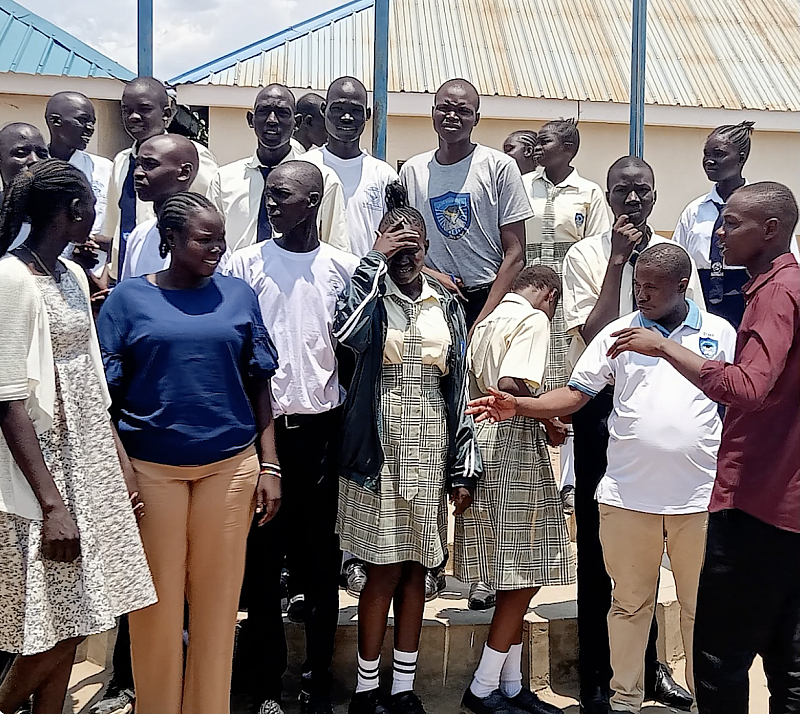 I began to think that if young people had opportunities to develop their knowledge, communication and debating skills, as well as the confidence to express themselves, they could become better equipped to question manipulation and resist being drawn into violence. They could recognize that they have alternatives and futures beyond carrying arms. I knew I could not accept going to the bush and taking up arms when I believed I had a future worth pursuing. I wanted other young people to have that same sense of possibility. That was how I began discovering what I called my "Peace Voice". I believed that one day, that voice could become something more: a contribution to peace.
After high school, I joined a debate organization as a volunteer. I began visiting high schools to train young people in debate. But my interest went beyond teaching debate. As I trained them, I also wanted to understand them: to listen to their experiences, learn about their challenges and hear their stories. I knew that conflict has not only happened in my hometown. Similar experiences were unfolding in many communities across South Sudan.
Then, in 2025, I travelled to Uganda to serve as a debate and public speaking adjudicator at the East African Debate Championship. I listened to and evaluated many speeches delivered by young people. That experience strengthened my belief that debate does more than help young people find their voices. It can also develop ethical leadership by teaching them to take responsibility for how they use those voices. It helps them learn how to turn expression and reasoning into constructive contributions to society.
Ladders for others
What really helped me organized the ideas I've been carrying since 2021 was the Peace Journey program from Goi Peace Foundation. I took it seriously — I remember waking up at midnight to attend sessions. It was not easy, but I made time for it because I believed in what I was learning.
There was one session I will always remember. It was about "Laddership". It reminded me that I was already on my own journey and had already begun taking action; I had simply not recognized it. The session gave me a new sense of confidence and helped me understand that we need to become "ladders" for others, just as other people become ladders for us. We can support one another, create opportunities for one another and keep lifting each other towards our aspirations.
That experience helped me give a clearer direction to my idea, which I named Peace Voices to Vision or (Peace x Voices to Vision) according to the naming by the Peace Journey program.
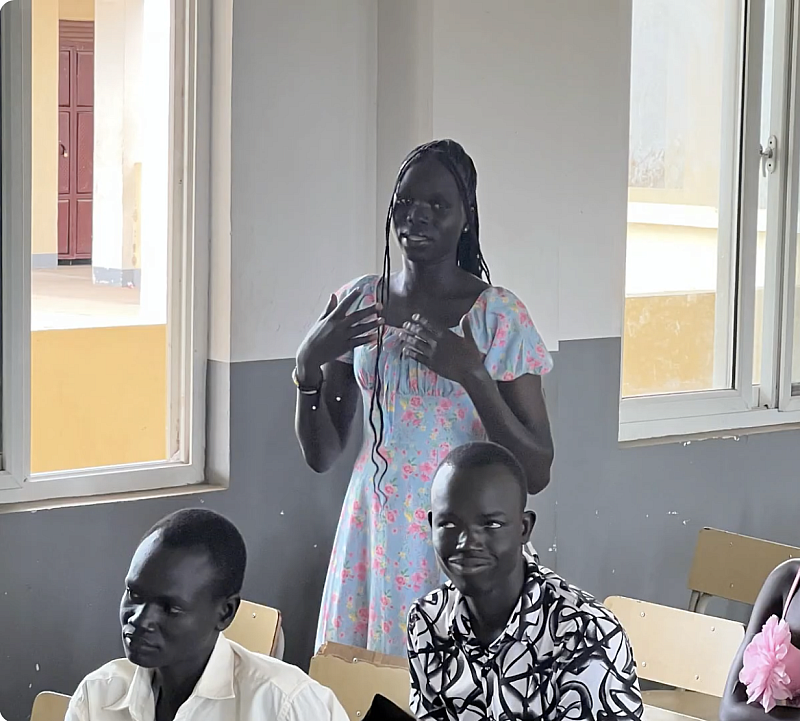 I began asking myself: "Okay, I have a voice. How do I turn that voice into a vision? And how can I help other young people back in Tambura, and across South Sudan, who have been affected by conflict, discover and develop their own voices in ways that work for them? It does not have to be the same as mine."
The idea is simple: to create safe and inclusive spaces where young people, particularly those affected by conflict or excluded from opportunities, can express themselves, develop their capacities, grow into responsible leaders and turn their ideas into positive change in their communities.
The same habit of asking questions also influenced my decision to pursue a degree in Peace and Conflict Studies.
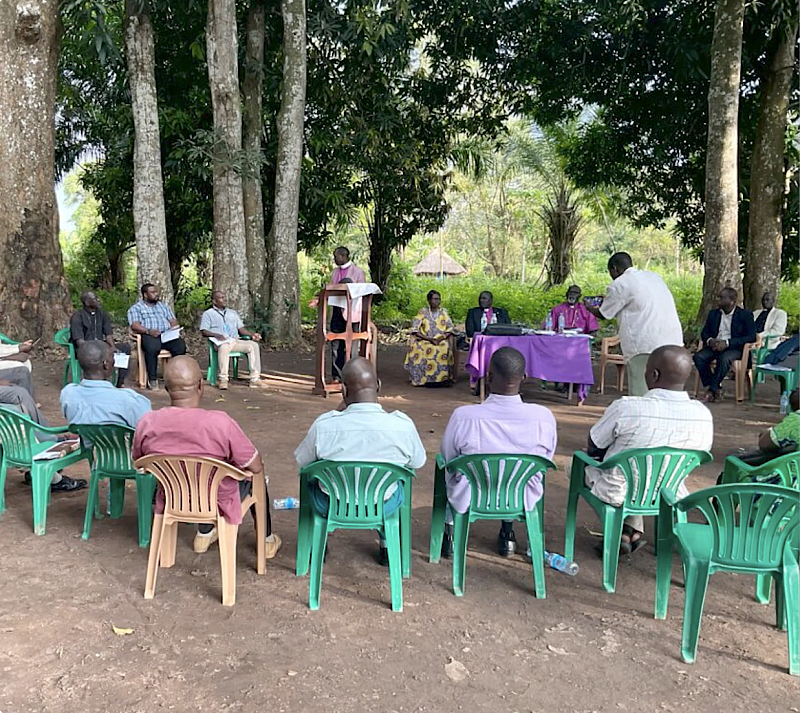 Studying the subject has changed my understanding of conflict. I have come to realize that conflict itself is not necessarily bad. It is part of human interaction, and we cannot expect to eliminate all conflict from the world. What matters is how we understand, manage and respond to it. We do not have to allow disagreements to turn into violence. I have studied conflict analysis and the different actors involved in conflict. I have come to understand that the people directly involved in fighting are not always the only actors influencing what happens. There can also be other individuals and interests behind the scenes, fuelling tensions and benefiting from violence. Sometimes, people believe they are fighting for what is right without fully understanding the interests they may actually be serving. This has strengthened my belief in the importance of choosing dialogue over division.
But perhaps the most important lesson I have learned is that young people must be part of peacebuilding. Too often, young people are viewed mainly as survivors of conflict who need assistance and humanitarian support. While such support is important, that should not be the only way we see them. Young people must also be recognized as people with the capacity to contribute to building peace. We should be among those at the forefront of shaping the peace we want to see, because it is our future that we are building.
Peacebuilding doesn't have to start after violence ends. It is a long-term process that shoud begin as early as possible, before violence defines our future as young people.
I feel you
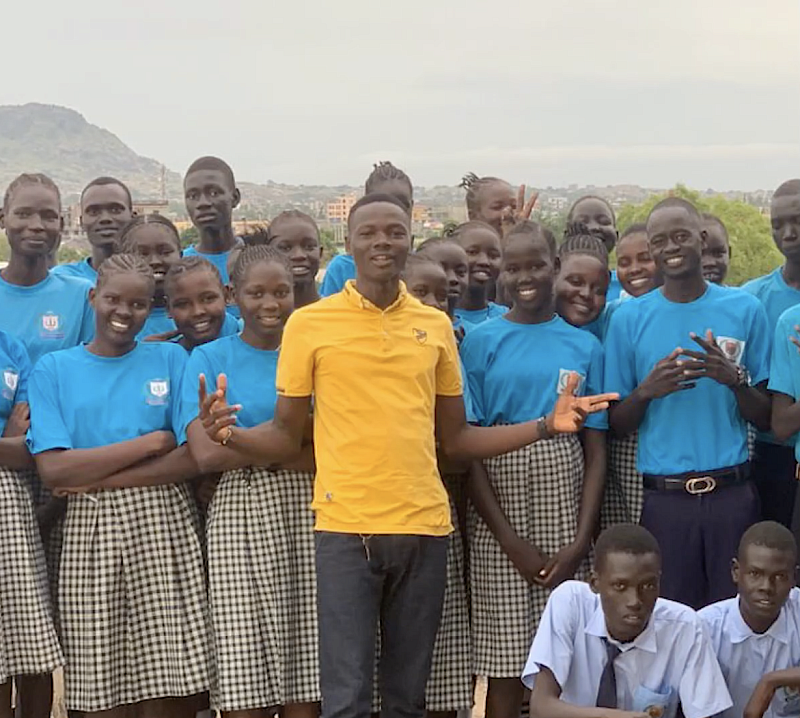
People sometimes ask me what young people need to develop within themselves to contribute meaningfully to peacebuilding. One important capacity is communication, particularly active listening. We, as young people, can sometimes be quick to respond without first taking the time to understand what another person is saying. We need empathy. We need to learn to say, "I feel you," rather than make generalisations such as, "That is how they always behave," or, "That is simply their nature." We need to move away from thinking in terms of "us" versus "them".
Young people should engage in constructive debate, community service, storytelling and opportunities to listen to people whose experiences and perspectives may be different from their own.
But it is a journey, and it begins within us.
If we do not work on changing ourselves, how can we expect to contribute to changing the world?
Before going into communities, we also need to develop our capacities so that we can engage responsibly, even when we encounter rejection. Sometimes, communities may tell us, "You are too young to deal with these issues." But maturity does not have to begin at mature age. It can begin when we train our minds to understand people and the world in which they interact, take responsibility and approach others with respect.
Many communities have experienced deep suffering and mistrust. They need opportunities to rebuild relationships and feel safe enough to speak openly. When people have the freedom to express themselves and listen to one another, they can begin identifying shared challenges and working together towards solutions. Even where differences remain, people can develop a common understanding of how to live together peacefully. Everyone deserves peace.
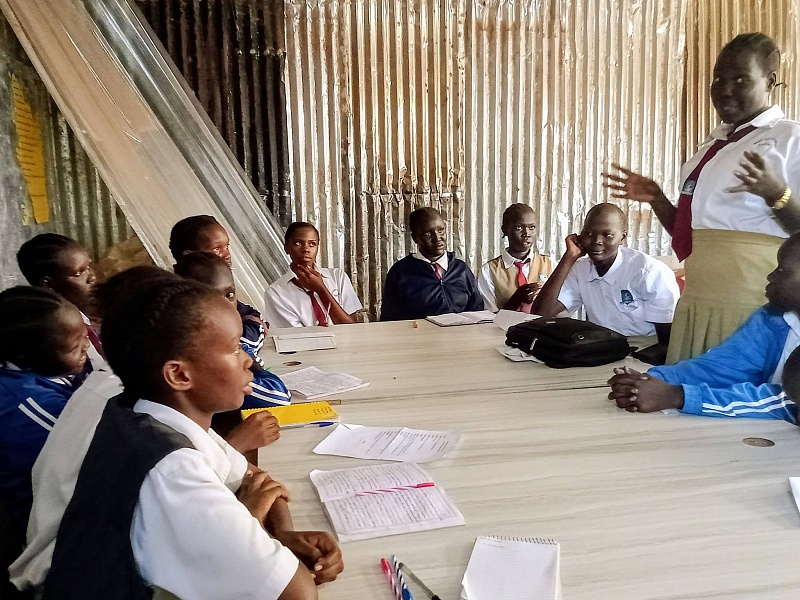 Ten years from now, I imagine a South Sudan with strong national identity and belonging. Today, we often express our identity primarily through our ethnic and tribal affliation rather than a ashared sence of being South Sudanese. I want see a South Sudan where we see ourselves first as people who belong to one country, with a shared futre and a shered responsibility for building it. This future can only become possible when young people have the opportunity to participate meaningfully in shaping it because we will be there as it is our destiny.
And to those outside South Sudan, I would say that we do not want to be seen only as people in need. We certainly need support, but we need the kind of support that equips us and walks with us on the journey towards our own aspirations, rather than support that is only consumed and then ends. We need opportunities to build our capacities, exercise our agency and contribute to shaping our future. We need empowerment.
I think again of the children born in 2021 in Tambura, and of the sentence I could not finish that afternoon in my room.
I am trying to finish it now through Peace Voices to Vision. I want that child, and the many young people growing up in difficult circumstances, to have opportunities to express themselves, to be heard and to discover what they can contribute to their communities. I want young people who have been silenced by fear to develop their capacities, become responsible leaders and become ladders for one another.
Maybe you also have an unfinished sentence of your own, one that stops your pen and stays with you long after you have put it down. Perhaps that is your voice, asking to be found.
COMMUNITY REFLECTIONS
SHARE YOUR REFLECTION
7 PAST RESPONSES
My reflection is that every community has challenges, but we can overcome them through unity, education, cooperation, and active participation. I have learned that everyone has a role to play in community development. I want to contribute by supporting education, empowering young people, promoting peace, and helping vulnerable members of my community. Together, we can build a safer, stronger, and more developed community.