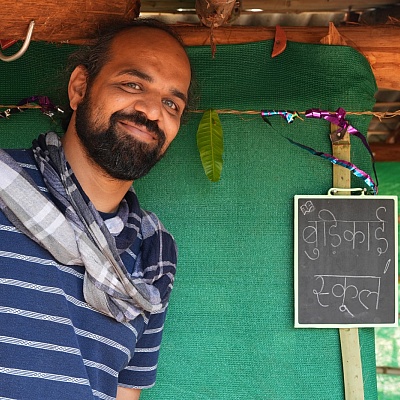
Gaurav Marathe is an Associate Professor of Organizational Behaviour at IIM Ranchi, one of India's premier business schools — a place built, as one listener put it, around relentless competitions and achievement. For three years, he has run "Soul Carnival" there, a student festival where nothing has a price and every stall is a gift. This story comes from a Story Booth conversation, moderated by his friend Rohit Rajgarhia, and is told in his own words.
"What is the problem, man? Let's experiment"
When I first asked for volunteers, everybody said, "Sir, nobody would volunteer. It's just not possible."
I work in a business school, and at that time, I was responsible for student administration — managing the student community, which is typically a very task-driven, rule-driven job. The students had this festival where they would bid for stalls. They would pay money, a few would get stalls, and then they would sell items. It's a whole day on campus where you can operate your own business. When the students came to me, I just felt: it's a residential community, we are together — why are you selling? They said, "Because we pay for the bidding."
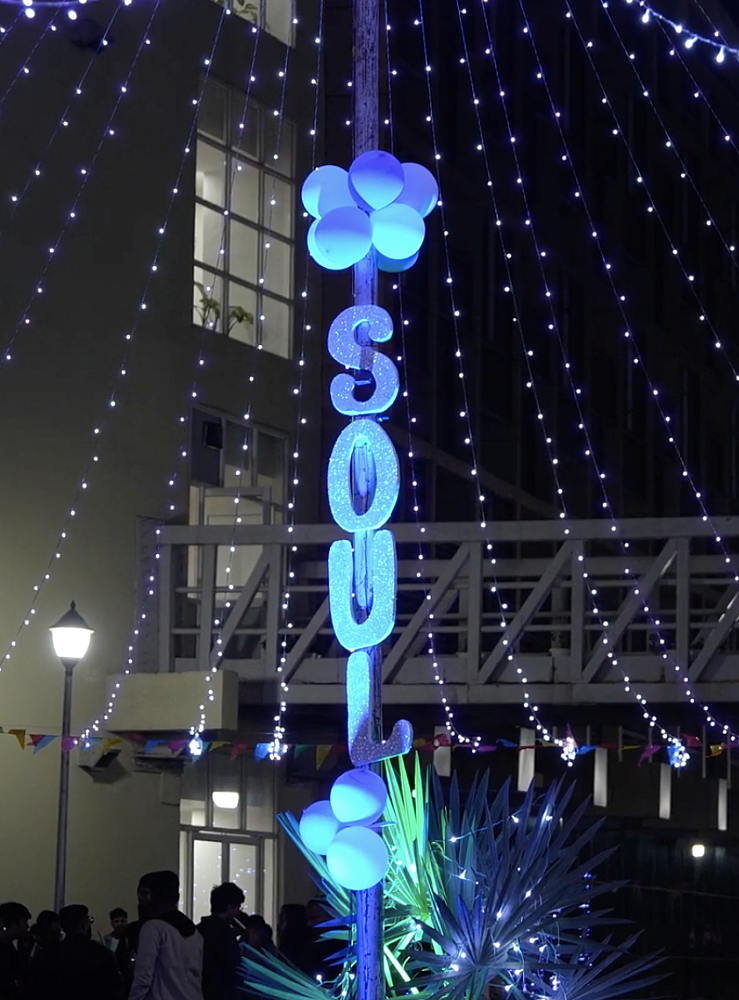 So I said, "Then why do you pay? It's a community space. Let's do it all together."
I had once eaten at a restaurant in Ahmedabad where you don't pay your bill — you pay-it-forward for the person who comes after you. Nobody monitors what you pay. So I said, "Let's do that experiment. Let it be the kind of carnival where nobody is charging anything. No cost price, nothing. If anybody wants to pay, they pay. If they don't, they don't. Let's believe in that spirit."
I did have a doubt. It might happen that it fails — but so what? Let's experiment with it once and see.
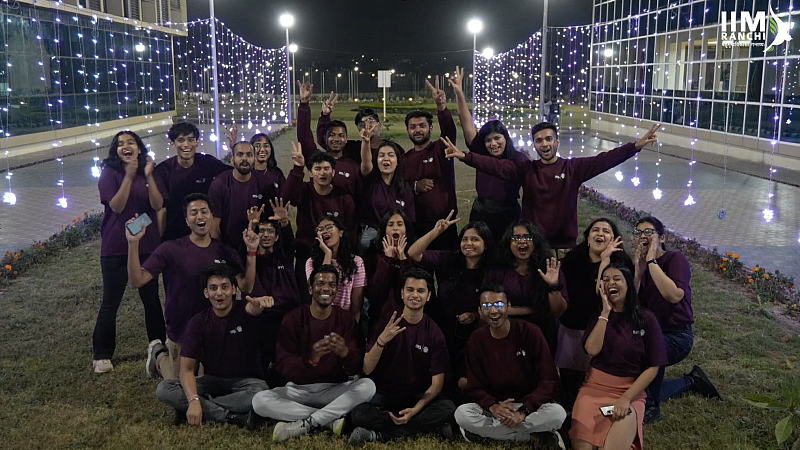
The Social Impact Student Committee on campus became my first source of support. They decided to go for it. Together, we got twelve volunteers. Twelve stalls — some cooking, some face painting, music, games. Nobody had an idea it was going to happen this way. Even I didn't have any idea. It caught on across campus. The whole vibe was completely different from other college events. And somehow all twelve stalls did not make a loss — that was not a criterion at all, but it was a complete surprise. Everybody was taken aback: this is possible?
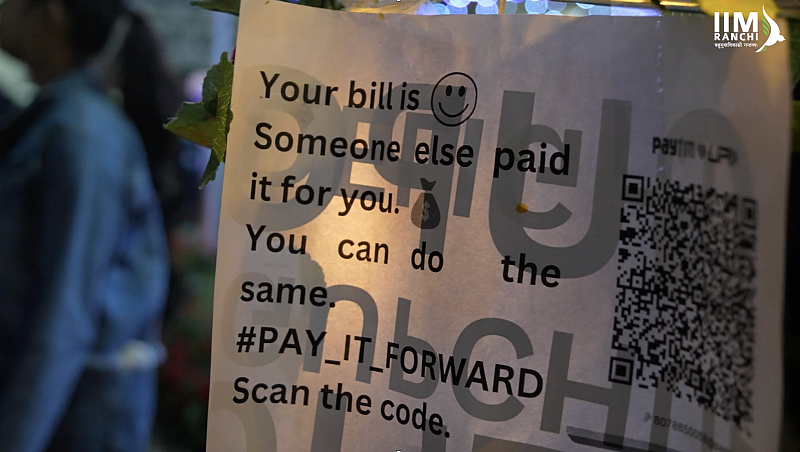
There was one stall I was suspicious about. A guy brought momos [dumplings], and what he did — he set a price, 90 rupees, and then crossed it out, so at least he could hint at what people should pay. I didn't have confidence that momos would work, so I went around saying, "Guys, let's make sure he doesn't end up making a loss. Let's pay him a little more"
The next year, we got 37 volunteer stalls. The year after, 54. And the beauty is that nobody discusses anymore whether they made a profit, whether the cost price came back. People come there to give.
Once you come there to give, the calculation is over.
I think Soul Carnival doesn't need me now. I just hope it stays like that.
"Remove the carbon"
My father passed away when I was two and a half, so I was raised by a single mother. She looked after me and my sister fully. There was a special school, with an entrance exam at fourth standard [in fourth grade], that would select students and nurture them for social leadership. Somehow, my mom had this notion that the school would make me a good human. The day I got admitted she was like, "Now, done." After that, she gave me all permissions. I never faced an issue in my life about permission. I was privileged.
In one prayer time at that school, a teacher gave us a description of a Sanskrit shloka [verse] called the Viraja mantra. My school picked it up from Mahatma Gandhi's ashram, where they prayed it. This teacher told us, "Humans are like a candle. After the candle burns, carbon stays on it, and you have to remove that black carbon from the light so the light again illuminates. Your work, he said, is to do this mind bath every day — remove the carbon that is being formed by the process of burning itself."
As a child, it put me into this feeling that I have to keep working on myself. I had a jealousy yesterday — let's work on it a little bit. It planted a seed of self-awareness. And I had plenty of carbon to find. My identity in early childhood was: he's this intelligent boy, disciplined, humble — and anyone else having that would trigger jealousy in me, because that was who I was. The carbon did not go, I should say. But I could detect the carbon. That is what is happening — I could see it.
Those ten minutes I carry right now. Even in telling you this story, I don't know what carbon I might create by speaking about all this stuff — ego is a function, but ego also has consequences. Institutes and structures are critical for creating systems, but they also create consequences; we start losing some essence in the process. Experiments like Soul Carnival are basically a reminder of that jyoti in you — the illumination that exists within us. You don't know how to be with it all lifelong, but at least you don't forget it.
I watch this whole teaching replay in my own son. The first year of the carnival, he was a very small guy. He made paper art, so many pieces, and he just wanted to give it to everyone. He didn't even have a QR code. He was just giving. The second year, he's growing, and there's an emerging sense of self. He painted diyas [lamps], a hundred plus, so happy that he's going to give — and then he got there and saw that everybody's stall has a QR code. Oh my. That's the beauty: kids have kindness, they have love, but they also have that other tendency. We all carry everything in our hearts. It's what you nurture. Third year, he said, "No" — this time I would just give. And now there's an entire campus kids' community that plans the carnival with him.
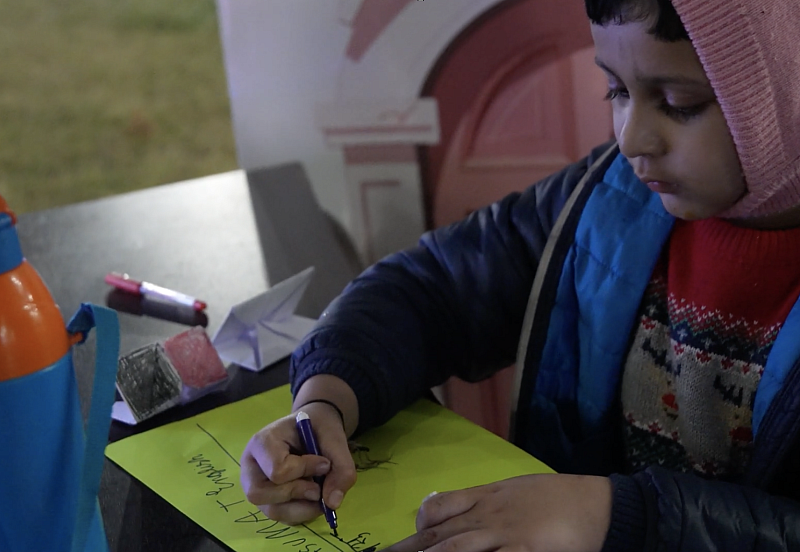
Many of my students, while passing out of college, show me — "Sir, your son gave me this in Soul Carnival." One sent me a photo recently: "Sir, I was arranging my stuff, I found this from your son. Those hearts are still being carried."
Love — bas, that's it.
"Mauli, give me food"
The mantra told me, remove the carbon, remove the carbon. It took me years to feel what the light itself was.
By flow, I became an engineer, got placed at IBM, had good salary with the prospect of going to the US — there was that whole dream of settling down. It was comfortable, but it was not meaningful; it was not giving me deep peace. So I left, and for about a year — in stretches of twelve, fifteen days, always with a friend — I traveled India. We would go to the railway station and not decide where to go: whatever train was leaving first, we would book general class, with an upper budget of 2,000 rupees, and keep going till it was spent.
General class on a train is a huge crowd. They are largely daily wage earners. And it was an eye-opener. You fight for your own seat, and then you see somebody standing, and you share your seat with them. They were carrying big loads, it was a hard space for them, but they were so comfortable, so easily sharing their food, their space. I realized money is not the source of happiness.
On that journey, I also walked a pilgrimage in Maharashtra called the Wari — people walk fifteen days to the temple of the god Vitthal, and everybody calls each other Mauli, which is a name for God. Nobody uses your name. I'm calling you God; you're calling me God. If I want someone to move: "Mauli, go side." If I'm hungry: "Mauli, give me food." For fifteen days, you are one with God — not someone outside God; you are each other's inner God.
On one side, the Viraja mantra kept saying remove the carbon; on the other side, the traveling gave me the feel of what that inner illumination is. I find it very difficult to question those feelings of love and kindness. It's so natural. It just exists out there.
Then I got married, and my partner had a completely different life story — one that was very much real for her. I realized my privilege, how gifted my experiences had been, and how different life can go for people. And here was a trouble: in initial years, I became judgmental. How can they have so much carbon? They should remove it! You feel you've done self-work and they have not — that superiority complex, I did generate it. It still keeps coming back; it's a mind function. But the mind had become, for me, something beautiful and complex to understand — so I did a PhD in organizational behaviour at XLRI, honestly, because the program paid a fellowship. But my deep desire was to understand the self.
"Complex and beautiful"
I taught organizational behaviour for ten or twelve years, and the mind studies became really profound when I read Robert Sapolsky's Behave. He puts our best and worst behavior on the same continuum — the mind gets shaped through life experiences. It gave me the anchor statement for my course:
Humans are not good or bad. They are complex and beautiful.
Everybody has that illumination inside, and we are just getting entangled in carbon in different ways, depending on how the winds blow on our candle.
On this backdrop, I had invited somebody to run a drum circle for the college program. The drums were arranged when a deeply distressing incident on campus meant that the circle had to be cancelled. The tragic loss was really disturbing for me; I couldn't make sense of it. But I went to the man and bought all his drums. "You go back," I said, "but keep the drums here. This has to become part of this campus."
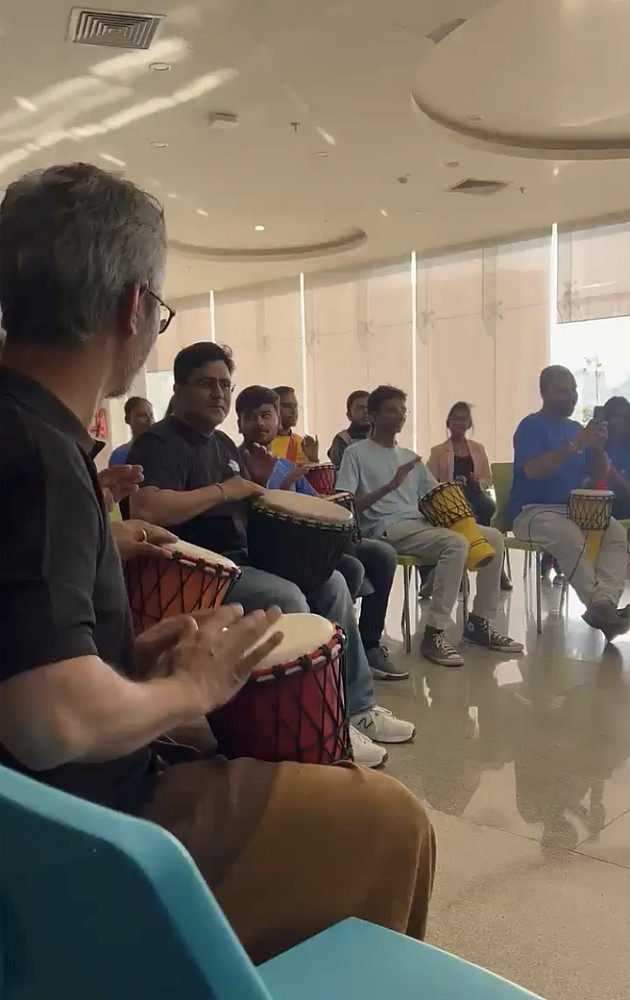 I should tell you — I have zero musical background. I have never played any instrument. I zero understand rhythm. But I had a sense that this meant something: we are getting so entangled in this becoming, and it is troubling us so much, and there is a being — and arts and music can reach it. One month later, I led my first drum circle for the campus. My heart was beating, standing in the middle knowing no music, but with such deep feeling for that guy.
A drum circle takes you to the peak, so you forget your identity — you forget the candle's shape and size — and then you drop the music. You drop the candle, you drop the music. And what remains is so peaceful, blissful. It gave students that very sharp distinction between becoming and being. Now, every month, we take the drums out — juvenile home, orphanage, old age home, anywhere someone asks. Whether it's a marriage hall or an orphanage, for me it's the same: we are there, together, to drum and feel who we are. We hold our stories so strongly. Even I'm telling you a story right now. But, in that moment, with the drumming, they just drop.
"The counter to entanglement cannot be entanglement"
Somebody asked me what I do for my own nourishment, and about hope in today's world. I don't know if the right word is hope — I feel vitality.
During my traveling year, I spent time in Auroville — a society without money, 108 nationalities, those wind chimes — and I was inspired. I had a strong drive to stay. But I was also doubtful: can the entire world become Auroville? I purposefully decided not to stay.
You create an experiment on the boundaries, but the way back is to create small, small experiments inside the existing structures and cultures. For me, hope is that we can keep the vitality alive through such experiments, not believing any one experiment is the way out. When we do a Soul Carnival in a business school, we are rekindling the trust.
And I struggle, like all of us. My current hypothesis is this:
The counter to entanglement cannot be entanglement.
In the Harry Potter series, there's a plant with all those roots — the more you struggle with it, the more you get entangled, and the more you sit there calmly, the more you get out of it. So you stay with your core nature, which is beauty and love and kindness, and it doesn't matter what others are doing — there are valid reasons, different experiences. You stay out of the entanglement and keep doing what you can do, as much as you can do. That's it. It settles down slowly.
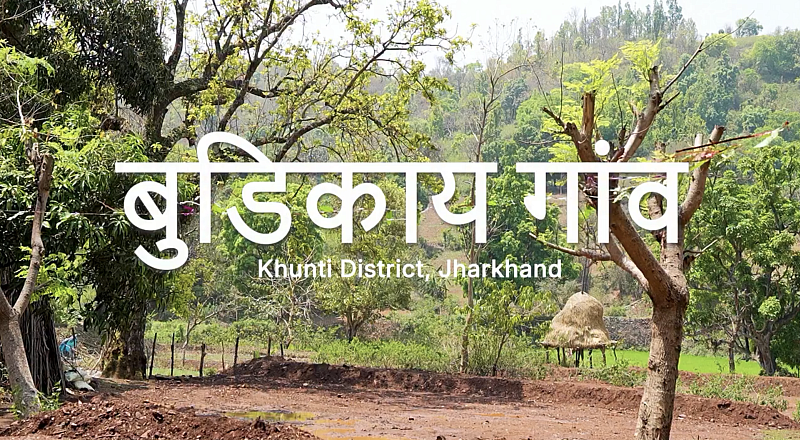 Seventy kilometers from Ranchi, there is a village where we had a hardcore Naxal issue — left extremism — because of which the administration never reached there for the last 75 years. We had done this Joy of Giving week in our campus, so we had some funds; we read about the village in the newspapers, so we went there and we constructed a school. It is out of the normal education system — there's no school registration, nothing; a local person teaches, and we give them a monthly honorarium. Can there be a school without standards, without formal education, without books — learning from community, learning with community, and learning together as a community? It's known as Budi Kai. It's a very initial start — we are only six months into it.
What does service mean to me? It's a connection. A human connection. That's it.
This year, we feel we should expand the carnival — maybe invite some outsiders. We don't know how to keep it fully open, but we want to keep it fully open.
Perhaps that's the point of these experiments — not to have all the answers, but to keep creating spaces where we can go close to inner jyoti a little more.
COMMUNITY REFLECTIONS
SHARE YOUR REFLECTION