
Betty Peck pri 92 je polna sijoče ljubkosti, ki spominja na vilo  botre in začarane vrtove. Obisk pri njej je podoben padcu v Alicino zajčjo luknjo. Okoli njenega doma v Saratogi vozi železniška proga s pravim vlakom. Obstajajo z bršljanom poraščene stene, nore vijugaste poti, hišice na drevesih, celo Rapunzelov stolp in amfiteater pod drevesi skupaj z balkonom Romea in Julije. Na stotine otrok se je igralo v tukajšnjem s soncem obsijanem potoku, navdušeni nad občutkom prsti pod bosimi nogami in veseli v svetu, polnem ustvarjalnosti, lepote in čudes. To je svet, ki ga je Betty Peck podarila številnim generacijam otrok.
In zdaj ima ta čudovita učiteljica nov projekt, nad katerim je globoko navdušena. Projekt, ki ga spodaj opisuje s svojimi besedami in se začne s preprostim, a globokim vprašanjem ...
Rad bi vedel, kako si se naučil brati.
Naučiti se brati je najpomembnejša stvar, ki se nam zgodi, in to se (večini) zgodi v otroštvu. Moj mož Willys Peck se je naučil brati po "metodi Pooh". Tukaj so njegove besede o tem neverjetnem dogodku:
Poohova metoda naučenega branja

Ko sem bil otrok, so moji starši brali knjige meni in mojemu bratu. Moji najljubši sta bili knjigi Winnie the Pooh in The House at Pooh Corner avtorja AA. Milne. Čeprav se nisem zavestno trudil, da bi si zgodbe zapomnil, sem z večkratnim poslušanjem ugotovil, da lahko uvodne odstavke recitiram na pamet. Nekega dne, ko sem gledal knjigo in jo recitiral na pamet, sem ugotovil, da pobiram besede, ki presegajo tiste, ki sem si jih dejansko zapomnil. V tistem trenutku sem ugotovil, da berem! Zato temu pravim učenje branja po Poohovi metodi.
Moje učenje branja je bila najpomembnejša stvar, ki se mi je zgodila v prvem razredu; to je tisto, kar mi je pomagalo, da sem postal to, kar sem. To sem zapisal v svoji knjigi: Izobraževanje v vrtcu – osvoboditev otrokovega ustvarjalnega potenciala (Hawthorne Press).
 Moja babica mi je povedala vse pravljice in otroške pesmice. Srečen je otrok, ki vsebuje vse te besede starodavne modrosti. Jaz pa bi postal pripovedovalec zgodb za svoje brate in sestre.
Spomnim se dneva, ko sem se naučil brati. Tudi jaz verjamem skupaj z Johnom Steinbeckom: "To je morda največji posamični napor, ki se ga loti človek, in to mora narediti kot otrok." Spomnim se dneva, ko sem v prvem razredu domov nesla knjigo z mehkimi platnicami, da bi jo prebrala mami. Naučila sem se brati! Navdušenje nad tem pričakovanjem, da bom lahko brala mami, me še vedno spremlja.
V mojem spominu sva se skupaj usedla nedaleč od vhodnih vrat. Z velikim navdušenjem in veseljem sem ji prebrala celotno knjigo. Ko sem končal, mi je rekla: "Zdaj pa preberi za nazaj." Ni verjela, da sem se naučil brati! Z večjim veseljem kot prej sem prebral celotno knjigo za nazaj. V tistem trenutku sem imela občutek, da prihajam na svoje. Postal sem več, kot sem mislil, da sem. Zdaj bi za to priložnost uporabil besedo 'presežen', kajti zdaj sem vedel, česar moja mama ni mogla vedeti. Jaz in samo jaz sem vedel to čudovito skrivnost: naučil sem se brati. Nisem potreboval praznovanja; učenje branja je bilo dovolj praznovanje.
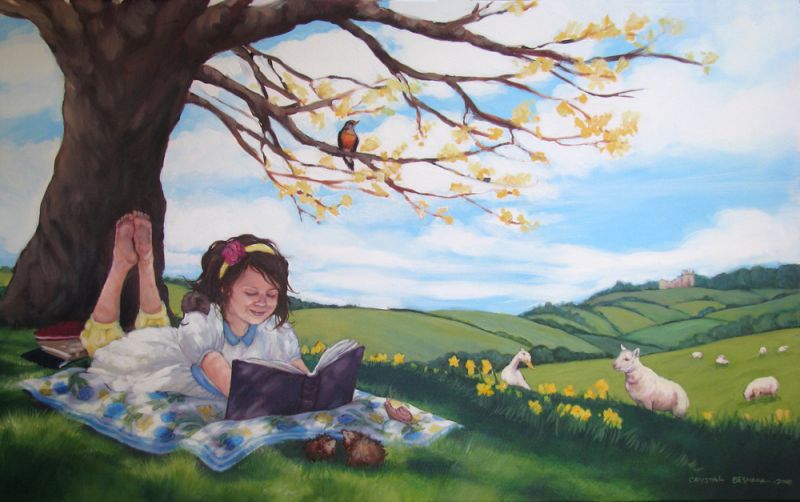
Ko se je moja vnukinja Sarah naučila brati, sem prosil, ali bi lahko sliko, na kateri bere svoji sestri Merini, postavili v otroško sobo v naši vaški knjižnici v čast njenega učenja brati. Sliko so obesili ob praznovanju enega najpomembnejših korakov v življenju, ki se zgodi v otroštvu.
 Knjižnica v Los Angelesu blizu naše hiše je nahranila mojo ljubezen do literature. Mama mi je brala. Do zadnje minute sva brala, da je knjiga na vrsti, potem pa sem na drsalkah odhitela v knjižnico, vedno sama. Toda gospa Laverne Perrin, moja učiteljica v sedmem razredu na šoli Bel Pasi, je bila tista, ki me je seznanila z veliko svetovno literaturo. Vsak teden smo se morali naučiti pesmico. Prebrala bi delo sira Walterja Scotta in v drugačnem duhu, 'Uncle Tom's Cabin; je bilo tisto, kjer smo se držali vsake besede. Prepričan sem, da nam je brala vse, kar je imela rada, saj se spominjam njene velike strasti do teh knjig. Vsaka zgodba je bila več kot njene besede: bila je celotno področje zgodovine, kulture, narave, filozofije, religije in psihologije. Zaradi te dediščine zdaj berem in preberem več knjig na dan, ki jih imam vse v svoji knjižnici.
Branje je eden najpomembnejših dogodkov v človekovem življenju, dogaja pa se že v otroštvu. Ste kdaj razmišljali o vseh veščinah, ki se morajo združiti, da lahko berete? Ta vznemirljivi dogodek je darilo bogov.
To, kar počnemo s tem darilom, pomaga določiti, kdo smo, in kot učitelj se počutim privilegiranega, da pomagam staršem otrok v vrtcu zgraditi temelje za produktivne državljane, ki odraščajo z ljubeznijo do branja. Upam, da se lahko praznovanja in obredi zgradijo okoli dogodka, ko se današnji otrok nauči brati. Toliko časa je trajalo, da sem spoznal, da je to čaroben trenutek, ki potrebuje priznanje.
Kako ste se naučili brati? Rad bi slišal tvojo zgodbo.
COMMUNITY REFLECTIONS
SHARE YOUR REFLECTION
12 PAST RESPONSES
My best friend taught me how to read. He was three years older than me. Every day after school in his first year he would come over and show me what he'd learned at school that day using the book Green Eggs and Ham. He died two years ago at age 58, I will miss him for the rest of my life.
I remember walking in to kindergarten and straight for the bookshelf. My beautiful new teacher (who was really 80 years old) said to my mother "oh I see we have a reader on our hands, how wonderful is that"? From that day forward, I have always considered myself just that "a reader" and have always lived up to the expectation of my kindergarten teacher. Thank you Mrs. Quaker!!
Satya Narain Goel
In India Ramayan written by Tulsidas is the most read book. For centuries, generations after generations, the women learned to read to enable them to read the story of Ram and Sita in Ramayan. Apart from religious and spritual side of the epic, which Ramayan is, it has made a tremendous contribution to the reading habits of women in India.
Satya Narain Goel, Jodhpur, Rajasthan. India
I cannot remember a time that I wasn't being read to by my parents. My mother had a gift for reading with accents and regional dialects which enthralled me and my siblings. I had numerous children's stories memorized and then I "read" those to my siblings (I have no recollection of the moment when the memorization became truly reading on my own). My father found children's books read over and over and over quite tedious, but he noticed that children love to sit with you and be read to, no matter what is being read (the special attention given the child is the most important part). So, he read what he liked aloud to me and thus, I heard the Wall Street Journal each evening and learned incredible language skills that have served me all my life! My vocabulary skills were enhanced all while I was having a wonderful time. Two of the ladies who babysat my siblings and me would bring stacks of books and read and read until they were hoarse and on the verge of losing their voices! We all three gathered on the couch and were enthralled all evening long. My, we were so blessed! I still love books and reading and stopping wherever there is a bookstore; bookstores even smell wonderful!
[Hide Full Comment]In Eastern India there is a annual festival called Saraswati Puja which revolves around the deity of learning, Saraswati. When a child is about 3 or 4 years old he or she sits down with other children of the same age and they are shown how to write the first alphabet in the Bengali script. Each child has her/ his own miniature handheld blackboard and chalk and it is a occasion of celebration that the child is progressing away from babyhood and getting ready for formal education. The child feels part of a group and seeing the adults reaction they are also enthusiastic about starting to read the alphabet.
Hi Betty,
My mother read to us from early on. She and I would sit in a big chair together, and she would read to me, annunciating each word clearly. So, I learned to read early on. she took delight in showing me off to the family at christmas time, when I recited "twas the night before christmas," from memory. I believe her strong focus on enunciation helped me learn how to read and spell well.
I was 4 years old. My mother was pregnant with my first little brother and she would take a hot bath every morning. I would sit on the bathroom floor with the newspaper spread out on the floor in front of me with my right hand on her tummy to feel the baby move. She would teach me about roots, prefixes and suffixes, how most words were Greek or Latin in origin. I would stumble through the article she chose and she taught me how to find meaning of words I didn't know through context. She was very strict and a very difficult woman to please, but she raised a true reader. I never read children's books. She never talked "baby talk". She felt that if you learn that way, then you would have to un-learn that to learn "real" language. I was an extremely gifted child and she challenged me, constantly. I don't ever remember anyone reading aloud to me, I read aloud to them.
Amazes me that people can remember when they learned to read. The earliest memory I know of is in second grade for me. I am sure I learned to read before then. Sorry.
Beautiful!
Books were my friends. My father was career Army so we moved every year until I was in high school. I learned to read early. My mother still talks about the day when I was in first grade and the teachers asked me to read a story to the third graders. In high school I spent my summers reading from books picked out from the Book mobile. I loved the Book mobile. I can still visualize the driver who would patiently help me find my books and the coolness of the air inside on those hot days. I read all of the available Agatha Christie novels that summer. Today I am the organizer of a neighborhood book club. We have 13 members. We all have been together for 10 years. We lost one member to cancer and we honor her memory by donating books to a needy cause. Reading has shaped my life.
I was four years old. My Grandmother Quigney taught me to read. Every day she would take a break from work cuddle up in her recliner by the living room window and read. Often she would read aloud to me from Reader's Digest or The Education of Hyman Kaplan or Cheaper by the Dozen. And she would read children's picture books, nursery rhymes and of course Winnie the Pooh. I would follow along trying to decipher the swirls on the page. And then one day it just clicked and I read a book about a pony who tries to keep up with the horses; how fitting. Thanks to my Grandmother's efforts I read Every book in my elementary school library. In adulthood (after jobs in women's health & cancer research), I was a Children's Librarian. I had the blessing of creating an entire program and helping thousands of children develop an appreciation for books and reading.
Today I am a Cause-Focused Storyteller & Literacy Advocate. I sold my home & possessions in 2005 to create/facilitate a volunteer literacy project in Belize; the initial thrust was book drives & reading activities. Since then I've donated programs for 33,000 children & trained 800 teachers how to use their own cultural stories in school. I've just returned from Ghana where I donated literacy training for librarians at 6 library/community centers. All because my Grandma instilled a Passion for books & taught me to read. Thank you for your Passion & sharing the Love of reading.
[Hide Full Comment]I learned to read in school, very early in the first grade. I loved the individual letters and their sounds, so I was using phonics before anyone had even coined the term. I like music and language seemed the same thing to me. The individual letter-noises could be combined to make familiar and unfamiliar words, so when I struck an unfamiliar word I knew that had happened, and wanted to learn what those sound patterns were for. It was all very easy and effortless. I was ready in the first grade, and those were the years before child care and kindergarten. We had a lot of kids in the first and second grades (in one room with one teacher) so I had lots of time to myself to play with the sound combinations and see where they went. I am glad I predated the hubbub of day care and kindergarten. We went to school because we were grown up enough to be allowed to, and it was a huge thrill!