
Betty Peck ở tuổi 92 tràn đầy vẻ đẹp rạng rỡ khiến người ta liên tưởng đến nàng tiên  những bà mẹ đỡ đầu và những khu vườn kỳ diệu. Đến thăm bà cũng giống như rơi xuống hang thỏ của Alice vậy. Một đường ray xe lửa với một đoàn tàu thật chạy quanh ngôi nhà Saratoga của bà. Có những bức tường phủ đầy cây thường xuân, những con đường quanh co điên rồ, những ngôi nhà trên cây, thậm chí cả một tòa tháp Rapunzel, và một giảng đường dưới những tán cây hoàn chỉnh với ban công Romeo và Juliet. Hàng trăm đứa trẻ đã chơi đùa trong con lạch đầy nắng ở đây, thích thú với cảm giác đất dưới đôi chân trần và vui mừng trong một thế giới tràn ngập sự sáng tạo, vẻ đẹp và sự kỳ diệu. Đây là thế giới mà Betty Peck đã tặng cho nhiều thế hệ trẻ em.
Và giờ đây, cô giáo tuyệt vời này có một dự án mới mà cô vô cùng hào hứng. Một dự án mà cô mô tả bằng chính lời của mình bên dưới, và bắt đầu bằng một câu hỏi đơn giản nhưng sâu sắc...
Tôi muốn biết bạn học đọc như thế nào.
Học đọc là điều quan trọng nhất xảy ra với chúng ta, và nó xảy ra (với hầu hết mọi người) trong thời thơ ấu. Chồng tôi, Willys Peck đã học đọc bằng “Phương pháp Pooh”. Sau đây là những lời của anh ấy về sự kiện tuyệt vời này:
Phương pháp học đọc của Pooh

Khi tôi còn nhỏ, bố mẹ tôi thường đọc sách cho tôi và anh trai tôi nghe. Những cuốn sách tôi thích nhất là Winnie the Pooh và The House at Pooh Corner của AA. Milne. Mặc dù tôi không cố gắng ghi nhớ những câu chuyện, nhưng tôi nhận ra rằng khi nghe chúng nhiều lần, tôi có thể đọc thuộc lòng những đoạn mở đầu. Một ngày nọ, khi nhìn vào cuốn sách và đọc thuộc lòng, tôi thấy mình học được nhiều từ hơn những từ thực sự đã ghi nhớ. Đúng lúc đó, tôi nhận ra mình đang đọc! Đó là lý do tại sao tôi gọi đó là học đọc theo Phương pháp Pooh.
Việc học đọc của tôi là điều quan trọng nhất xảy ra với tôi khi học lớp một; đó là điều giúp tôi trở thành con người như ngày hôm nay. Tôi đã viết điều này trong cuốn sách của mình: Giáo dục mẫu giáo – Giải phóng tiềm năng sáng tạo của trẻ em (Nhà xuất bản Hawthorne).
 Bà tôi kể cho tôi nghe tất cả những câu chuyện cổ tích và bài đồng dao. Thật may mắn cho đứa trẻ nào có được tất cả những lời lẽ của trí tuệ cổ xưa này. Đến lượt mình, tôi sẽ trở thành người kể chuyện cho anh chị em mình.
Tôi nhớ ngày tôi học đọc. Tôi cũng tin như John Steinbeck, “Có lẽ đó là nỗ lực lớn nhất mà con người thực hiện, và họ phải làm điều đó khi còn là một đứa trẻ.” Tôi nhớ ngày tôi mang cuốn sách bìa mềm về nhà để đọc cho mẹ tôi nghe khi tôi học lớp một. Tôi đã học đọc! Sự phấn khích của sự mong đợi được đọc cho mẹ tôi nghe vẫn còn ở trong tôi.
Trong ký ức của tôi, chúng tôi ngồi cùng nhau không xa cửa trước. Tôi đọc toàn bộ cuốn sách cho bà nghe với niềm vui và sự thích thú lớn lao. Khi tôi đọc xong, bà nói với tôi, "Bây giờ hãy đọc ngược lại". Bà không tin rằng tôi đã học đọc! Với niềm vui lớn hơn trước, tôi đọc toàn bộ cuốn sách ngược lại. Vào khoảnh khắc đó, tôi có cảm giác như mình đã trở thành chính mình. Tôi đã trở thành nhiều hơn những gì tôi nghĩ về bản thân mình. Bây giờ, tôi sẽ sử dụng từ 'siêu việt' cho dịp này, vì bây giờ tôi đã biết những gì mẹ tôi không thể biết. Tôi, và chỉ tôi, biết bí mật tuyệt vời này: Tôi đã học đọc. Tôi không cần một lễ kỷ niệm; học đọc đã là đủ lễ kỷ niệm rồi.
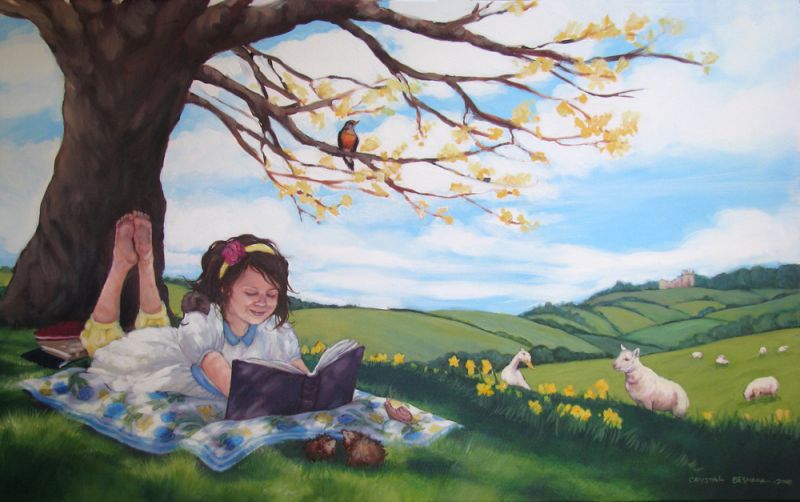
Khi cháu gái Sarah của tôi học đọc, tôi đã hỏi liệu có thể đặt một bức ảnh cháu đang đọc sách cho chị gái Merina trong phòng trẻ em tại thư viện làng của chúng tôi để kỷ niệm việc cháu học đọc không. Bức ảnh được treo để kỷ niệm một trong những bước quan trọng nhất của cuộc đời, tình cờ diễn ra trong thời thơ ấu.
 Chính thư viện ở Los Angeles gần nhà tôi đã nuôi dưỡng tình yêu văn học của tôi. Mẹ tôi thường đọc sách cho tôi nghe. Chúng tôi sẽ đọc đến phút cuối cùng khi cuốn sách đến hạn và sau đó tôi sẽ vội vã đến thư viện trên đôi giày trượt băng của mình, luôn luôn một mình. Nhưng chính cô Laverne Perrin, giáo viên lớp bảy của tôi tại Trường Bel Pasi, là người đã giới thiệu cho tôi nền văn học vĩ đại của thế giới. Chúng tôi phải học một bài thơ mỗi tuần. Cô ấy sẽ đọc tác phẩm của Sir Walter Scott, và theo một phong cách khác, 'Uncle Tom's Cabin; là một tác phẩm mà chúng tôi đã ghi nhớ từng từ. Tôi chắc chắn rằng cô ấy đã đọc cho chúng tôi nghe tất cả những điều cô ấy yêu thích, vì tôi nhớ niềm đam mê lớn lao của cô ấy đối với những cuốn sách này. Mỗi câu chuyện không chỉ là những từ ngữ của nó: đó là toàn bộ lĩnh vực lịch sử, văn hóa, thiên nhiên, triết học, tôn giáo và tâm lý học. Nhờ di sản này, giờ đây tôi đọc và đọc lại nhiều cuốn sách mỗi ngày, tất cả đều có trong thư viện của tôi.
Đọc là một trong những sự kiện quan trọng nhất trong cuộc đời của một con người, và nó diễn ra trong thời thơ ấu. Bạn đã bao giờ nghĩ đến tất cả các kỹ năng cần kết hợp lại để có thể đọc được chưa? Sự kiện thú vị này là một món quà từ các vị thần.
Những gì chúng ta làm với món quà này giúp xác định chúng ta là ai, và với tư cách là một giáo viên, tôi cảm thấy vinh dự khi giúp phụ huynh của trẻ mẫu giáo xây dựng nền tảng cho những công dân có ích lớn lên với tình yêu đọc sách. Tôi hy vọng rằng các lễ kỷ niệm và nghi lễ có thể được xây dựng xung quanh sự kiện khi một đứa trẻ ngày nay học đọc. Phải mất nhiều thời gian như vậy để nhận ra rằng đây là một khoảnh khắc kỳ diệu cần được công nhận.
Bạn học đọc như thế nào? Tôi rất muốn nghe câu chuyện của bạn.
COMMUNITY REFLECTIONS
SHARE YOUR REFLECTION
12 PAST RESPONSES
My best friend taught me how to read. He was three years older than me. Every day after school in his first year he would come over and show me what he'd learned at school that day using the book Green Eggs and Ham. He died two years ago at age 58, I will miss him for the rest of my life.
I remember walking in to kindergarten and straight for the bookshelf. My beautiful new teacher (who was really 80 years old) said to my mother "oh I see we have a reader on our hands, how wonderful is that"? From that day forward, I have always considered myself just that "a reader" and have always lived up to the expectation of my kindergarten teacher. Thank you Mrs. Quaker!!
Satya Narain Goel
In India Ramayan written by Tulsidas is the most read book. For centuries, generations after generations, the women learned to read to enable them to read the story of Ram and Sita in Ramayan. Apart from religious and spritual side of the epic, which Ramayan is, it has made a tremendous contribution to the reading habits of women in India.
Satya Narain Goel, Jodhpur, Rajasthan. India
I cannot remember a time that I wasn't being read to by my parents. My mother had a gift for reading with accents and regional dialects which enthralled me and my siblings. I had numerous children's stories memorized and then I "read" those to my siblings (I have no recollection of the moment when the memorization became truly reading on my own). My father found children's books read over and over and over quite tedious, but he noticed that children love to sit with you and be read to, no matter what is being read (the special attention given the child is the most important part). So, he read what he liked aloud to me and thus, I heard the Wall Street Journal each evening and learned incredible language skills that have served me all my life! My vocabulary skills were enhanced all while I was having a wonderful time. Two of the ladies who babysat my siblings and me would bring stacks of books and read and read until they were hoarse and on the verge of losing their voices! We all three gathered on the couch and were enthralled all evening long. My, we were so blessed! I still love books and reading and stopping wherever there is a bookstore; bookstores even smell wonderful!
[Hide Full Comment]In Eastern India there is a annual festival called Saraswati Puja which revolves around the deity of learning, Saraswati. When a child is about 3 or 4 years old he or she sits down with other children of the same age and they are shown how to write the first alphabet in the Bengali script. Each child has her/ his own miniature handheld blackboard and chalk and it is a occasion of celebration that the child is progressing away from babyhood and getting ready for formal education. The child feels part of a group and seeing the adults reaction they are also enthusiastic about starting to read the alphabet.
Hi Betty,
My mother read to us from early on. She and I would sit in a big chair together, and she would read to me, annunciating each word clearly. So, I learned to read early on. she took delight in showing me off to the family at christmas time, when I recited "twas the night before christmas," from memory. I believe her strong focus on enunciation helped me learn how to read and spell well.
I was 4 years old. My mother was pregnant with my first little brother and she would take a hot bath every morning. I would sit on the bathroom floor with the newspaper spread out on the floor in front of me with my right hand on her tummy to feel the baby move. She would teach me about roots, prefixes and suffixes, how most words were Greek or Latin in origin. I would stumble through the article she chose and she taught me how to find meaning of words I didn't know through context. She was very strict and a very difficult woman to please, but she raised a true reader. I never read children's books. She never talked "baby talk". She felt that if you learn that way, then you would have to un-learn that to learn "real" language. I was an extremely gifted child and she challenged me, constantly. I don't ever remember anyone reading aloud to me, I read aloud to them.
Amazes me that people can remember when they learned to read. The earliest memory I know of is in second grade for me. I am sure I learned to read before then. Sorry.
Beautiful!
Books were my friends. My father was career Army so we moved every year until I was in high school. I learned to read early. My mother still talks about the day when I was in first grade and the teachers asked me to read a story to the third graders. In high school I spent my summers reading from books picked out from the Book mobile. I loved the Book mobile. I can still visualize the driver who would patiently help me find my books and the coolness of the air inside on those hot days. I read all of the available Agatha Christie novels that summer. Today I am the organizer of a neighborhood book club. We have 13 members. We all have been together for 10 years. We lost one member to cancer and we honor her memory by donating books to a needy cause. Reading has shaped my life.
I was four years old. My Grandmother Quigney taught me to read. Every day she would take a break from work cuddle up in her recliner by the living room window and read. Often she would read aloud to me from Reader's Digest or The Education of Hyman Kaplan or Cheaper by the Dozen. And she would read children's picture books, nursery rhymes and of course Winnie the Pooh. I would follow along trying to decipher the swirls on the page. And then one day it just clicked and I read a book about a pony who tries to keep up with the horses; how fitting. Thanks to my Grandmother's efforts I read Every book in my elementary school library. In adulthood (after jobs in women's health & cancer research), I was a Children's Librarian. I had the blessing of creating an entire program and helping thousands of children develop an appreciation for books and reading.
Today I am a Cause-Focused Storyteller & Literacy Advocate. I sold my home & possessions in 2005 to create/facilitate a volunteer literacy project in Belize; the initial thrust was book drives & reading activities. Since then I've donated programs for 33,000 children & trained 800 teachers how to use their own cultural stories in school. I've just returned from Ghana where I donated literacy training for librarians at 6 library/community centers. All because my Grandma instilled a Passion for books & taught me to read. Thank you for your Passion & sharing the Love of reading.
[Hide Full Comment]I learned to read in school, very early in the first grade. I loved the individual letters and their sounds, so I was using phonics before anyone had even coined the term. I like music and language seemed the same thing to me. The individual letter-noises could be combined to make familiar and unfamiliar words, so when I struck an unfamiliar word I knew that had happened, and wanted to learn what those sound patterns were for. It was all very easy and effortless. I was ready in the first grade, and those were the years before child care and kindergarten. We had a lot of kids in the first and second grades (in one room with one teacher) so I had lots of time to myself to play with the sound combinations and see where they went. I am glad I predated the hubbub of day care and kindergarten. We went to school because we were grown up enough to be allowed to, and it was a huge thrill!