
Posta de sol a Uluru (foto de Martin Fisher/Flickr)

«Arribarà el dia en què l'home haurà de lluitar contra el soroll tan inexorablement com contra el còlera i la pesta». Així ho va dir el bacteriòleg guanyador del Premi Nobel Robert Koch el 1905. Un segle més tard, aquest dia s'ha acostat molt més. Avui dia, el silenci s'ha convertit en una espècie en perill d'extinció. Les nostres ciutats, els nostres suburbis, les nostres comunitats agrícoles, fins i tot els nostres parcs nacionals més extensos i remots no estan lliures d'intrusions de soroll humà. Tampoc hi ha alleujament ni tan sols al Pol Nord; els avions que salten de continent s'encarreguen d'això. A més, lluitar contra el soroll no és el mateix que preservar el silenci. Les nostres estratègies típiques contra el soroll (tapons per a les orelles, auriculars amb cancel·lació de soroll, fins i tot lleis de reducció del soroll) no ofereixen cap solució real perquè no fan res per ajudar-nos a reconnectar i escoltar la terra. I la terra parla.
Hem arribat a un moment de la història de la humanitat en què la nostra crisi ambiental global requereix que fem canvis permanents en el nostre estil de vida. Més que mai, necessitem tornar a enamorar-nos de la terra. El silenci és el nostre lloc de trobada.
És el nostre dret de naixement escoltar, en silenci i sense ser molestats, l'entorn natural i entendre'n els significats que puguem entendre. Molt abans dels sorolls de la humanitat, només hi havia els sons del món natural. Les nostres orelles van evolucionar perfectament afinades per escoltar aquests sons, sons que superen amb escreix el rang de la parla humana o fins i tot les nostres actuacions musicals més ambicioses: una brisa que indica un canvi de temps, els primers cants d'ocells de la primavera que anuncien un reverdiment de la terra i un retorn al creixement i la prosperitat, una tempesta que s'acosta que promet alleujament d'una sequera i el canvi de marea que ens recorda el ballet celestial. Totes aquestes experiències ens connecten amb la terra i amb el nostre passat evolutiu.
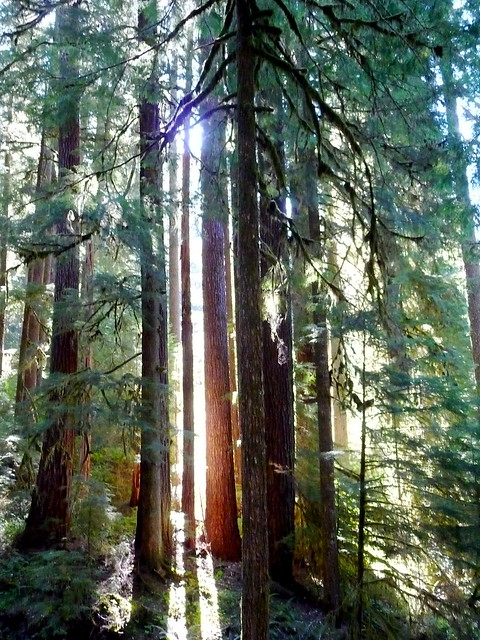
One Square Inch of Silence és un lloc a la selva tropical de Hoh , que forma part del Parc Nacional Olímpic, possiblement el lloc més tranquil dels Estats Units. Però també està en perill d'extinció, protegit només per una política que no és practicada pel mateix Servei de Parcs Nacionals ni està recolzada per lleis adequades. La meva esperança és que One Square Inch provoqui un despertar silenciós en tots aquells que estiguin disposats a convertir-se en autèntics oients.
Preservar el silenci natural és tan necessari i essencial com la preservació de les espècies , la restauració de l'hàbitat, la neteja de residus tòxics i la reducció del diòxid de carboni, per anomenar només alguns dels reptes immediats que ens enfrontem en aquest segle encara jove. La bona notícia és que rescatar el silenci pot ser molt més fàcil que abordar aquests altres problemes. Una sola llei significaria una millora enorme i immediata. Aquesta llei prohibiria a tots els avions volar sobre els nostres parcs nacionals més verges.
El silenci no és l'absència d'alguna cosa sinó la presència de tot. Viu aquí, profundament, a One Square Inch a la selva tropical de Hoh. És la presència del temps, impertorbable. Es pot sentir dins del pit. El silenci nodreix la nostra naturalesa, la nostra naturalesa humana, i ens fa saber qui som. Amb una ment més receptiva i una oïda més afinada, ens convertim en millors oients no només de la natura, sinó també els uns dels altres. El silenci es pot portar com les brases d'un foc. El silenci es pot trobar, i el silenci et pot trobar a tu. El silenci es pot perdre i també es pot recuperar. Però el silenci no es pot imaginar, tot i que la majoria de la gent ho pensa. Per experimentar la meravella del silenci que omple l'ànima, l'has d'escoltar.
El silenci és un so, molts, molts sons. N'he sentit més dels que puc comptar. El silenci és la cançó il·luminada per la lluna del coiot que signa l'aire, i la resposta de la seva parella. És el xiuxiueig de la neu que cau i que més tard es fondrà amb un ritme reggae sorprenent tan nítid que voldràs ballar-hi. És el so dels insectes alats pol·linitzadors que vibren melodies suaus mentre entren i surten defensivament de les branques dels pins per escapar temporalment de la brisa, una barreja de brunzit d'insectes i sospirs de pi que t'acompanyarà tot el dia. El silenci és l'estol que passa de cigales d'esquena castanya i tresors de pit vermell, que piulen i voletegen, recordant-te la teva pròpia curiositat.
Heu sentit la pluja últimament? La gran selva tropical del nord-oest d'Amèrica, com no és d'estranyar, és un lloc excel·lent per escoltar-la. Això és el que he sentit a One Square Inch of Silence. El principi de la temporada de pluges no és gens humit. Inicialment, innombrables llavors cauen dels arbres imponents. Aviat això va seguit pel suau aplaudiment de les fulles d'auró que s'assenten tan silenciosament com una manta d'hivern per a les llavors. Però aquest tranquil concert és només un preludi.
Quan arriba la primera de moltes grans tempestes, desencadenant el seu poderós himne, cada espècie d'arbre fa el seu propi so amb el vent i la pluja. Fins i tot la gota de pluja més gran potser no tocarà mai a terra. A gairebé 90 metres per sobre, a dalt de la capçada del bosc, les fulles i l'escorça absorbeixen gran part de la humitat... fins que aquesta esponja aèria se satura i les gotes es tornen a formar i baixen més enllà... colpejant branques més baixes i caient en cascada sobre cortines de molsa que absorbeixen el so... colpejant falgueres epífites... caient lleugerament sobre arbustos de nabius... i colpejant les fulles dures i fermes de salal... abans que, finalment, les gotes dobleguin inaudiblement les delicades fulles semblants a trèvol de l'acedera i degotin per filtrar-se a terra. Sentit de dia o de nit, aquest ballet líquid continuarà durant més d'una hora després que cessi la pluja real.
Recordant l'advertència de Robert Koch, desenvolupador del mètode científic que identifica les causes de les malalties, crec que la pèrdua incontrolada del silenci és un canari en una mina de carbó, una mena de món. Si no podem posicionar-nos aquí, si fem oïdes sordes al problema de la desaparició de la quietud natural, com podem esperar que ens anirà millor amb crisis ambientals més complexes?
COMMUNITY REFLECTIONS
SHARE YOUR REFLECTION
6 PAST RESPONSES
Amazing Article ! The contents so described are soul touching and capable enough to arouse the inner feeling of a sincere reader and a thinking man...This was the reason why our great saints and Hermits used to leave the cities and towns and migrated to the valleys and on the lap of great mountains to find the eternal truth...They were realizing that Silence is Golden and its sound is rhythmic but one need to have a pair of sensitive ears to listen those vibrant music of the nature....We do not need instruments to accompany and throat breaking noise or sound to catch anybody's attention. Instead we will learn the melodious songs of cuckoos, bellowing of cattle and similar sounds which will never break any body's journey for the silence. It is certainly soul searching to enter into a silent place and keep on listening and looking....one will automatically immerse in the soul of the mother nature..How beautiful that moment would be....It is to be experienced...So be away from the madding crowd at least once in a week.. and enjoy the silent songs of the nature..which is God Gifted to us...let us also explore and experience those mesmerizing impact of the silence and natures songs like a lullaby sung by our mother during our childhood.....
[Hide Full Comment]Beautiful! I live in SW Colorado surrounded by national forest & wilderness. I was struck on 9/11 when all the planes were grounded by the silence. In Bali they have a day a year when no planes fly, transportation & commercial activity stops. 24/7 commerce & non-stop human activity is a plague. I experience great blessings in having moments where the inner Silence of conscious awareness & the outer silence of moments here on the outskirts of so-called civilization I hear nothing but the sounds of nature, even their activity stills at times. The lake frozen over functions as a sound chamber making eerie mystifying sounds. Something occurs in body & soul in the naturalness. We are such amazing beings of consciousness, love & light and of human spirit, and creatures of the natural world also. Stop to smell the roses. Taste the wind. Touch the bark of a tree, the pine needles softness. See the natural light of sun, moon & stars. And listen, listen from the quietness within. Let natural sounds penetrate you & see how that feels. Contact with Silence within and without restores us. There's so much to be heard from the still small voice to the hum of the hummingbird, the robin heralding spring. Ultimately it all informs us as well as restores us. Listen up, those with ears to hear. The resounding Word is everywhere in everything.
[Hide Full Comment]Thank you, DailyGood and Gordon Hempton, for this beautiful piece. I will return to it often. And some day I hope to visit One Square Inch. Remembering Phillip Levine, who passed away Saturday -- here's a stanza from one his poems, Our Valley, that honors the immensity of silence. Thank you Phillip Levine. Peace all.
"You probably think I’m nuts saying the mountains have no word for ocean,
but if you live here you begin to believe they know everything.
They maintain that huge silence we think of as divine,
a silence that grows in autumn when snow falls
slowly between the pines and the wind dies
to less than a whisper and you can barely catch
your breath because you’re thrilled and terrified."
Thank you for debunking the misconception that silence is soundless. I think that, ultimately, listening to silence is mindfulness, meditation, presencing ...
I live in the Pacific
[Hide Full Comment]Northwest, and have all my 58 years. I teach in a local high school, and
get to share yoga as a PE elective. I have had a long standing focus for
yoga that it is quiet and without music, which is viewed at first by the students
as unfair and unheard of. Students at
first are frightened and surprised by how loud their personal thoughts are in
the silence of the yoga room, and then begin to crave the absence of
technology-driven distraction. I teach walking classes as a PE elective,
and the students are not allowed to listen to music and plug their ears with
earbuds or headphones (for ‘exercise’ motivation if you can imagine), nor even
have their phones with them (some drop the class because they are unable to do
this). We are located within the noise
pollution radius of the freeway, an expanding airport, and relentless increases
in coal/oil trains. We walk sidewalks
along streets with cars whizzing by, in close proximity to the hospital
helipad, and recently drones just overhead.
I do though get to observe students begin to recognize bird sounds from
chickadees, sparrows, juncos, hummingbirds, cedar waxwings, robins, seagulls,
crows, starlings, and then the local peregrine chatter and if really lucky eagle
cries from a hundred feet up as they circle toward the river. The students begin to discern the difference
between dog barks of ‘Hello, I’m here, can we play?’ and ‘Get away’. They start entertaining the idea they are no
longer invisible and recognize community members walking, biking, and jogging by
using eye contact and saying the word ‘hi’.
They have the opportunity to acquire listening and empathy skills as
they spend an hour with a walking partner who is conversing with them in close
contact. I love my job. The real reason I am writing, though, is that
over the years of indiscriminant development and significant paving of
farmland-open space-forested land in my beloved slice of heaven, there is a
slogan perpetuated by the local military base whose flights overhead have
stepped up significantly in the past ten years that this continuous low flying
military jet noise is the sound of freedom…and this includes the flights toward
the Olympic Peninsula, as well as over the San Juan Islands, toward Mt. Baker,
over a multitude of local lakes and streams, tiny communities, and wildlife of
all types. You may be able to tell I
would argue with this as we continue to raise generation after generation void
of connection with nature, quiet places and spaces, and opportunities for
silence.