
Sončni zahod v Uluruju (foto Martin Fisher/Flickr)

Prišel bo dan, ko se bo človek moral boriti proti hrupu tako neizprosno kot proti koleri in kugi.« Tako je dejal nobelov nagrajenec Robert Koch leta 1905. Danes je tišina postala ogrožena živalska vrsta, niti naši najbolj obsežni in oddaljeni nacionalni parki niso brez vdorov človeškega hrupa ni isto kot ohranjanje tišine. Naše tipične strategije proti hrupu – čepki za ušesa, slušalke za zmanjšanje hrupa – ne ponujajo nobene prave rešitve, ker nam ne pomagajo pri ponovnem povezovanju in poslušanju zemlje.
V človeški zgodovini smo dosegli čas, ko naša globalna okoljska kriza zahteva, da trajno spremenimo življenjski slog. Bolj kot kdaj koli prej se moramo znova zaljubiti v zemljo. Tišina je naše stičišče.
Naša prvotna pravica je, da tiho in nemoteno prisluhnemo naravnemu okolju in sprejemamo kakršne koli pomene. Dolgo pred hrupom človeštva so obstajali le zvoki naravnega sveta. Naša ušesa so se razvila popolnoma uglašena, da slišijo te zvoke – zvoke, ki daleč presegajo obseg človeškega govora ali celo naše najambicioznejše glasbene predstave: mimoidoči vetrič, ki nakazuje spremembo vremena, prvo pomladno petje ptic, ki naznanja ponovno ozelenitev zemlje ter vrnitev k rasti in blaginji, bližajoča se nevihta, ki obljublja olajšanje pred sušo, in spreminjajoča se plima, ki nas spominja na nebesni balet. Vse te izkušnje nas povezujejo z zemljo in našo evolucijsko preteklostjo.
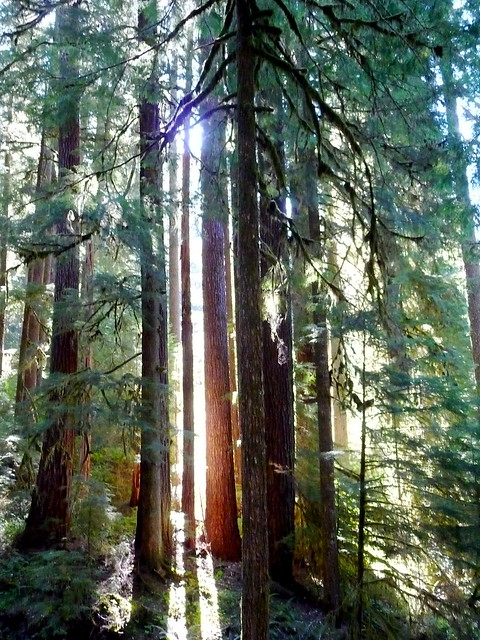
One Square Inch of Silence je kraj v deževnem gozdu Hoh , ki je del olimpijskega narodnega parka – verjetno najtišji kraj v Združenih državah. Toda tudi to je ogroženo, zaščiteno le s politiko, ki je ne izvaja niti sama služba narodnih parkov niti je ne podpirajo ustrezni zakoni. Upam, da bo One Square Inch sprožil tiho prebujenje pri vseh tistih, ki želijo postati pravi poslušalci.
Ohranjanje naravne tišine je enako potrebno in bistvenega pomena kot ohranjanje vrst , obnova habitatov, čiščenje strupenih odpadkov in zmanjšanje ogljikovega dioksida, če omenimo le nekaj neposrednih izzivov, s katerimi se soočamo v tem še mladem stoletju. Dobra novica je, da je reševanje tišine veliko lažje kot reševanje teh drugih težav. En sam zakon bi pomenil velik in takojšen napredek. Ta zakon bi vsem letalom prepovedal letenje nad našimi najbolj nedotaknjenimi nacionalnimi parki.
Tišina ni odsotnost nečesa, ampak prisotnost vsega. Živi tukaj, globoko v enem kvadratnem centimetru v deževnem gozdu Hoh. Je prisotnost časa, nemoteno. Lahko se čuti v prsih. Tišina neguje našo naravo, našo človeško naravo in nam daje vedeti, kdo smo. Če ostanemo z bolj dojemljivim umom in bolj uglašenim ušesom, postanemo boljši poslušalci ne samo narave, ampak drug drugega. Tišino lahko nosimo kot žerjavico iz ognja. Tišino je mogoče najti in tišina lahko najde tebe. Tišina se lahko izgubi in tudi obnovi. Tišine pa si ni mogoče predstavljati, čeprav večina tako misli. Če želite doživeti čudež tišine, ki vam nabrekne, jo morate slišati.
Tišina je zvok, veliko, veliko zvokov. Slišal sem več, kot lahko preštejem. Tišina je mesečina obsijana pesem kojota, ki piše zrak, in odgovor njegovega partnerja. To je padajoči šepet snega, ki se bo kasneje stopil z osupljivim reggae ritmom, tako ostrim, da boste želeli zaplesati nanj. To je zvok krilatih žuželk opraševalcev, ki vibrirajo mehke melodije, ko obrambno švigajo v borove veje in iz njih, da bi začasno ubežale vetriču, mešanica brenčanja žuželk in borovega vzdiha, ki vas bo spremljala ves dan. Tišina je mimoidoča jata kostanjevih čičkarjev in rdečeprsih orehov, ki s čivkanjem in prhutanjem spominjajo na lastno radovednost.
Ste v zadnjem času slišali dež? Velik ameriški severozahodni deževni gozd, kar ni presenetljivo, je odličen kraj za poslušanje. Tukaj je tisto, kar sem slišal pri One Square Inch of Silence. Prvi del deževne sezone sploh ni moker. Sprva z visokih dreves pade nešteto semen. Kmalu za tem sledi tihi aplavz plapolajočih javorjevih listov, ki se oh tako tiho usedejo kot zimska odeja za semena. Toda ta tihi koncert je le uvod.
Ko pride prva od mnogih močnih deževnih neviht, ki sprožijo svojo mogočno himno, vsaka drevesna vrsta oddaja svoj zvok v vetru in dežju. Tudi največja dežna kaplja morda nikoli ne pade na tla. Skoraj 300 čevljev nad glavo, visoko v krošnjah gozda, listi in lubje absorbirajo velik del vlage … dokler se ta zračna goba ne nasiči in se kapljice ponovno oblikujejo in spustijo dlje … udarjajo v nižje veje in padajo na zavese mahu, ki absorbirajo zvok … udarjajo po epifitskih praproti … rahlo ploskajo po grmovju huckleberry … in udarjajo po trdih, salal listi … preden kapljice končno neslišno upognejo nežne deteljaste liste kislice in pokapljajo v zemljo. Ta tekoči balet, slišan podnevi ali ponoči, se bo nadaljeval še več kot eno uro po dejanskem prenehanju dežja.
Ob upoštevanju opozorila Roberta Kocha, razvijalca znanstvene metode, ki ugotavlja vzroke bolezni, menim, da je nenadzorovana izguba tišine kanarček v rudniku premoga – globalni. Če tukaj ne moremo zavzeti stališča, če pustimo gluha ušesa za vprašanje izginjajoče naravne tišine, kako lahko pričakujemo, da nam bo šlo bolje pri kompleksnejših okoljskih krizah?
COMMUNITY REFLECTIONS
SHARE YOUR REFLECTION
6 PAST RESPONSES
Amazing Article ! The contents so described are soul touching and capable enough to arouse the inner feeling of a sincere reader and a thinking man...This was the reason why our great saints and Hermits used to leave the cities and towns and migrated to the valleys and on the lap of great mountains to find the eternal truth...They were realizing that Silence is Golden and its sound is rhythmic but one need to have a pair of sensitive ears to listen those vibrant music of the nature....We do not need instruments to accompany and throat breaking noise or sound to catch anybody's attention. Instead we will learn the melodious songs of cuckoos, bellowing of cattle and similar sounds which will never break any body's journey for the silence. It is certainly soul searching to enter into a silent place and keep on listening and looking....one will automatically immerse in the soul of the mother nature..How beautiful that moment would be....It is to be experienced...So be away from the madding crowd at least once in a week.. and enjoy the silent songs of the nature..which is God Gifted to us...let us also explore and experience those mesmerizing impact of the silence and natures songs like a lullaby sung by our mother during our childhood.....
[Hide Full Comment]Beautiful! I live in SW Colorado surrounded by national forest & wilderness. I was struck on 9/11 when all the planes were grounded by the silence. In Bali they have a day a year when no planes fly, transportation & commercial activity stops. 24/7 commerce & non-stop human activity is a plague. I experience great blessings in having moments where the inner Silence of conscious awareness & the outer silence of moments here on the outskirts of so-called civilization I hear nothing but the sounds of nature, even their activity stills at times. The lake frozen over functions as a sound chamber making eerie mystifying sounds. Something occurs in body & soul in the naturalness. We are such amazing beings of consciousness, love & light and of human spirit, and creatures of the natural world also. Stop to smell the roses. Taste the wind. Touch the bark of a tree, the pine needles softness. See the natural light of sun, moon & stars. And listen, listen from the quietness within. Let natural sounds penetrate you & see how that feels. Contact with Silence within and without restores us. There's so much to be heard from the still small voice to the hum of the hummingbird, the robin heralding spring. Ultimately it all informs us as well as restores us. Listen up, those with ears to hear. The resounding Word is everywhere in everything.
[Hide Full Comment]Thank you, DailyGood and Gordon Hempton, for this beautiful piece. I will return to it often. And some day I hope to visit One Square Inch. Remembering Phillip Levine, who passed away Saturday -- here's a stanza from one his poems, Our Valley, that honors the immensity of silence. Thank you Phillip Levine. Peace all.
"You probably think I’m nuts saying the mountains have no word for ocean,
but if you live here you begin to believe they know everything.
They maintain that huge silence we think of as divine,
a silence that grows in autumn when snow falls
slowly between the pines and the wind dies
to less than a whisper and you can barely catch
your breath because you’re thrilled and terrified."
Thank you for debunking the misconception that silence is soundless. I think that, ultimately, listening to silence is mindfulness, meditation, presencing ...
I live in the Pacific
[Hide Full Comment]Northwest, and have all my 58 years. I teach in a local high school, and
get to share yoga as a PE elective. I have had a long standing focus for
yoga that it is quiet and without music, which is viewed at first by the students
as unfair and unheard of. Students at
first are frightened and surprised by how loud their personal thoughts are in
the silence of the yoga room, and then begin to crave the absence of
technology-driven distraction. I teach walking classes as a PE elective,
and the students are not allowed to listen to music and plug their ears with
earbuds or headphones (for ‘exercise’ motivation if you can imagine), nor even
have their phones with them (some drop the class because they are unable to do
this). We are located within the noise
pollution radius of the freeway, an expanding airport, and relentless increases
in coal/oil trains. We walk sidewalks
along streets with cars whizzing by, in close proximity to the hospital
helipad, and recently drones just overhead.
I do though get to observe students begin to recognize bird sounds from
chickadees, sparrows, juncos, hummingbirds, cedar waxwings, robins, seagulls,
crows, starlings, and then the local peregrine chatter and if really lucky eagle
cries from a hundred feet up as they circle toward the river. The students begin to discern the difference
between dog barks of ‘Hello, I’m here, can we play?’ and ‘Get away’. They start entertaining the idea they are no
longer invisible and recognize community members walking, biking, and jogging by
using eye contact and saying the word ‘hi’.
They have the opportunity to acquire listening and empathy skills as
they spend an hour with a walking partner who is conversing with them in close
contact. I love my job. The real reason I am writing, though, is that
over the years of indiscriminant development and significant paving of
farmland-open space-forested land in my beloved slice of heaven, there is a
slogan perpetuated by the local military base whose flights overhead have
stepped up significantly in the past ten years that this continuous low flying
military jet noise is the sound of freedom…and this includes the flights toward
the Olympic Peninsula, as well as over the San Juan Islands, toward Mt. Baker,
over a multitude of local lakes and streams, tiny communities, and wildlife of
all types. You may be able to tell I
would argue with this as we continue to raise generation after generation void
of connection with nature, quiet places and spaces, and opportunities for
silence.