
Pôr do sol em Uluru (foto de Martin Fisher/Flickr)

"Chegará o dia em que o homem terá que lutar contra o ruído tão inexoravelmente quanto contra a cólera e a peste." Assim disse o bacteriologista ganhador do Prêmio Nobel, Robert Koch, em 1905. Um século depois, esse dia se aproximou muito. Hoje, o silêncio se tornou uma espécie em extinção. Nossas cidades, nossos subúrbios, nossas comunidades agrícolas, até mesmo nossos parques nacionais mais extensos e remotos não estão livres da intrusão do ruído humano. Nem mesmo no Polo Norte há alívio; jatos que cruzam continentes se encarregam disso. Além disso, combater o ruído não é o mesmo que preservar o silêncio. Nossas estratégias típicas contra o ruído — protetores auriculares, fones de ouvido com cancelamento de ruído, até mesmo leis de redução de ruído — não oferecem uma solução real porque não fazem nada para nos ajudar a nos reconectar e ouvir a terra. E a terra está falando.
Chegamos a um momento na história da humanidade em que nossa crise ambiental global exige mudanças permanentes em nosso estilo de vida. Mais do que nunca, precisamos nos reconectar com a natureza. O silêncio é o nosso ponto de encontro.
É nosso direito inato ouvir, em silêncio e sem perturbações, o ambiente natural e extrair os significados que pudermos. Muito antes dos ruídos da humanidade, existiam apenas os sons do mundo natural. Nossos ouvidos evoluíram perfeitamente sintonizados para ouvir esses sons — sons que ultrapassam em muito o alcance da fala humana ou mesmo nossas mais ambiciosas performances musicais: uma brisa passageira que indica uma mudança climática, o primeiro canto dos pássaros na primavera anunciando o reflorestamento da terra e o retorno ao crescimento e à prosperidade, uma tempestade se aproximando prometendo alívio da seca e a maré oscilante nos lembrando do balé celestial. Todas essas experiências nos reconectam à terra e ao nosso passado evolutivo.
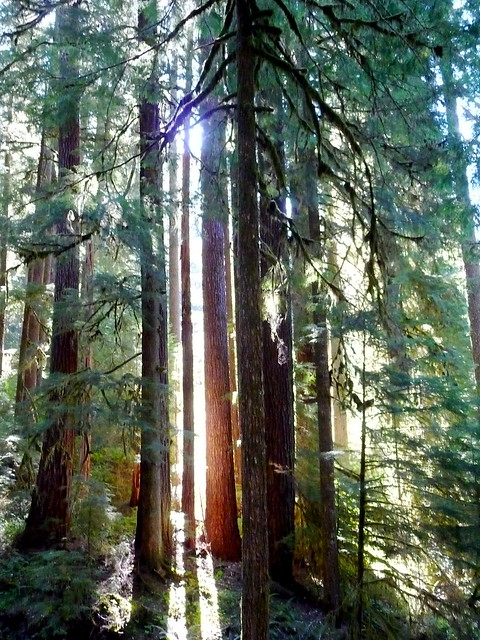
Um Centímetro Quadrado de Silêncio é um lugar na Floresta Tropical Hoh , parte do Parque Nacional Olympic — possivelmente o lugar mais silencioso dos Estados Unidos. Mas ele também está em perigo, protegido apenas por uma política que não é praticada pelo próprio Serviço Nacional de Parques nem amparada por leis adequadas. Minha esperança é que Um Centímetro Quadrado de Silêncio desperte um despertar silencioso em todos aqueles dispostos a se tornarem verdadeiros ouvintes.
Preservar o silêncio natural é tão necessário e essencial quanto a preservação de espécies , a restauração de habitats, a limpeza de resíduos tóxicos e a redução do dióxido de carbono, para citar apenas alguns dos desafios imediatos que enfrentamos neste século ainda jovem. A boa notícia é que resgatar o silêncio pode ser muito mais fácil do que lidar com esses outros problemas. Uma única lei representaria uma melhoria enorme e imediata. Essa lei proibiria todas as aeronaves de sobrevoarem nossos parques nacionais mais preservados.
O silêncio não é a ausência de algo, mas a presença de tudo. Ele reside aqui, profundamente, em One Square Inch, na Floresta Tropical Hoh. É a presença do tempo, imperturbável. Pode ser sentido no peito. O silêncio nutre nossa natureza, nossa natureza humana, e nos permite saber quem somos. Com uma mente mais receptiva e ouvidos mais atentos, tornamo-nos melhores ouvintes, não apenas da natureza, mas também uns dos outros. O silêncio pode ser carregado como brasas de uma fogueira. O silêncio pode ser encontrado e pode encontrar você. O silêncio pode ser perdido e também recuperado. Mas o silêncio não pode ser imaginado, embora a maioria das pessoas pense assim. Para experimentar a maravilha que o silêncio proporciona à alma, você precisa ouvi-lo.
O silêncio é um som, muitos, muitos sons. Já ouvi mais do que consigo contar. O silêncio é o canto do coiote ao luar, sinalizando para o ar, e a resposta de sua companheira. É o sussurro da neve caindo, que mais tarde derreterá com um ritmo reggae surpreendente, tão nítido que você vai querer dançar. É o som dos insetos alados polinizadores vibrando melodias suaves enquanto se lançam defensivamente para dentro e para fora dos galhos de pinheiro para escapar temporariamente da brisa, uma mistura de zumbido de inseto e suspiro de pinheiro que ficará com você o dia todo. O silêncio é o bando de chapins-de-costas-castanhas e trepadeiras-de-peito-vermelho que passa, chilreando e batendo as asas, lembrando você da sua própria curiosidade.
Você ouviu a chuva ultimamente? A grande floresta tropical do noroeste americano, sem surpresa, é um excelente lugar para ouvi-la. Eis o que ouvi em Um Centímetro Quadrado de Silêncio. O primeiro dia da estação chuvosa não é nada úmido. Inicialmente, inúmeras sementes caem das árvores imponentes. Logo em seguida, ouve-se o suave aplauso das folhas de bordo que tremulam, depositando-se silenciosamente como um cobertor de inverno para as sementes. Mas esse concerto silencioso é apenas um prelúdio.
Quando a primeira de muitas grandes tempestades chega, desencadeando seu poderoso hino, cada espécie de árvore produz seu próprio som no vento e na chuva. Mesmo as maiores gotas de chuva podem nunca atingir o solo. A quase 90 metros de altura, no alto da copa da floresta, as folhas e a casca absorvem grande parte da umidade… até que essa esponja aérea se sature e as gotas se reformem e desçam ainda mais… atingindo galhos mais baixos e caindo em cascata sobre musgos que absorvem o som… batendo em samambaias epífitas… pingando levemente em arbustos de mirtilo… e golpeando as folhas duras e firmes do salal… antes que, finalmente, as gotas dobrem inaudivelmente as delicadas folhas do trevo-azedo e gotejem, infiltrando-se no solo. Ouvido dia e noite, esse balé líquido continua por mais de uma hora após a chuva cessar.
Recordando o alerta de Robert Koch, criador do método científico que identifica as causas das doenças, acredito que a perda desenfreada do silêncio seja um sinal de alerta — um sinal global. Se não conseguirmos tomar uma posição aqui, se ignorarmos a questão do desaparecimento do silêncio natural, como podemos esperar lidar melhor com crises ambientais mais complexas?
COMMUNITY REFLECTIONS
SHARE YOUR REFLECTION
6 PAST RESPONSES
Amazing Article ! The contents so described are soul touching and capable enough to arouse the inner feeling of a sincere reader and a thinking man...This was the reason why our great saints and Hermits used to leave the cities and towns and migrated to the valleys and on the lap of great mountains to find the eternal truth...They were realizing that Silence is Golden and its sound is rhythmic but one need to have a pair of sensitive ears to listen those vibrant music of the nature....We do not need instruments to accompany and throat breaking noise or sound to catch anybody's attention. Instead we will learn the melodious songs of cuckoos, bellowing of cattle and similar sounds which will never break any body's journey for the silence. It is certainly soul searching to enter into a silent place and keep on listening and looking....one will automatically immerse in the soul of the mother nature..How beautiful that moment would be....It is to be experienced...So be away from the madding crowd at least once in a week.. and enjoy the silent songs of the nature..which is God Gifted to us...let us also explore and experience those mesmerizing impact of the silence and natures songs like a lullaby sung by our mother during our childhood.....
[Hide Full Comment]Beautiful! I live in SW Colorado surrounded by national forest & wilderness. I was struck on 9/11 when all the planes were grounded by the silence. In Bali they have a day a year when no planes fly, transportation & commercial activity stops. 24/7 commerce & non-stop human activity is a plague. I experience great blessings in having moments where the inner Silence of conscious awareness & the outer silence of moments here on the outskirts of so-called civilization I hear nothing but the sounds of nature, even their activity stills at times. The lake frozen over functions as a sound chamber making eerie mystifying sounds. Something occurs in body & soul in the naturalness. We are such amazing beings of consciousness, love & light and of human spirit, and creatures of the natural world also. Stop to smell the roses. Taste the wind. Touch the bark of a tree, the pine needles softness. See the natural light of sun, moon & stars. And listen, listen from the quietness within. Let natural sounds penetrate you & see how that feels. Contact with Silence within and without restores us. There's so much to be heard from the still small voice to the hum of the hummingbird, the robin heralding spring. Ultimately it all informs us as well as restores us. Listen up, those with ears to hear. The resounding Word is everywhere in everything.
[Hide Full Comment]Thank you, DailyGood and Gordon Hempton, for this beautiful piece. I will return to it often. And some day I hope to visit One Square Inch. Remembering Phillip Levine, who passed away Saturday -- here's a stanza from one his poems, Our Valley, that honors the immensity of silence. Thank you Phillip Levine. Peace all.
"You probably think I’m nuts saying the mountains have no word for ocean,
but if you live here you begin to believe they know everything.
They maintain that huge silence we think of as divine,
a silence that grows in autumn when snow falls
slowly between the pines and the wind dies
to less than a whisper and you can barely catch
your breath because you’re thrilled and terrified."
Thank you for debunking the misconception that silence is soundless. I think that, ultimately, listening to silence is mindfulness, meditation, presencing ...
I live in the Pacific
[Hide Full Comment]Northwest, and have all my 58 years. I teach in a local high school, and
get to share yoga as a PE elective. I have had a long standing focus for
yoga that it is quiet and without music, which is viewed at first by the students
as unfair and unheard of. Students at
first are frightened and surprised by how loud their personal thoughts are in
the silence of the yoga room, and then begin to crave the absence of
technology-driven distraction. I teach walking classes as a PE elective,
and the students are not allowed to listen to music and plug their ears with
earbuds or headphones (for ‘exercise’ motivation if you can imagine), nor even
have their phones with them (some drop the class because they are unable to do
this). We are located within the noise
pollution radius of the freeway, an expanding airport, and relentless increases
in coal/oil trains. We walk sidewalks
along streets with cars whizzing by, in close proximity to the hospital
helipad, and recently drones just overhead.
I do though get to observe students begin to recognize bird sounds from
chickadees, sparrows, juncos, hummingbirds, cedar waxwings, robins, seagulls,
crows, starlings, and then the local peregrine chatter and if really lucky eagle
cries from a hundred feet up as they circle toward the river. The students begin to discern the difference
between dog barks of ‘Hello, I’m here, can we play?’ and ‘Get away’. They start entertaining the idea they are no
longer invisible and recognize community members walking, biking, and jogging by
using eye contact and saying the word ‘hi’.
They have the opportunity to acquire listening and empathy skills as
they spend an hour with a walking partner who is conversing with them in close
contact. I love my job. The real reason I am writing, though, is that
over the years of indiscriminant development and significant paving of
farmland-open space-forested land in my beloved slice of heaven, there is a
slogan perpetuated by the local military base whose flights overhead have
stepped up significantly in the past ten years that this continuous low flying
military jet noise is the sound of freedom…and this includes the flights toward
the Olympic Peninsula, as well as over the San Juan Islands, toward Mt. Baker,
over a multitude of local lakes and streams, tiny communities, and wildlife of
all types. You may be able to tell I
would argue with this as we continue to raise generation after generation void
of connection with nature, quiet places and spaces, and opportunities for
silence.