
Uluru Sunset (picha na Martin Fisher/Flickr)

Siku itakuja ambapo mwanadamu atalazimika kupigana na kelele bila kuzuilika kama kipindupindu na tauni.” Hivyo alisema mshindi wa Tuzo ya Nobel bacteriologist Robert Koch katika 1905. Karne moja baadaye, siku hiyo imekaribia sana Leo ukimya umekuwa spishi iliyo hatarini kutoweka, hata mbuga zetu za kitaifa zilizoenea zaidi haziko huru kutoka kwa kelele za wanadamu Kuhifadhi ukimya. Mikakati yetu ya kawaida ya kuzuia kelele - vifunga masikioni, vipokea sauti vinavyobanwa kichwani, hata sheria za kupunguza kelele - hazitoi suluhu la kweli kwa sababu hazitusaidii kuunganisha tena na kusikiliza ardhi.
Tumefikia wakati katika historia ya mwanadamu ambapo shida yetu ya mazingira duniani inahitaji tufanye mabadiliko ya kudumu ya mtindo wa maisha. Zaidi ya hapo awali, tunahitaji kupenda tena ardhi. Kimya ni mahali petu pa kukutana.
Ni haki yetu ya kuzaliwa kusikiliza, kwa utulivu na bila usumbufu, kwa mazingira ya asili na kuchukua maana yoyote tunayoweza. Muda mrefu kabla ya kelele za wanadamu, kulikuwa na sauti tu za ulimwengu wa asili. Masikio yetu yameundwa vizuri ili kusikia sauti-sauti hizi zinazozidi kwa mbali aina mbalimbali za matamshi ya binadamu au hata maonyesho yetu ya muziki yenye shauku zaidi: upepo unaopita ambao unaonyesha mabadiliko ya hali ya hewa, nyimbo za kwanza za ndege za majira ya machipuko zinazotangaza ardhi kuwa ya kijani kibichi na kurudi kwa ukuaji na ustawi, dhoruba inayokaribia inayoahidi ahueni kutoka kwa hali ya hewa ya mvua inayotukumbusha. Matukio haya yote yanatuunganisha kurudi kwenye ardhi na kwa maisha yetu ya zamani ya mageuzi.
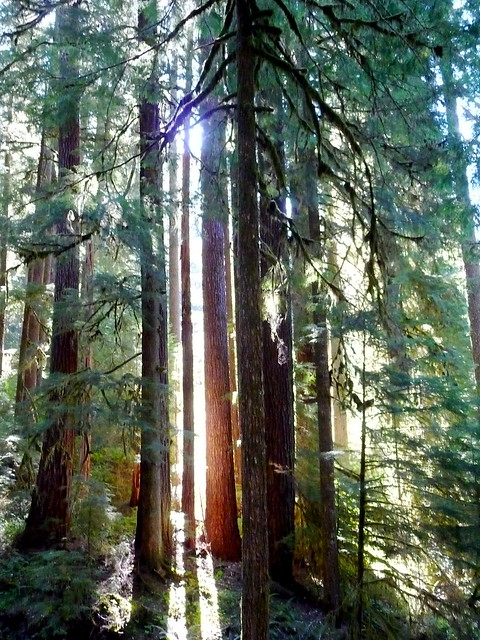
Inchi Moja ya Mraba ya Kimya ni mahali katika Msitu wa Mvua wa Hoh , sehemu ya Mbuga ya Kitaifa ya Olimpiki - bila shaka ni sehemu tulivu zaidi nchini Marekani. Lakini pia, iko hatarini, inalindwa tu na sera ambayo haitekelezwi na Huduma ya Hifadhi ya Kitaifa yenyewe wala kuungwa mkono na sheria za kutosha. Matumaini yangu ni kwamba Inchi Moja ya Mraba itaanzisha mwamko wa utulivu kwa wale wote walio tayari kuwa wasikilizaji wa kweli.
Kuhifadhi ukimya wa asili ni muhimu na muhimu kama vile uhifadhi wa spishi , urejeshaji wa makazi, usafishaji wa taka zenye sumu, na upunguzaji wa dioksidi kaboni, kutaja changamoto chache za haraka zinazotukabili katika karne hii ambayo bado mchanga. Habari njema ni kwamba ukimya wa kuokoa unaweza kuja kwa urahisi zaidi kuliko kushughulikia shida hizi zingine. Sheria moja ingeashiria uboreshaji mkubwa na wa haraka. Sheria hiyo ingepiga marufuku ndege zote kuruka juu ya mbuga zetu za kitaifa zilizo safi kabisa.
Kukaa kimya sio kutokuwepo kwa kitu bali uwepo wa kila kitu. Inaishi hapa, kwa kina, katika Inchi Moja ya Mraba katika Msitu wa Mvua wa Hoh. Ni uwepo wa wakati, usio na usumbufu. Inaweza kujisikia ndani ya kifua. Ukimya unakuza asili yetu, asili yetu ya kibinadamu, na hutufanya tujue sisi ni nani. Tukiachwa tukiwa na akili isikivu zaidi na sikio lililoshikamana zaidi, tunakuwa wasikilizaji bora sio tu wa asili bali kwa kila mmoja wetu. Ukimya unaweza kubebwa kama makaa kutoka kwa moto. Ukimya unaweza kupatikana, na ukimya unaweza kukupata. Ukimya unaweza kupotea na pia kurejeshwa. Lakini ukimya hauwezi kufikiria, ingawa watu wengi wanafikiria hivyo. Ili kupata maajabu ya uvimbe wa nafsi ya ukimya, lazima uisikie.
Ukimya ni sauti, sauti nyingi, nyingi. Nimesikia zaidi ya ninavyoweza kuhesabu. Ukimya ni wimbo wa mbalamwezi wa coyote akisaini hewa, na jibu la mwenzi wake. Ni mnong'ono wa theluji ambao baadaye utayeyuka kwa mdundo wa kushangaza wa reggae ambao utataka kuucheza. Ni sauti ya wadudu wachavushao wenye mabawa wanaotetemeka kwa sauti laini huku wakiruka kwa kujilinda na kutoka kwenye matawi ya misonobari ili kuepuka upepo kwa muda, mchanganyiko wa sauti ya wadudu na misonobari ambayo itabaki nawe siku nzima. Ukimya ni kundi linalopita la chickadees wanaoungwa mkono na chestnut na nuthachi zenye matiti mekundu, zinazolia na kupepea, zikikumbusha udadisi wako mwenyewe.
Je, umesikia mvua hivi majuzi? Msitu mkubwa wa mvua wa kaskazini-magharibi wa Amerika, haishangazi, ni mahali pazuri pa kusikiliza. Hivi ndivyo nilivyosikia kwenye Inchi Moja ya Mraba ya Kimya. Msimu wa kwanza wa mvua sio mvua hata kidogo. Hapo awali, mbegu nyingi huanguka kutoka kwa miti mirefu. Hili hufuatwa hivi karibuni na makofi laini ya majani ya mpera yanayopepea, ambayo hutulia kimya kimya kama blanketi la msimu wa baridi kwa mbegu. Lakini tamasha hili tulivu ni utangulizi tu.
Dhoruba ya kwanza kati ya dhoruba nyingi za mvua ifikapo, ikitoa wimbo wake wenye nguvu, kila aina ya mti hutoa sauti yake yenyewe katika upepo na mvua. Hata matone makubwa zaidi ya mvua hayawezi kamwe kupiga ardhi. Takriban futi 300 juu ya ardhi, juu ya mwavuli wa msitu, majani na gome hunyonya unyevu mwingi ... hadi sifongo hii ya angani inashiba na kushuka na kubadilika na kushuka chini zaidi ... ikipiga matawi ya chini na kushuka kwenye vinyesi vinavyofyonza sauti ... kugonga ferns ya epiphytic ... hatimaye, matone hayo yanapinda kwa njia isiyosikika majani maridadi kama karafuu ya chika ya kuni na kudondokea kuvuja ardhini. Kusikia mchana au usiku, ballet hii ya kioevu itaendelea kwa zaidi ya saa moja baada ya mvua halisi kukoma.
Nikikumbuka onyo la Robert Koch, msanidi wa mbinu ya kisayansi inayotambua visababishi vya magonjwa, ninaamini kuwa ukimya usiodhibitiwa ni canary katika mgodi wa makaa ya mawe-ulimwengu. Ikiwa hatuwezi kutoa msimamo hapa, ikiwa tutaziba sikio kwa suala la kutoweka kwa utulivu wa asili, tunawezaje kutarajia kuwa bora na migogoro ngumu zaidi ya mazingira?
COMMUNITY REFLECTIONS
SHARE YOUR REFLECTION
6 PAST RESPONSES
Amazing Article ! The contents so described are soul touching and capable enough to arouse the inner feeling of a sincere reader and a thinking man...This was the reason why our great saints and Hermits used to leave the cities and towns and migrated to the valleys and on the lap of great mountains to find the eternal truth...They were realizing that Silence is Golden and its sound is rhythmic but one need to have a pair of sensitive ears to listen those vibrant music of the nature....We do not need instruments to accompany and throat breaking noise or sound to catch anybody's attention. Instead we will learn the melodious songs of cuckoos, bellowing of cattle and similar sounds which will never break any body's journey for the silence. It is certainly soul searching to enter into a silent place and keep on listening and looking....one will automatically immerse in the soul of the mother nature..How beautiful that moment would be....It is to be experienced...So be away from the madding crowd at least once in a week.. and enjoy the silent songs of the nature..which is God Gifted to us...let us also explore and experience those mesmerizing impact of the silence and natures songs like a lullaby sung by our mother during our childhood.....
[Hide Full Comment]Beautiful! I live in SW Colorado surrounded by national forest & wilderness. I was struck on 9/11 when all the planes were grounded by the silence. In Bali they have a day a year when no planes fly, transportation & commercial activity stops. 24/7 commerce & non-stop human activity is a plague. I experience great blessings in having moments where the inner Silence of conscious awareness & the outer silence of moments here on the outskirts of so-called civilization I hear nothing but the sounds of nature, even their activity stills at times. The lake frozen over functions as a sound chamber making eerie mystifying sounds. Something occurs in body & soul in the naturalness. We are such amazing beings of consciousness, love & light and of human spirit, and creatures of the natural world also. Stop to smell the roses. Taste the wind. Touch the bark of a tree, the pine needles softness. See the natural light of sun, moon & stars. And listen, listen from the quietness within. Let natural sounds penetrate you & see how that feels. Contact with Silence within and without restores us. There's so much to be heard from the still small voice to the hum of the hummingbird, the robin heralding spring. Ultimately it all informs us as well as restores us. Listen up, those with ears to hear. The resounding Word is everywhere in everything.
[Hide Full Comment]Thank you, DailyGood and Gordon Hempton, for this beautiful piece. I will return to it often. And some day I hope to visit One Square Inch. Remembering Phillip Levine, who passed away Saturday -- here's a stanza from one his poems, Our Valley, that honors the immensity of silence. Thank you Phillip Levine. Peace all.
"You probably think I’m nuts saying the mountains have no word for ocean,
but if you live here you begin to believe they know everything.
They maintain that huge silence we think of as divine,
a silence that grows in autumn when snow falls
slowly between the pines and the wind dies
to less than a whisper and you can barely catch
your breath because you’re thrilled and terrified."
Thank you for debunking the misconception that silence is soundless. I think that, ultimately, listening to silence is mindfulness, meditation, presencing ...
I live in the Pacific
[Hide Full Comment]Northwest, and have all my 58 years. I teach in a local high school, and
get to share yoga as a PE elective. I have had a long standing focus for
yoga that it is quiet and without music, which is viewed at first by the students
as unfair and unheard of. Students at
first are frightened and surprised by how loud their personal thoughts are in
the silence of the yoga room, and then begin to crave the absence of
technology-driven distraction. I teach walking classes as a PE elective,
and the students are not allowed to listen to music and plug their ears with
earbuds or headphones (for ‘exercise’ motivation if you can imagine), nor even
have their phones with them (some drop the class because they are unable to do
this). We are located within the noise
pollution radius of the freeway, an expanding airport, and relentless increases
in coal/oil trains. We walk sidewalks
along streets with cars whizzing by, in close proximity to the hospital
helipad, and recently drones just overhead.
I do though get to observe students begin to recognize bird sounds from
chickadees, sparrows, juncos, hummingbirds, cedar waxwings, robins, seagulls,
crows, starlings, and then the local peregrine chatter and if really lucky eagle
cries from a hundred feet up as they circle toward the river. The students begin to discern the difference
between dog barks of ‘Hello, I’m here, can we play?’ and ‘Get away’. They start entertaining the idea they are no
longer invisible and recognize community members walking, biking, and jogging by
using eye contact and saying the word ‘hi’.
They have the opportunity to acquire listening and empathy skills as
they spend an hour with a walking partner who is conversing with them in close
contact. I love my job. The real reason I am writing, though, is that
over the years of indiscriminant development and significant paving of
farmland-open space-forested land in my beloved slice of heaven, there is a
slogan perpetuated by the local military base whose flights overhead have
stepped up significantly in the past ten years that this continuous low flying
military jet noise is the sound of freedom…and this includes the flights toward
the Olympic Peninsula, as well as over the San Juan Islands, toward Mt. Baker,
over a multitude of local lakes and streams, tiny communities, and wildlife of
all types. You may be able to tell I
would argue with this as we continue to raise generation after generation void
of connection with nature, quiet places and spaces, and opportunities for
silence.