
Uluru naplemente (fotó: Martin Fisher/Flickr)

„Eljön a nap, amikor az embernek olyan könyörtelenül kell majd küzdenie a zaj ellen, mint a kolerával és a pestissel.” – mondta a Nobel-díjas bakteriológus, Robert Koch 1905-ben. Egy évszázaddal később ez a nap sokkal közelebb került. Ma a csend veszélyeztetett fajjá vált. Városaink, külvárosaink, mezőgazdasági közösségeink, sőt, legkiterjedtebb és legeldugottabb nemzeti parkjaink sem mentesek az emberi zajbehatolástól. Még az Északi-sarkon sincs enyhülés; kontinensről kontinensre repülve repülőgépek gondoskodnak erről. Sőt, a zaj elleni küzdelem nem ugyanaz, mint a csend megőrzése. A tipikus zajcsökkentő stratégiáink – füldugók, zajszűrő fejhallgatók, sőt, még a zajcsökkentő törvények is – nem kínálnak valódi megoldást, mert semmit sem tesznek azért, hogy segítsenek újra kapcsolódni és meghallani a földet. És a föld beszél.
Elérkeztünk az emberiség történelmének egy olyan pontjához, amikor a globális környezeti válság miatt tartós életmódváltásra van szükségünk. Most minden eddiginél fontosabb, hogy újra beleszeressünk a földbe. A csend a találkozóhelyünk.
Születési jogunk, hogy csendben és zavartalanul hallgassuk a természeti környezetet, és bármilyen jelentést is tulajdonítsunk neki. Jóval az emberiség zajai előtt csak a természet hangjai léteztek. Fülünk tökéletesen hangolttá fejlődött, hogy meghallja ezeket a hangokat – olyan hangokat, amelyek messze meghaladják az emberi beszéd vagy akár a legambiciózusabb zenei előadásaink tartományát is: egy áthaladó szellő, amely az időjárás változását jelzi, a tavasz első madárdalai, amelyek a föld újrazöldülését és a növekedéshez és jóléthez való visszatérést hirdetik, egy közeledő vihar, amely enyhülést ígér az aszály után, és a változó dagály, amely az égi balettre emlékeztet minket. Mindezek a tapasztalatok visszakapcsolnak minket a földhöz és evolúciós múltunkhoz.
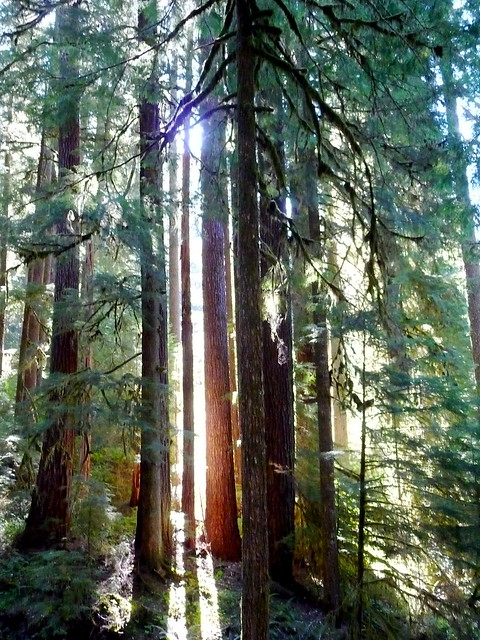
A One Square Inch of Silence egy hely a Hoh esőerdőben , az Olympic Nemzeti Parkban – vitathatatlanul az Egyesült Államok legcsendesebb helyén. De ez is veszélyeztetett, csak egy olyan politika védi, amelyet sem maga a Nemzeti Park Szolgálat nem gyakorol, sem megfelelő törvények nem támogatnak. Remélem, hogy a One Square Inch csendes ébredést indít el mindazokban, akik hajlandóak igazi hallgatósággá válni.
A természetes csend megőrzése ugyanolyan szükséges és alapvető fontosságú, mint a fajok megőrzése , az élőhelyek helyreállítása, a mérgező hulladékok eltávolítása és a szén-dioxid-kibocsátás csökkentése, hogy csak néhányat említsünk a még mindig fiatal évszázadunkban előttünk álló közvetlen kihívások közül. A jó hír az, hogy a csend megmentése sokkal könnyebb, mint ezeknek a más problémáknak a kezelése. Egyetlen törvény hatalmas és azonnali javulást jelezne. Ez a törvény megtiltaná az összes repülőgépnek, hogy átrepüljön a legérintetlenebb nemzeti parkjaink felett.
A csend nem valaminek a hiánya, hanem mindennek a jelenléte. Itt él, mélyen, a Hoh esőerdő Egy Négyzethüvelyknyi részén. Az idő zavartalan jelenléte. Érezhető a mellkasunkban. A csend táplálja természetünket, emberi természetünket, és tudatja velünk, hogy kik vagyunk. Fogékonyabb elmével és jobban odafigyelő füllel nemcsak a természet, hanem egymás jobb hallgatóivá válunk. A csendet úgy lehet hordozni, mint a parázs a tűzből. A csendet meg lehet találni, és a csend megtalálhat minket. A csendet el lehet veszíteni és vissza is lehet szerezni. De a csendet nem lehet elképzelni, bár a legtöbb ember így gondolja. Ahhoz, hogy megtapasztald a csend lélekmelengető csodáját, meg kell hallanod.
A csend egy hang, sok-sok hang. Többet hallottam már, mint amennyit megszámolni tudok. A csend a prérifarkas holdfényes dala, ahogy a levegőt jelképezi, és párja válasza. A hó hullásának suttogása, amely később elolvad egy lenyűgöző reggae ritmussal, olyan frissen, hogy táncolni akarsz majd rá. A beporzó szárnyas rovarok hangja, amelyek lágy dallamokat rezegtetnek, miközben védekezően ki-be cikáznak a fenyőágak közül, hogy ideiglenesen elmeneküljenek a szellő elől; a rovarzümmögés és a fenyősóhaj keveréke, amely egész nap elkísér majd. A csend a gesztenyebarna cinegék és vörösnyakú csuszkák elvonuló csapata, amelyek csiripelnek és verdesnek, emlékeztetve a saját kíváncsiságodra.
Hallottál mostanában esőt? Amerika hatalmas északnyugati esőerdője, ami nem meglepő, kiváló hely a hallgatózásra. Íme, amit a One Square Inch of Silence rendezvényen hallottam. Az esős évszak első szakasza egyáltalán nem nedves. Kezdetben számtalan mag hullik a magas fákról. Ezt hamarosan a rebbenő juharlevelek halk tapsa követi, amelyek olyan csendben hullanak le, mint egy téli takaró a magoknak. De ez a csendes koncert csupán előjáték.
Amikor a sok nagy eső közül az első megérkezik, és szabadjára engedi hatalmas himnuszát, minden fafaj a saját hangját adja ki a szélben és az esőben. Még a legnagyobb esőcseppek is talán soha nem érik el a földet. Majdnem 90 méterrel a fejünk felett, magasan az erdő lombkoronájában a levelek és a kéreg elnyelik a nedvesség nagy részét... amíg ez a levegőben lévő szivacs át nem telítődik, és a cseppek újraformálódnak, és tovább ereszkednek... az alsó ágakra csapódnak, és a hangelnyelő mohafüggönyökre hullanak... epifiton páfrányokon kopognak... halkan pottyannak az áfonyabokrokra... és a kemény, szilárd szalmalevelekre csapódnak... mielőtt végül a cseppek hallhatatlanul meghajlítják a sóska finom, lóhereszerű leveleit, és lecsepegve a földbe szivárognak. Éjjel-nappal hallható, ez a folyékony balett több mint egy órán át folytatódik, miután az eső ténylegesen elállt.
Emlékeztetve Robert Koch, a betegségek okainak azonosítására szolgáló tudományos módszer kidolgozójának figyelmeztetésére, úgy vélem, hogy a csend ellenőrizetlen elvesztése olyan, mint egy kanári a szénbányában – globálisan. Ha nem tudunk kiállni, ha süket fülekre találunk az eltűnő természetes csend kérdésére, hogyan várhatjuk el, hogy jobban boldoguljunk a bonyolultabb környezeti válságokkal?
COMMUNITY REFLECTIONS
SHARE YOUR REFLECTION
6 PAST RESPONSES
Amazing Article ! The contents so described are soul touching and capable enough to arouse the inner feeling of a sincere reader and a thinking man...This was the reason why our great saints and Hermits used to leave the cities and towns and migrated to the valleys and on the lap of great mountains to find the eternal truth...They were realizing that Silence is Golden and its sound is rhythmic but one need to have a pair of sensitive ears to listen those vibrant music of the nature....We do not need instruments to accompany and throat breaking noise or sound to catch anybody's attention. Instead we will learn the melodious songs of cuckoos, bellowing of cattle and similar sounds which will never break any body's journey for the silence. It is certainly soul searching to enter into a silent place and keep on listening and looking....one will automatically immerse in the soul of the mother nature..How beautiful that moment would be....It is to be experienced...So be away from the madding crowd at least once in a week.. and enjoy the silent songs of the nature..which is God Gifted to us...let us also explore and experience those mesmerizing impact of the silence and natures songs like a lullaby sung by our mother during our childhood.....
[Hide Full Comment]Beautiful! I live in SW Colorado surrounded by national forest & wilderness. I was struck on 9/11 when all the planes were grounded by the silence. In Bali they have a day a year when no planes fly, transportation & commercial activity stops. 24/7 commerce & non-stop human activity is a plague. I experience great blessings in having moments where the inner Silence of conscious awareness & the outer silence of moments here on the outskirts of so-called civilization I hear nothing but the sounds of nature, even their activity stills at times. The lake frozen over functions as a sound chamber making eerie mystifying sounds. Something occurs in body & soul in the naturalness. We are such amazing beings of consciousness, love & light and of human spirit, and creatures of the natural world also. Stop to smell the roses. Taste the wind. Touch the bark of a tree, the pine needles softness. See the natural light of sun, moon & stars. And listen, listen from the quietness within. Let natural sounds penetrate you & see how that feels. Contact with Silence within and without restores us. There's so much to be heard from the still small voice to the hum of the hummingbird, the robin heralding spring. Ultimately it all informs us as well as restores us. Listen up, those with ears to hear. The resounding Word is everywhere in everything.
[Hide Full Comment]Thank you, DailyGood and Gordon Hempton, for this beautiful piece. I will return to it often. And some day I hope to visit One Square Inch. Remembering Phillip Levine, who passed away Saturday -- here's a stanza from one his poems, Our Valley, that honors the immensity of silence. Thank you Phillip Levine. Peace all.
"You probably think I’m nuts saying the mountains have no word for ocean,
but if you live here you begin to believe they know everything.
They maintain that huge silence we think of as divine,
a silence that grows in autumn when snow falls
slowly between the pines and the wind dies
to less than a whisper and you can barely catch
your breath because you’re thrilled and terrified."
Thank you for debunking the misconception that silence is soundless. I think that, ultimately, listening to silence is mindfulness, meditation, presencing ...
I live in the Pacific
[Hide Full Comment]Northwest, and have all my 58 years. I teach in a local high school, and
get to share yoga as a PE elective. I have had a long standing focus for
yoga that it is quiet and without music, which is viewed at first by the students
as unfair and unheard of. Students at
first are frightened and surprised by how loud their personal thoughts are in
the silence of the yoga room, and then begin to crave the absence of
technology-driven distraction. I teach walking classes as a PE elective,
and the students are not allowed to listen to music and plug their ears with
earbuds or headphones (for ‘exercise’ motivation if you can imagine), nor even
have their phones with them (some drop the class because they are unable to do
this). We are located within the noise
pollution radius of the freeway, an expanding airport, and relentless increases
in coal/oil trains. We walk sidewalks
along streets with cars whizzing by, in close proximity to the hospital
helipad, and recently drones just overhead.
I do though get to observe students begin to recognize bird sounds from
chickadees, sparrows, juncos, hummingbirds, cedar waxwings, robins, seagulls,
crows, starlings, and then the local peregrine chatter and if really lucky eagle
cries from a hundred feet up as they circle toward the river. The students begin to discern the difference
between dog barks of ‘Hello, I’m here, can we play?’ and ‘Get away’. They start entertaining the idea they are no
longer invisible and recognize community members walking, biking, and jogging by
using eye contact and saying the word ‘hi’.
They have the opportunity to acquire listening and empathy skills as
they spend an hour with a walking partner who is conversing with them in close
contact. I love my job. The real reason I am writing, though, is that
over the years of indiscriminant development and significant paving of
farmland-open space-forested land in my beloved slice of heaven, there is a
slogan perpetuated by the local military base whose flights overhead have
stepped up significantly in the past ten years that this continuous low flying
military jet noise is the sound of freedom…and this includes the flights toward
the Olympic Peninsula, as well as over the San Juan Islands, toward Mt. Baker,
over a multitude of local lakes and streams, tiny communities, and wildlife of
all types. You may be able to tell I
would argue with this as we continue to raise generation after generation void
of connection with nature, quiet places and spaces, and opportunities for
silence.