
Sonnenuntergang am Uluru (Foto von Martin Fisher/Flickr)

„Der Tag wird kommen, an dem der Mensch den Lärm ebenso unerbittlich bekämpfen muss wie Cholera und Pest“, sagte der Nobelpreisträger und Bakteriologe Robert Koch im Jahr 1905. Ein Jahrhundert später ist dieser Tag viel näher gerückt. Heute ist die Stille zu einer bedrohten Art geworden. Unsere Städte, unsere Vororte, unsere Bauerngemeinden, selbst unsere ausgedehntesten und abgelegensten Nationalparks sind nicht frei von menschlichem Lärm. Und nicht einmal am Nordpol gibt es Erleichterung; dafür sorgen Kontinent-hüpfende Jets. Darüber hinaus ist die Bekämpfung des Lärms nicht dasselbe wie die Bewahrung der Stille. Unsere typischen Anti-Lärm-Strategien – Ohrstöpsel, Kopfhörer mit Lärmunterdrückung, sogar Lärmschutzgesetze – bieten keine wirkliche Lösung, weil sie uns nicht dabei helfen, uns wieder mit der Natur zu verbinden und ihr zuzuhören. Und die Natur spricht.
Wir befinden uns in einer Phase der Menschheitsgeschichte, in der die globale Umweltkrise dauerhafte Veränderungen unseres Lebensstils erfordert. Mehr denn je müssen wir uns wieder in die Natur verlieben. Die Stille ist unser Treffpunkt.
Es ist unser Geburtsrecht, der Natur still und ungestört zu lauschen und sie nach unseren eigenen Vorstellungen zu interpretieren. Lange vor den Geräuschen der Menschheit gab es nur die Klänge der Natur. Unsere Ohren haben sich perfekt darauf eingestellt, diese Klänge zu hören – Klänge, die weit über die Reichweite menschlicher Sprache oder selbst unserer anspruchsvollsten musikalischen Darbietungen hinausgehen: eine vorbeiziehende Brise, die einen Wetterwechsel ankündigt, der erste Vogelgesang des Frühlings, der die Wiederergrünung des Landes und die Rückkehr zu Wachstum und Wohlstand ankündigt, ein aufziehender Sturm, der Linderung nach einer Dürre verspricht, und die wechselnden Gezeiten, die uns an das himmlische Ballett erinnern. All diese Erfahrungen verbinden uns mit dem Land und unserer evolutionären Vergangenheit.
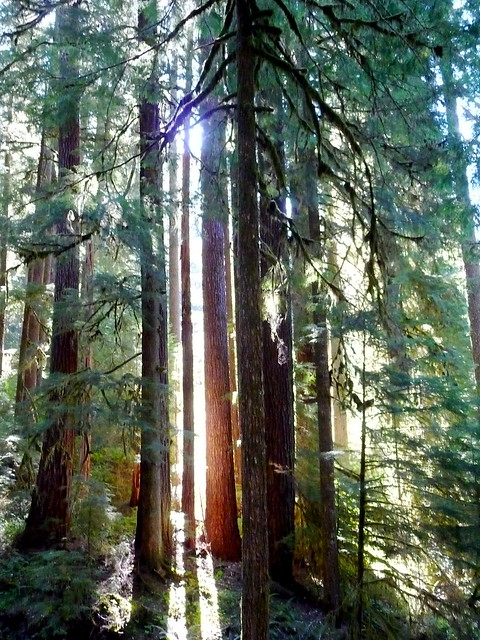
One Square Inch of Silence ist ein Ort im Hoh-Regenwald , einem Teil des Olympic-Nationalparks – dem wohl ruhigsten Ort der Vereinigten Staaten. Doch auch dieser ist gefährdet und wird nur durch eine Politik geschützt, die weder vom National Park Service selbst praktiziert noch durch entsprechende Gesetze gestützt wird. Ich hoffe, dass One Square Inch bei all jenen, die bereit sind, wahre Zuhörer zu werden, ein stilles Erwachen auslösen wird.
Der Schutz der natürlichen Stille ist ebenso notwendig und unerlässlich wie Artenschutz , Lebensraumrestaurierung, die Beseitigung von Giftmüll und die Reduzierung des Kohlendioxidausstoßes – um nur einige der unmittelbaren Herausforderungen zu nennen, denen wir in diesem noch jungen Jahrhundert gegenüberstehen. Die gute Nachricht ist, dass die Rettung der Stille viel einfacher sein kann als die Bewältigung dieser anderen Probleme. Ein einziges Gesetz würde eine enorme und sofortige Verbesserung bedeuten. Dieses Gesetz würde allen Flugzeugen das Überfliegen unserer unberührtesten Nationalparks verbieten.
Stille ist nicht die Abwesenheit von etwas, sondern die Anwesenheit von allem. Sie lebt hier, tief in der Tiefe, auf einem Quadratzentimeter im Hoh-Regenwald. Sie ist die Gegenwart der Zeit, ungestört. Man spürt sie in der Brust. Stille nährt unsere Natur, unsere menschliche Natur, und lässt uns erkennen, wer wir sind. Mit einem empfänglicheren Geist und einem feineren Gehör können wir nicht nur der Natur, sondern auch einander besser zuhören. Stille kann getragen werden wie Glut eines Feuers. Stille kann gefunden werden, und Stille kann dich finden. Stille kann verloren gehen und wiedergefunden werden. Doch Stille kann man sich nicht vorstellen, auch wenn die meisten das glauben. Um das berührende Wunder der Stille zu erleben, muss man sie hören.
Stille ist ein Geräusch, viele, viele Geräusche. Ich habe mehr gehört, als ich zählen kann. Stille ist der mondhelle Gesang des Kojoten, der durch die Luft singt, und die Antwort seines Partners. Es ist das fallende Flüstern des Schnees, der später mit einem erstaunlichen Reggae-Rhythmus schmilzt, so klar, dass man dazu tanzen möchte. Es ist das Geräusch bestäubender geflügelter Insekten, die sanft vibrieren, während sie zur Abwehr zwischen den Kiefernzweigen hin- und herflitzen, um der Brise vorübergehend zu entkommen – eine Mischung aus Insektensummen und Kiefernseufzen, die einen den ganzen Tag begleiten wird. Stille ist der vorbeiziehende Schwarm von Kastanienmeisen und Rotkehl-Kleibern, die zwitschern und flattern und einen an die eigene Neugier erinnern.
Haben Sie in letzter Zeit den Regen gehört? Der große Regenwald im Nordwesten Amerikas ist, wenig überraschend, ein hervorragender Ort zum Lauschen. Folgendes habe ich bei One Square Inch of Silence gehört: Der erste Tag der Regenzeit ist überhaupt nicht nass. Zunächst fallen unzählige Samen von den hoch aufragenden Bäumen. Bald darauf folgt der sanfte Applaus flatternder Ahornblätter, die sich ganz leise als Winterdecke über die Samen legen. Doch dieses stille Konzert ist nur ein Vorspiel.
Wenn der erste von vielen großen Regenstürmen eintrifft und seine gewaltige Hymne entfesselt, erzeugt jede Baumart im Wind und Regen ihren eigenen Klang. Selbst die größten Regentropfen erreichen möglicherweise nie den Boden. Fast 90 Meter über uns, hoch oben im Blätterdach des Waldes, nehmen Blätter und Rinde einen Großteil der Feuchtigkeit auf … bis dieser Luftschwamm gesättigt ist und sich die Tropfen neu bilden und weiter herabsinken … auf untere Äste treffen und auf schallschluckende Moosvorhänge herabprasseln … auf epiphytische Farne klopfen … leise auf Heidelbeersträucher plumpsen … und auf die harten, festen Salalblätter schlagen … bevor die Tropfen schließlich unhörbar die zarten, kleeartigen Blätter des Waldsauerklees biegen und in den Boden tropfen. Dieses flüssige Ballett, das man Tag und Nacht hören kann, dauert noch über eine Stunde an, nachdem der Regen aufgehört hat.
In Erinnerung an die Warnung Robert Kochs, des Entwicklers der wissenschaftlichen Methode zur Identifizierung von Krankheitsursachen, glaube ich, dass der unkontrollierte Verlust der Stille ein weltweites Problem darstellt. Wenn wir hier nicht Stellung beziehen können und das Problem der schwindenden natürlichen Ruhe ignorieren, wie können wir dann erwarten, bei komplexeren Umweltkrisen besser zurechtzukommen?
COMMUNITY REFLECTIONS
SHARE YOUR REFLECTION
6 PAST RESPONSES
Amazing Article ! The contents so described are soul touching and capable enough to arouse the inner feeling of a sincere reader and a thinking man...This was the reason why our great saints and Hermits used to leave the cities and towns and migrated to the valleys and on the lap of great mountains to find the eternal truth...They were realizing that Silence is Golden and its sound is rhythmic but one need to have a pair of sensitive ears to listen those vibrant music of the nature....We do not need instruments to accompany and throat breaking noise or sound to catch anybody's attention. Instead we will learn the melodious songs of cuckoos, bellowing of cattle and similar sounds which will never break any body's journey for the silence. It is certainly soul searching to enter into a silent place and keep on listening and looking....one will automatically immerse in the soul of the mother nature..How beautiful that moment would be....It is to be experienced...So be away from the madding crowd at least once in a week.. and enjoy the silent songs of the nature..which is God Gifted to us...let us also explore and experience those mesmerizing impact of the silence and natures songs like a lullaby sung by our mother during our childhood.....
[Hide Full Comment]Beautiful! I live in SW Colorado surrounded by national forest & wilderness. I was struck on 9/11 when all the planes were grounded by the silence. In Bali they have a day a year when no planes fly, transportation & commercial activity stops. 24/7 commerce & non-stop human activity is a plague. I experience great blessings in having moments where the inner Silence of conscious awareness & the outer silence of moments here on the outskirts of so-called civilization I hear nothing but the sounds of nature, even their activity stills at times. The lake frozen over functions as a sound chamber making eerie mystifying sounds. Something occurs in body & soul in the naturalness. We are such amazing beings of consciousness, love & light and of human spirit, and creatures of the natural world also. Stop to smell the roses. Taste the wind. Touch the bark of a tree, the pine needles softness. See the natural light of sun, moon & stars. And listen, listen from the quietness within. Let natural sounds penetrate you & see how that feels. Contact with Silence within and without restores us. There's so much to be heard from the still small voice to the hum of the hummingbird, the robin heralding spring. Ultimately it all informs us as well as restores us. Listen up, those with ears to hear. The resounding Word is everywhere in everything.
[Hide Full Comment]Thank you, DailyGood and Gordon Hempton, for this beautiful piece. I will return to it often. And some day I hope to visit One Square Inch. Remembering Phillip Levine, who passed away Saturday -- here's a stanza from one his poems, Our Valley, that honors the immensity of silence. Thank you Phillip Levine. Peace all.
"You probably think I’m nuts saying the mountains have no word for ocean,
but if you live here you begin to believe they know everything.
They maintain that huge silence we think of as divine,
a silence that grows in autumn when snow falls
slowly between the pines and the wind dies
to less than a whisper and you can barely catch
your breath because you’re thrilled and terrified."
Thank you for debunking the misconception that silence is soundless. I think that, ultimately, listening to silence is mindfulness, meditation, presencing ...
I live in the Pacific
[Hide Full Comment]Northwest, and have all my 58 years. I teach in a local high school, and
get to share yoga as a PE elective. I have had a long standing focus for
yoga that it is quiet and without music, which is viewed at first by the students
as unfair and unheard of. Students at
first are frightened and surprised by how loud their personal thoughts are in
the silence of the yoga room, and then begin to crave the absence of
technology-driven distraction. I teach walking classes as a PE elective,
and the students are not allowed to listen to music and plug their ears with
earbuds or headphones (for ‘exercise’ motivation if you can imagine), nor even
have their phones with them (some drop the class because they are unable to do
this). We are located within the noise
pollution radius of the freeway, an expanding airport, and relentless increases
in coal/oil trains. We walk sidewalks
along streets with cars whizzing by, in close proximity to the hospital
helipad, and recently drones just overhead.
I do though get to observe students begin to recognize bird sounds from
chickadees, sparrows, juncos, hummingbirds, cedar waxwings, robins, seagulls,
crows, starlings, and then the local peregrine chatter and if really lucky eagle
cries from a hundred feet up as they circle toward the river. The students begin to discern the difference
between dog barks of ‘Hello, I’m here, can we play?’ and ‘Get away’. They start entertaining the idea they are no
longer invisible and recognize community members walking, biking, and jogging by
using eye contact and saying the word ‘hi’.
They have the opportunity to acquire listening and empathy skills as
they spend an hour with a walking partner who is conversing with them in close
contact. I love my job. The real reason I am writing, though, is that
over the years of indiscriminant development and significant paving of
farmland-open space-forested land in my beloved slice of heaven, there is a
slogan perpetuated by the local military base whose flights overhead have
stepped up significantly in the past ten years that this continuous low flying
military jet noise is the sound of freedom…and this includes the flights toward
the Olympic Peninsula, as well as over the San Juan Islands, toward Mt. Baker,
over a multitude of local lakes and streams, tiny communities, and wildlife of
all types. You may be able to tell I
would argue with this as we continue to raise generation after generation void
of connection with nature, quiet places and spaces, and opportunities for
silence.