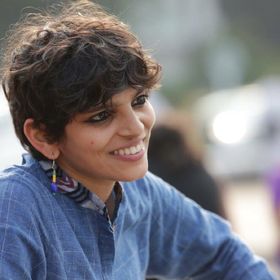
 Over the Past Ten years, Sach

So all of these kids are sitting right now with all of that questioning, all that grief, and not trusting the system. They’re saying, “I never get to know anything that’s happened.” So then we did an underground project, just managing emotions, talking with the children, taking them towards more positive expression - through drawing, painting, all of this stuff.
RICHARD: This is your creative response to the restrictions. It must be incredibly difficult.
SACHI: Yeah. It’s so frustrating that the people in charge think that when we talk about things, more will come up, so they don’t want to deal with it. They don’t have the capacity to deal with it. But actually, if you dealt with it, then all the frustration, anger and other things will not come up.
RICHARD: This has to be an endemic problem in such institutions.
SACHI: Of course.
PAVI: What kind of things do you do for helping someone navigate internally?
SACHI: The idea is to keep it forward looking and not go back into the past and moan because then it’s very easy to be a victim. But it’s important to acknowledge the past, too. So for example, we do this Step In, Step Out game.There’s a study that says there are three categories in which we face adverse childhood experiences. So we created a game out of it. You read out a statement, and then the kids step in or step out. Right? For example, we say, “If you never felt loved by your family, then step in.” Or, “If anyone in your family is in prison or has been in prison, step in.”
“If you felt like your father abandoned you or you did not receive the love of your parents, then you step in.” Poverty is a big one. So, “If you had to struggle for your day-to-day daily bread, then step in.” Those kind of things.
Most kids don’t even know that they faced these childhood experiences because of which they made these choices. This is a way for them to make sense of that. The idea is not to just keep it in the head. So there’s movement; there’s art; there is the visual aspect, and there’s the feeling and the sensations piece. The idea is to tie all of these things together.
We also do a session called “River of Life” where the children have to draw their river-of-life. Then they have to write what were their experiences of people and places that shaped their life, or made their river turn a certain way, and eventually made them land up here today.
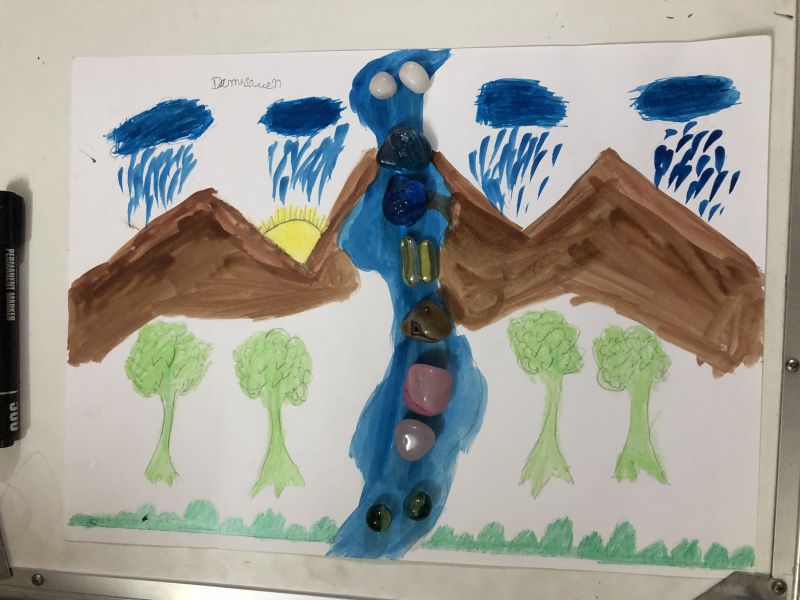
Then after that, the next thing is to say, "Okay. We’re here. This is an opportunity for us to change. You can make this an opportunity to change the course of your life, no matter whether you’ve committed a crime or not..” Like I draw this path and then I draw one line going up and one line going down. I say, “You are walking and you met with an accident, that’s why you’re in this facility. You have the option of going on the same path again, going downwards. Or you can go upwards, make this accident the best moment of your life, and use this time to make a change in yourself.” These are some of the conversations that we have with them.
RICHARD: It’s interesting the Step In, Step Out game. Whatever environment a child grows up in, they think it’s just how it is. So this gives them a new perspective. It seems like an amazing gift.
SACHI: Yeah. So that’s one part, and also, when we’re designing programs, the idea is to not do circles on sadness. We do circles on happiness. Sadness will show up as a part of that. And we keep focusing on what you have, rather than what you don’t have. Western psychology keeps labeling things. “Oh, you are ADD.” But there’s also something else, which is the gift of ADD. So how do you look at that?
RICHARD: And that’s a beautiful reframe. Do you have thoughts or examples of some of the gifts that can come from suffering, from deprivation. There’s a famous Leonard Cohen song:”Ring the bells that still can ring, There is a crack in everything. That’s how the light gets in.”
SACHI: Wow. Yeah. Personally, I feel that suffering, like whatever bad happens in your life, can be a teaching moment. We see that in a lot of kids. Like we have some of the children who say, “I'm so grateful I was here.” We have one boy who is the first graduate in his family. He would have been a dropout, but the fact that he completed his education was because of the facility. We have a lot of kids saying they were glad they were here.
RICHARD: I understand that you have some relationship with John Malloy? Do you want to say something about that?
SACHI: Yeah, it’s a deep relationship. John is a mentor, a guide. He’s more of a guide for my own journey, so that’s been really amazing. Most of the time, we’re talking about the kids, or the team, or how to do something, but it’s actually not that. And of course, John’s way of doing things is so unique and beautiful. It helps me not get lost in a term I learned recently - “the non-profit industrial complex.” Or getting lost in how to grow the organization. His focus is always on, “How do I support children’s journeys? Who do I need to be?” He’s always reflecting that.
Pavi: You’re in India and he’s here in California, What’s your process of connecting with him?
SACHI: John and I have a monthly call. Usually, whenever I'm facing some issues, I write to him and share what’s going on. He’ll immediately respond or call back.
PAVI: Yeah. There’s one of the gifts of technology. And you know John, right? Each email he sends is like a little poem. And it’s often non-linear, too. Not like, “This is your problem. Here’s the solution.” I think when John looks at Sachi, he sees so much of the spirit of what he did at the Foundry, and what he continues to embody in the parent groups and grief circles that he runs. I think it’s more than a mentorship. It’s a very deep and unique exchange, a mirroring that enriches both, equally.
SACHI: Yeah.
RICHARD: If we could only have more Sachis and more Johns - what a huge gift that would be. I don’t know how we actually move in that direction, but sharing this helps.
PAVI: What I’ve felt, listening to the rawness of these stories, is that there’s no easy answer. A lot of it is sitting in the middle of the chaos and just kind of being present to it. Most of us in the outside world, we have so many pretenses in our social experience. So many ways of delivering false promises or being a little less than sincere. And there’s something in the stream of your work, Sachi ---there’s something very naked about it. You’re in this raw, very real place and you have to confront that in yourself, right? Like you said, the kids know when you’re bluffing. The way you bring forward the stories of these children, and the way you bring forward your own experience-- it gives us a glimpse of what sincere living can look like.
When you’re willing to sit with people in that way, it’s not pretty. But there is such a deep sacredness to that process. I don’t know if that makes sense or not, but I feel it very strongly.
SACHI: The way I define this work of entering institutions is easy, but the situation of the children in the institution is difficult. It’s difficult because any facility strips you away from being human. Right? That’s the problem.
So yes, I think the beauty is in the rawness of the lives of the children, and of everything. The beauty is in the paradox of how somebody can have nothing, and yet can be so kind and giving. How there can be so much anger, pain and evil, how can someone commit a murder or rape? There’s nothing good in those actions, but then in that same person, you see the light. You see the good things they’re capable of, and they you show that they’re capable of good. When you let everything come together then transformation and change happen.
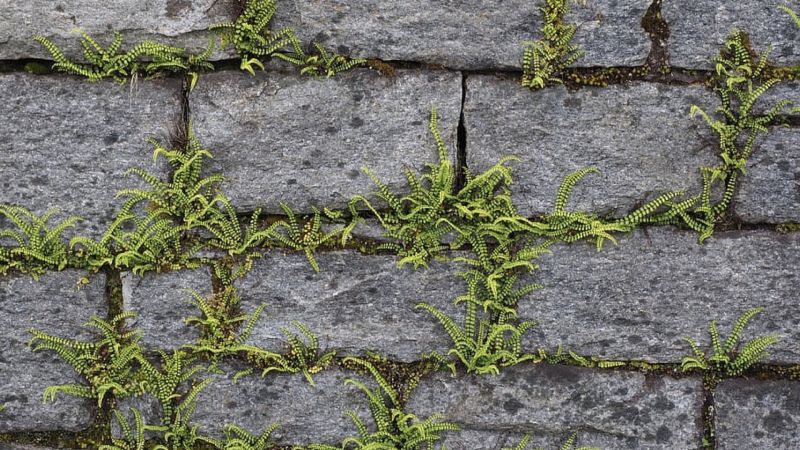
So, I often think of what I see over there - those rocks and how the plants are growing in between the cracks. In India, you see this so much. You see a wall, and suddenly you’ll see a tree growing out of that, or little flowers. I feel like our work is that. The institution is this rock wall, the cement blocks, and if we can just grow through the cracks, that would be beautiful. This work is actually breathing life into these rocks.
COMMUNITY REFLECTIONS
SHARE YOUR REFLECTION
1 PAST RESPONSES
Always a blessing to revisit people and places of infinite blessing—encouragement to persevere in kindness, love and compassion.