
Et si nous mesurions la richesse en termes de vie et de la façon dont nous la servons ?
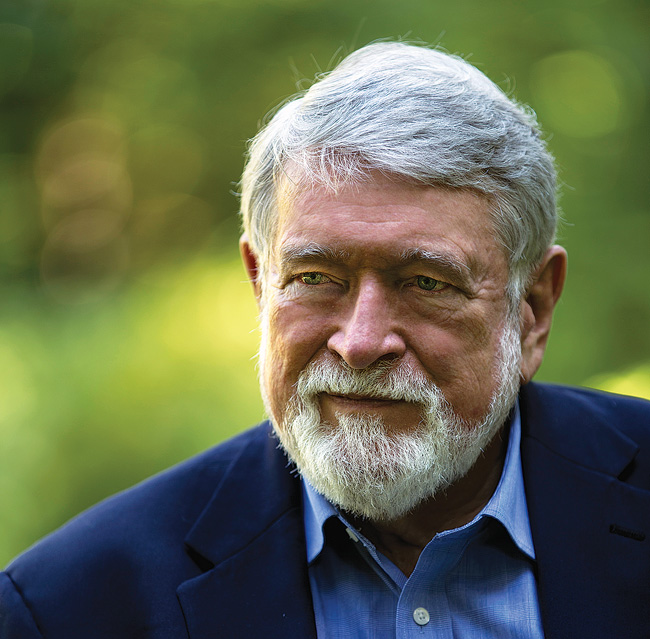
David Korten a débuté sa carrière professionnelle comme professeur à la Harvard Business School, avec pour mission de sortir de la pauvreté les populations en difficulté des pays du tiers monde en partageant les secrets de la réussite des entreprises américaines. Pourtant, après deux décennies passées à appliquer ses stratégies de développement organisationnel dans des pays aussi éloignés que l'Éthiopie, le Nicaragua et les Philippines, Korten a changé d'avis. En 1995, il a écrit le best-seller « Quand les entreprises gouvernent le monde » , suivi d'une série d'ouvrages qui ont contribué à la naissance du mouvement connu sous le nom de « Nouvelle Économie », un appel à remplacer la domination des entreprises transnationales par des économies locales, le contrôle, la propriété et l'autonomie.
Ce mois-ci, Korten, également cofondateur et président du conseil d'administration de YES!, publie un nouveau livre qui invite les lecteurs à repenser leur relation à la Terre – et même à toute la création, de la plus petite particule quantique à l'univers tout entier. Le monde a besoin d'une « nouvelle histoire », affirme-t-il. « Si la plupart des espèces, y compris Homo sapiens, veulent survivre, nous devons reconnaître la Terre comme un être vivant. » Korten a évoqué sa métamorphose en cours avec Dean Paton, rédacteur en chef de YES!
Dean Paton : Dites-moi comment quelqu’un qui était un spécialiste de la gestion organisationnelle, puis un leader d’opinion de la nouvelle économie, a fait ce saut vers ce qui est autant une proposition spirituelle que politique : que la Terre est un organisme vivant, que nous sommes tous essentiellement une partie de cette grande forme de vie.
« La question est la suivante : faisons-nous partie de la nature ? Ou en sommes-nous séparés ? »
David Korten : En fait, ce n'est pas si difficile, une fois qu'on se place dans le cadre de la Terre vivante, de comprendre que la Terre est essentiellement une organisation d'organismes vivants créant et maintenant les conditions essentielles à la vie. Si vous êtes un expert en organisation, ou un théoricien, cela soulève une question fascinante : comment ces millions d'organismes travaillent-ils de concert pour maintenir la vie ?
Paton : Comme si tout avait une intelligence et un but ? Quel est le rapport avec votre nouveau livre, Change the Story, Change the Future ?
Korten : Le nouveau livre établit une juxtaposition entre la vieille histoire de « l'Argent et des Marchés Sacrés » et celle, émergente, de « la Vie Sacrée et la Terre Vivante ». Ce sont deux cadres totalement différents qui mènent à deux façons radicalement différentes de penser l'organisation de la société. Soit on voit la vie comme un moyen de gagner de l'argent, soit on voit l'argent comme un simple chiffre utile pour tenir des comptes au service de la vie, mais sans valeur en soi. Adhérer à l'histoire de « l'Argent et des Marchés Sacrés » selon laquelle l'argent est richesse et clé du bonheur nous enferme dans un servage forcé à la domination des entreprises.
Paton : Vous dites que c'est le modèle de développement traditionnel, ou le capitalisme transnational, qui nuit à la Terre en tant que communauté vivante, non seulement aux humains, mais à toutes les formes de vie. Pourtant, nous dépendons tous de l'argent, de l'économie de marché. Pensez-vous vraiment que nous pouvons simplement mettre fin à cette dépendance ?
Korten : Nous continuerons d'utiliser l'argent et les marchés, mais nous ôterons à Wall Street le contrôle de la création et de l'allocation monétaires. Il fut un temps, aux États-Unis, où la plupart de nos institutions financières étaient locales. Cela signifiait essentiellement que les communautés locales pouvaient créer leur propre crédit, ou leur propre monnaie, en fonction de leurs besoins. Nous dépendions toujours des banques, mais le processus était beaucoup plus démocratique.
Paton : Comme le bâtiment et le prêt de George Bailey dans La vie est belle .
« Nous, les humains, vivons d’histoires. »
Korten : Exactement. Si davantage d'argent circulait dans nos communautés plutôt que dans les casinos de Wall Street, cela faciliterait l'organisation locale pour répondre à davantage de besoins économiques avec les ressources locales. Le contrôle de l'argent est le mécanisme ultime de contrôle social dans une société où la plupart des individus dépendent de l'argent pour leurs besoins fondamentaux : nourriture, eau, logement, chauffage, transports, loisirs. Cela nous amène au mouvement de la simplicité volontaire : moins je dépends de l'argent, plus je suis libre. Il faut comprendre que le seul but légitime de l'économie est de servir la vie, de nous servir en tant qu'êtres vivants gagnant notre vie en partenariat coproductif avec la Terre.
Paton : Comment cela se traduit-il en actes ? Si nous parvenons à convaincre un millier de personnes de dire : « Je suis un être vivant, né et nourri par une Terre vivante », comment cela stoppera-t-il la fracturation hydraulique ? Comment empêchera-t-il les Russes d'exploiter tout le pétrole du Kazakhstan et de le vendre dans le monde entier ?
Korten : Cela montre très clairement que détruire les systèmes naturels vivants dont dépend notre existence, afin d’obtenir une solution énergétique rapide ou un profit rapide, est littéralement insensé.
Paton : Donc si nous sommes tous des êtres vivants « nés d’une Terre vivante », comme vous le dites, où cela commence-t-il à se manifester dans nos vies ?
Korten : Une grande partie de ce processus repose sur la reconnaissance des implications de notre dépendance à l'argent. Cela renvoie au développement comme processus de séparation des individus de leurs moyens de production de subsistance. Plus les individus se détachent de leur propre production, plus ils deviennent dépendants de l'argent, et plus ils dépendent de ceux qui contrôlent sa création et son allocation.
Paton : Tu veux dire que lorsque je suis dépendant, j'accepte la fracturation hydraulique.
Korten : Oui, vous dites : « J'ai besoin de cet argent. Ils vont me payer pour fracturer ma propriété. »
Paton : Pensez-vous vraiment que les Américains vont pouvoir se débarrasser de la croyance selon laquelle l’argent est roi ?
Korten : Je dirais que beaucoup de gens l'abandonnent.
Paton : La plupart d'entre nous réagissons à un billet de 10 dollars. Ou à une prime au travail. Ou à une nouvelle voiture.
Korten : Mais nous réagissons à cela parce que nous acceptons l’histoire de « l’argent sacré et des marchés » selon laquelle l’argent est une richesse, une fabrication qui nous tue littéralement.
Paton : Donc vous dites que notre choix est entre travailler avec la Terre et travailler contre elle ?
Korten : Cela revient à ceci : faisons-nous partie de la nature ? Ou sommes-nous à l'écart de la nature ?
Paton : Pourquoi insistez-vous pour que nous adoptions cette histoire de « Terre Vivante » ?
Korten : Parce que nous, les humains, vivons d’histoires.
Paton : Et ça veut dire…?
Korten : Cela signifie que pour nous organiser en sociétés ordonnées, nous avons besoin d'un cadre commun - des valeurs et des hypothèses de base - afin que lorsque je me connecte à vous, j'aie une idée de la façon dont vous allez réagir, car nous partageons notre histoire de base.
Paton : Avons-nous le choix ?
Korten : Oui, changer ou mourir. Littéralement. On ne peut pas vraiment saisir la nouvelle histoire – en tant que société – et continuer à vivre comme nous le faisons. On commence d'abord par évoluer vers une simplicité plus volontaire, ce qui revient littéralement à réduire sa dépendance à l'argent. On commence à faire plus de choses soi-même. On accorde beaucoup plus d'attention à ses relations, à l'économie du don. On acquiert peut-être un sentiment plus profond d'appartenance et de contribution à un univers vivant qui évolue vers toujours plus de complexité, de beauté, de conscience et de possibilités. Qu'est-ce que cela signifie pour la société, et ensuite pour ma façon de vivre ? Quelle est ma contribution au changement dont la société a besoin ? J'ai la responsabilité de participer à ce changement, qui commence par changer l'histoire.
COMMUNITY REFLECTIONS
SHARE YOUR REFLECTION
5 PAST RESPONSES
"Are we a part of nature? Or apart from nature?"
This good question mirrors larger ones, such as, Are we a part of the divine? Or apart from the divine? Is our planet earth a part of the divine? Or is planet earth apart from the divine? What actually happens to us, to our humanity, and to all of life on our planet home when we believe and act as if the divine presence of God is never really present in our midst, that we cannot ever see, hear, touch, and know God right here, in this moment on this earth? Are we reserving all our seeing, hearing, touching, and knowing God for some next life, for some heaven beyond this present life?
What if God is here? What if God is under our noses, present within our own being, distinctly and separately contained in the loving wisdoms of two unique genders, alive in all the various races, colors, and cultures of people, within sexual orientation and identity, walking by, and also flying past, swimming in rivers and oceans, present in plants and insects - all facets and different aspects of the Universal One?
We seem so convinced that the divine is "out there", distant and foreign, looking down upon us. What if heaven has been waiting for us to bring it to life, right here on earth?
What would heaven be like? Would heaven have a hierarchy of superior and inferior people, or people superior to creatures, birds, fish, insects, plants, forests, oceans, and waters; human beings dominating over life, enslaving, re-engineering, genetically-altering, chemically-poisoning, and monetarily profiting from commodifying, exploiting, abusing, destroying, and killing human life and all of creation, and our own human hearts and souls in the bargain?
When Albert Eisstein was asked, What is the most important question in life, his answer was, "Is the universe a friendly place or not?"
[Hide Full Comment]Chasing and competing (even unto death) for fleeting, dissolving, and false monetary wealth blinds and pits all human beings (wittingly or unwittingly) against one another, and against all of life, and also crushes respect, love, genuine and true affection along the way, in regard to others and all of creation but also for one's self. Are we "making a living", but just existing, and not truly living? Can we compete our way into heaven, disrespecting and commodifying human work populations and all of life? Can we save our planet earth home, and the best in our humanity by disregarding and disrespecting both, in favor of non-lasting monetary rewards that are disappearing as quickly as we claim them, while they take away and destroy our true and lasting common wealth in the natural world of earth, lead us to suppress ground-breaking knowledge in natural processes and life-sustaining innovation, and stand in the way and block our ability to form healthy, respectful, cooperative relationships with one another and with all of creation? Is our existence on this earth nothing more than just a place to compete and win while trampling over others, dominating everyone and all of life, destroying the best of our own humanity and all of creation?
Perhaps the first, and truly most important, question is,
"Is the earth a friendly place or not?"
And, what have we formed it to be?
It has been said by George Simmel, German Sociologist, that money is the purest form of a tool. Since the tool is man made I suggest accounting for inherent worth wherein all possess natural worth.
Another contribution to changing the story.
"We are surrounded by a sea of free energy. Nikola Tesla and Dr. Thomas Henry Moray tried to educate the public to this good and free electromagnetic energy (EM energy) over 80 years ago that can be harnessed with a simple, even homemade, omnidirectional antenna. EM energy is infinitely supplied by our good universe, and it creates zero emissions. All the Egyptian pyramids are antennas, and more modern pyramids within our midst. Solar panels can be redesigned to harness this electromagnetic energy and supply free, unlimited, and carbon-free electrical energy." Get on it. Investigate. The info is out there. We need to reclaim our planetary earth home, if humanity and all of creation deserve a chance at continuing into a future full of abundance, joy, peace, free and good, priceless love and life.
from frenergy
[Tapping into 200 volts positive of free, unlimited and unmetered pure electrical energy]
Thank you for this good and necessary interview with David Korten.
A contribution to changing the story -
The goal is self-sufficiency. We need life skills asap.
Our real needs are actually simple - food, clothing, shelter, and local community connections.
We can all contribute to a new earth by literally beginning to be more and more self-sufficient, learning how to grow, harvest, and preserve our own food at the individual and local community level, planting organic gmo-free gardens, encouraging and supporting the creation of small local organic farms, and farmdens ["a farmden is more than a garden and less than a farm", horticulturist, Lee Reich], local fruit and nut trees and orchards etc, and learning best practices for organic growing and preserving of non-gmo vegetables, fruits, and herbs. Schools and universities could be growing and teaching their students necessary life skills, how to grow and harvest organic, vegetables, herbs, and orchards on their own campuses. We are wasting, actually also polluting chemically, enormous swatches of dead zone land in maintaining pristine-looking lawns, but often poisoned with "cides" that are dangerous to esp. children but also adults, animals, bird, bat, insect life, fish, and local water sources (from the runoff into groundwater or local streams and creeks etc), rather than front, back, and side yards, and common community lands that are contributing to organic food self-sufficiency and engaged with the growing-of-life-itself process. We could also be composting all vegetal and organic plant waste and restoring depleted soils, rather than putting it into garbage disposals and sewers. We could be planting native plants and trees to encourage and contribute to the health and well being of all plant, animal, insect, bird, and fish populations at the individual and local level. And rooftop farms and gardens are one dynamic solution [eg. Brooklyn Grange] enabling city dwellers to also begin the process of becoming food self-sufficient local towns and cities.
We could also be de-constructing archaic and wasteful, unsustainable housing construction, reclaiming the materials, but also restoring the soils and lands, and building our own houses esp. with natural earth and cob-building processes [eg. First Earth movie], passive solar, thermal mass, sustainable energies, revolutionary biotecture techniques [Earthship Biotecture] for heating and cooling, trapping and using rainwater, and treating sewage on site w natural earth knowledge and processes, etc. Very little or no furniture and unspoiled home goods should be going into land fills. All of it, the vast majority could be recycled, redesigned, repainted, reupholstered and re-imagined into new life by local peoples with the know-how and vision to reclaim it. Raw materials could also find new and glorious uses [eg. Wallace Detroit Guitars - Upcycled Guitars Made From Abandoned Homes]. Old doors and windows could be made into garden greenhouses and conservatories "to extend the growing season, and as a shelter for chickens and/ or quail" [from Off Grid World].
I am one generation away from grandparents who did know how to grow and preserve their own food, who had cold cellars on their properties, who knew how to design and sew their own clothes, and build their own houses, and they did it all at the local level. By building and supporting local community and local businesses, local banking or public local banks, we are creating real wealth in self-sufficient and self-sustainable lives, enjoying life and real living, sharing in the joy and abundance of growing and harvesting, and engaged with our neighbors, neighborhoods, and local community. We could become local towns and communities of handbikers, bike trails and bike lanes like Amsterdam in the Netherlands. We could ensure our community has, at least, one dynamic and exciting, welcoming and beautiful public square with native plants and trees etc. where people can gather to talk, engage, sit, stroll, enjoy an ice cream cone, watch and support local street performers entertain, maybe have local-truck businesses that visit, come and go, etc. on Friday night and Saturday like they do in Tuscan Italian towns.
A few decades ago while working together at a community bank, I worked with a co-worker and friend whose mother lived in Greece, and her Greek mother would come every summer to visit her daughter. The two of them would roam the stores looking at clothes they admired. Then, the Greek mother (actually a grandmother) would make the dress, skirt etc patterns herself, and sew the clothes that her daughter, my friend, had admired. Watching the two of them every summer, was ... almost miraculous. That elderly and sophisticated Greek grandmother had true life skills; she was self-sufficient, and it was marvelous. The clothes she sewed for herself and her daughter were absolutely fabulous; they both had THE most gorgeous and unique wardrobes, and it was all created with loving hands and overflowing generosity of heart.
Imagine if we were all so engaged in living, having a wealth of life skills at our fingertips,
[Hide Full Comment]what kind of loving and life-enhancing new earth we could be living, and bring forth?
This "Living Earth' story need to be heard by more people around the world. We are living in a world controlled by greedy big banks and big businesses whose only aim is the big profit! And the rest of the world is mindlessly succumbing to their mantra of materialism - consume, consume AND consume! Lets rethink at individual levels about our way of life and make a concerted effort to resist materialism and go back to a simplistic way of living, caring for the living earth, caring for your families and future generations, caring for the communities we live in.