
Hoe zou het zijn als we welvaart zouden meten aan de hand van het leven en hoe goed we dat leven dienen?
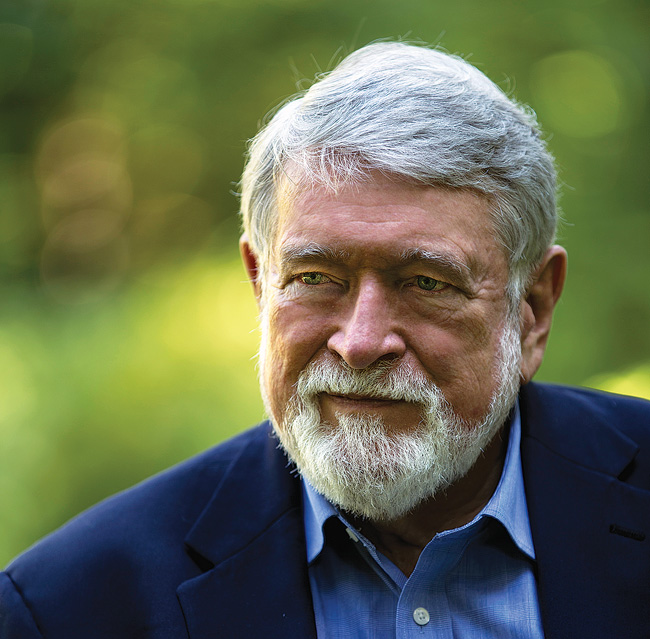
David Korten begon zijn professionele leven als professor aan de Harvard Business School met als missie om mensen in ontwikkelingslanden die het moeilijk hebben, uit de armoede te halen door de geheimen van succesvol zakendoen in de VS te delen. Maar na een paar decennia waarin hij zijn strategieën voor organisatieontwikkeling toepaste op plekken zo ver weg als Ethiopië, Nicaragua en de Filipijnen, onderging Korten een verandering van gedachten. In 1995 schreef hij de bestseller When Corporations Rule the World , gevolgd door een reeks boeken die de beweging die bekend staat als de Nieuwe Economie, mede mogelijk maakten. Deze beweging riep op tot het vervangen van transnationale bedrijfsdominantie door lokale economieën, controle, eigenaarschap en zelfredzaamheid.
Deze maand publiceert Korten, tevens medeoprichter en bestuursvoorzitter van YES!, een nieuw boek waarin hij lezers uitdaagt om hun relatie met de aarde te heroverwegen – sterker nog, met de hele schepping, van het kleinste kwantumdeeltje tot het hele universum. De wereld heeft "een nieuw verhaal" nodig, zegt hij. "Als de meeste soorten, waaronder Homo sapiens, willen overleven, moeten we de aarde erkennen als een levend wezen." Korten sprak over zijn voortdurende metamorfose met Dean Paton, hoofdredacteur van YES!.
Dean Paton : Vertel eens hoe iemand die eerst specialist was in organisatorisch management en later een thought leader op het gebied van de nieuwe economie, deze sprong maakte naar wat evenzeer een spiritueel als een politiek voorstel is: dat de aarde een levend organisme is en dat we in essentie allemaal deel uitmaken van deze ene grote levensform.
"Het komt hierop neer: zijn we onderdeel van de natuur? Of staan we er los van?"
David Korten : Het is eigenlijk niet zo moeilijk – als je eenmaal in het kader van de levende Aarde kijkt – om te zien dat de Aarde in wezen een organisatie is van levende organismen die de essentiële omstandigheden voor leven creëert en in stand houdt. Als je een organisatie-expert of theoreticus bent, roept dat een fascinerende vraag op: hoe werken deze miljoenen organismen samen om leven in stand te houden?
Paton : Alsof alles een intelligentie en een doel heeft? Hoe is dat relevant voor je nieuwe boek, Change the Story, Change the Future?
Korten : Het nieuwe boek schetst de tegenstelling tussen het oude verhaal over "Heilig Geld en Markten" en een opkomend verhaal over "Heilig Leven en de Levende Aarde". Het zijn twee totaal verschillende kaders die leiden tot twee totaal verschillende manieren van denken over de organisatie van de maatschappij. Je ziet het leven ofwel als een middel om geld te verdienen, ofwel als een getal dat nuttig is om rekeningen te beheren ten dienste van het leven, maar op zichzelf geen enkele waarde heeft. Door te geloven in het verhaal over "Heilig Geld en Markten" dat geld rijkdom is en de sleutel tot geluk, worden we gedwongen tot gedwongen dienstbaarheid aan de heerschappij van bedrijven.
Paton : Je zegt dat het traditionele ontwikkelingsmodel, of transnationaal kapitalisme, de aarde als levende gemeenschap schaadt, inclusief niet alleen mensen, maar alle levensvormen. Toch zijn we allemaal afhankelijk van geld, van de markteconomie. Denk je echt dat we die afhankelijkheid zomaar kunnen doorbreken?
Korten : We zullen nog steeds geld en markten gebruiken, maar Wall Street ontdoen van de controle over de geldcreatie en -allocatie. Er was een tijd in de Verenigde Staten dat de meeste van onze financiële instellingen lokaal waren. Wat in feite betekende dat lokale gemeenschappen hun eigen krediet, of hun eigen geld, konden creëren om aan hun eigen behoeften te voldoen. We waren nog steeds afhankelijk van banken, maar het was een veel democratischer proces.
Paton : Zoals het gebouw en de lening van George Bailey in It's a Wonderful Life .
“Wij mensen leven van verhalen.”
Korten : Precies. Als meer van ons geld in onze gemeenschappen zou circuleren in plaats van in het casino op Wall Street, zou dat mensen in staat stellen zich lokaal te organiseren om meer van hun economische behoeften te dekken met lokale middelen. Controle over geld is het ultieme mechanisme van sociale controle in een samenleving waarin vrijwel iedereen afhankelijk is van geld voor de basismiddelen van bestaan: voedsel, water, onderdak, verwarming, vervoer, entertainment. Dit leidt ons naar de beweging voor vrijwillige eenvoud: hoe minder ik afhankelijk ben van geld, hoe vrijer ik ben. Besef dat het enige legitieme doel van de economie is om het leven te dienen, om ons als levende wezens te dienen die ons brood verdienen in een coproductieve samenwerking met de levende aarde.
Paton : Hoe vertaalt zich dat in daden? Als we duizend mensen laten zeggen: "Ik ben een levend wezen, geboren uit en gevoed door een levende aarde", hoe stopt dat dan fracking? Hoe weerhoudt dat de Russen ervan om alle olie uit Kazachstan te pompen en over de hele wereld te verkopen?
Korten : Het maakt heel duidelijk dat het vernietigen van de natuurlijke levende systemen waarvan ons bestaan afhangt, om snel aan energie te komen of snel winst te maken, werkelijk waanzin is.
Paton : Dus als we allemaal levende wezens zijn, "geboren uit een levende aarde", zoals u zegt, waar begint dat zich in ons leven te manifesteren?
Korten : Een groot deel hiervan heeft te maken met het erkennen van de implicaties van onze afhankelijkheid van geld. Dit gaat terug op ontwikkeling als een proces waarbij mensen werden losgemaakt van hun middelen van bestaan. Hoe meer mensen vervreemd raken van hun eigen productie, hoe afhankelijker ze worden van geld – en hoe afhankelijker ze worden van de mensen die de creatie en toewijzing van geld controleren.
Paton : Je bedoelt dat ik fracking accepteer als ik afhankelijk ben?
Korten : Ja, je zegt: "Ik heb dat geld nodig. Ze gaan me betalen om mijn eigendom te fracken."
Paton : Denk je echt dat Amerikanen de overtuiging dat geld koning is, los kunnen laten?
Korten : Ik denk dat veel mensen het afdanken.
Paton : De meesten van ons reageren op een briefje van 10 dollar. Of een bonus op het werk. Of een nieuwe auto.
Korten : Maar wij reageren daarop omdat wij het verhaal van ‘Heilig Geld en Markten’ accepteren dat geld rijkdom is, een verzinsel dat ons letterlijk doodt.
Paton : Je zegt dus dat we de keuze hebben tussen samenwerken met de Aarde en tegen haar werken?
Korten : Het komt hierop neer: zijn we onderdeel van de natuur? Of staan we er los van?
Paton : Waarom dring je erop aan dat we dit verhaal van “Levende Aarde” omarmen?
Korten : Omdat wij mensen leven van verhalen.
Paton : En dat betekent…?
Korten : Dat betekent dat we, om geordende samenlevingen te kunnen organiseren, een gedeeld raamwerk nodig hebben – basiswaarden en aannames. Als ik dan met jou in contact kom, heb ik een idee van hoe jij gaat reageren, omdat we hetzelfde basisverhaal delen.
Paton : Hebben we een keus?
Korten : Ja, veranderen of sterven. Letterlijk. Je kunt het nieuwe verhaal – als samenleving – echt niet bevatten en doorgaan met leven zoals we leven. Eerst begin je te bewegen naar meer vrijwillige eenvoud, wat letterlijk neerkomt op het verminderen van je afhankelijkheid van geld. Je gaat meer dingen zelf doen. Je besteedt veel meer aandacht aan je relaties, aan de gifteconomie. Je krijgt misschien een dieper gevoel van deel uitmaken van en bijdragen aan een levend universum dat evolueert naar steeds meer complexiteit, schoonheid, bewustzijn en mogelijkheden. Wat zou dat betekenen voor de samenleving, en wat betekent het vervolgens voor hoe ik leef? Wat is mijn bijdrage aan de verandering die de samenleving nodig heeft? Ik heb de verantwoordelijkheid om deel uit te maken van deze verandering – en die begint met het veranderen van het verhaal.
COMMUNITY REFLECTIONS
SHARE YOUR REFLECTION
5 PAST RESPONSES
"Are we a part of nature? Or apart from nature?"
This good question mirrors larger ones, such as, Are we a part of the divine? Or apart from the divine? Is our planet earth a part of the divine? Or is planet earth apart from the divine? What actually happens to us, to our humanity, and to all of life on our planet home when we believe and act as if the divine presence of God is never really present in our midst, that we cannot ever see, hear, touch, and know God right here, in this moment on this earth? Are we reserving all our seeing, hearing, touching, and knowing God for some next life, for some heaven beyond this present life?
What if God is here? What if God is under our noses, present within our own being, distinctly and separately contained in the loving wisdoms of two unique genders, alive in all the various races, colors, and cultures of people, within sexual orientation and identity, walking by, and also flying past, swimming in rivers and oceans, present in plants and insects - all facets and different aspects of the Universal One?
We seem so convinced that the divine is "out there", distant and foreign, looking down upon us. What if heaven has been waiting for us to bring it to life, right here on earth?
What would heaven be like? Would heaven have a hierarchy of superior and inferior people, or people superior to creatures, birds, fish, insects, plants, forests, oceans, and waters; human beings dominating over life, enslaving, re-engineering, genetically-altering, chemically-poisoning, and monetarily profiting from commodifying, exploiting, abusing, destroying, and killing human life and all of creation, and our own human hearts and souls in the bargain?
When Albert Eisstein was asked, What is the most important question in life, his answer was, "Is the universe a friendly place or not?"
[Hide Full Comment]Chasing and competing (even unto death) for fleeting, dissolving, and false monetary wealth blinds and pits all human beings (wittingly or unwittingly) against one another, and against all of life, and also crushes respect, love, genuine and true affection along the way, in regard to others and all of creation but also for one's self. Are we "making a living", but just existing, and not truly living? Can we compete our way into heaven, disrespecting and commodifying human work populations and all of life? Can we save our planet earth home, and the best in our humanity by disregarding and disrespecting both, in favor of non-lasting monetary rewards that are disappearing as quickly as we claim them, while they take away and destroy our true and lasting common wealth in the natural world of earth, lead us to suppress ground-breaking knowledge in natural processes and life-sustaining innovation, and stand in the way and block our ability to form healthy, respectful, cooperative relationships with one another and with all of creation? Is our existence on this earth nothing more than just a place to compete and win while trampling over others, dominating everyone and all of life, destroying the best of our own humanity and all of creation?
Perhaps the first, and truly most important, question is,
"Is the earth a friendly place or not?"
And, what have we formed it to be?
It has been said by George Simmel, German Sociologist, that money is the purest form of a tool. Since the tool is man made I suggest accounting for inherent worth wherein all possess natural worth.
Another contribution to changing the story.
"We are surrounded by a sea of free energy. Nikola Tesla and Dr. Thomas Henry Moray tried to educate the public to this good and free electromagnetic energy (EM energy) over 80 years ago that can be harnessed with a simple, even homemade, omnidirectional antenna. EM energy is infinitely supplied by our good universe, and it creates zero emissions. All the Egyptian pyramids are antennas, and more modern pyramids within our midst. Solar panels can be redesigned to harness this electromagnetic energy and supply free, unlimited, and carbon-free electrical energy." Get on it. Investigate. The info is out there. We need to reclaim our planetary earth home, if humanity and all of creation deserve a chance at continuing into a future full of abundance, joy, peace, free and good, priceless love and life.
from frenergy
[Tapping into 200 volts positive of free, unlimited and unmetered pure electrical energy]
Thank you for this good and necessary interview with David Korten.
A contribution to changing the story -
The goal is self-sufficiency. We need life skills asap.
Our real needs are actually simple - food, clothing, shelter, and local community connections.
We can all contribute to a new earth by literally beginning to be more and more self-sufficient, learning how to grow, harvest, and preserve our own food at the individual and local community level, planting organic gmo-free gardens, encouraging and supporting the creation of small local organic farms, and farmdens ["a farmden is more than a garden and less than a farm", horticulturist, Lee Reich], local fruit and nut trees and orchards etc, and learning best practices for organic growing and preserving of non-gmo vegetables, fruits, and herbs. Schools and universities could be growing and teaching their students necessary life skills, how to grow and harvest organic, vegetables, herbs, and orchards on their own campuses. We are wasting, actually also polluting chemically, enormous swatches of dead zone land in maintaining pristine-looking lawns, but often poisoned with "cides" that are dangerous to esp. children but also adults, animals, bird, bat, insect life, fish, and local water sources (from the runoff into groundwater or local streams and creeks etc), rather than front, back, and side yards, and common community lands that are contributing to organic food self-sufficiency and engaged with the growing-of-life-itself process. We could also be composting all vegetal and organic plant waste and restoring depleted soils, rather than putting it into garbage disposals and sewers. We could be planting native plants and trees to encourage and contribute to the health and well being of all plant, animal, insect, bird, and fish populations at the individual and local level. And rooftop farms and gardens are one dynamic solution [eg. Brooklyn Grange] enabling city dwellers to also begin the process of becoming food self-sufficient local towns and cities.
We could also be de-constructing archaic and wasteful, unsustainable housing construction, reclaiming the materials, but also restoring the soils and lands, and building our own houses esp. with natural earth and cob-building processes [eg. First Earth movie], passive solar, thermal mass, sustainable energies, revolutionary biotecture techniques [Earthship Biotecture] for heating and cooling, trapping and using rainwater, and treating sewage on site w natural earth knowledge and processes, etc. Very little or no furniture and unspoiled home goods should be going into land fills. All of it, the vast majority could be recycled, redesigned, repainted, reupholstered and re-imagined into new life by local peoples with the know-how and vision to reclaim it. Raw materials could also find new and glorious uses [eg. Wallace Detroit Guitars - Upcycled Guitars Made From Abandoned Homes]. Old doors and windows could be made into garden greenhouses and conservatories "to extend the growing season, and as a shelter for chickens and/ or quail" [from Off Grid World].
I am one generation away from grandparents who did know how to grow and preserve their own food, who had cold cellars on their properties, who knew how to design and sew their own clothes, and build their own houses, and they did it all at the local level. By building and supporting local community and local businesses, local banking or public local banks, we are creating real wealth in self-sufficient and self-sustainable lives, enjoying life and real living, sharing in the joy and abundance of growing and harvesting, and engaged with our neighbors, neighborhoods, and local community. We could become local towns and communities of handbikers, bike trails and bike lanes like Amsterdam in the Netherlands. We could ensure our community has, at least, one dynamic and exciting, welcoming and beautiful public square with native plants and trees etc. where people can gather to talk, engage, sit, stroll, enjoy an ice cream cone, watch and support local street performers entertain, maybe have local-truck businesses that visit, come and go, etc. on Friday night and Saturday like they do in Tuscan Italian towns.
A few decades ago while working together at a community bank, I worked with a co-worker and friend whose mother lived in Greece, and her Greek mother would come every summer to visit her daughter. The two of them would roam the stores looking at clothes they admired. Then, the Greek mother (actually a grandmother) would make the dress, skirt etc patterns herself, and sew the clothes that her daughter, my friend, had admired. Watching the two of them every summer, was ... almost miraculous. That elderly and sophisticated Greek grandmother had true life skills; she was self-sufficient, and it was marvelous. The clothes she sewed for herself and her daughter were absolutely fabulous; they both had THE most gorgeous and unique wardrobes, and it was all created with loving hands and overflowing generosity of heart.
Imagine if we were all so engaged in living, having a wealth of life skills at our fingertips,
[Hide Full Comment]what kind of loving and life-enhancing new earth we could be living, and bring forth?
This "Living Earth' story need to be heard by more people around the world. We are living in a world controlled by greedy big banks and big businesses whose only aim is the big profit! And the rest of the world is mindlessly succumbing to their mantra of materialism - consume, consume AND consume! Lets rethink at individual levels about our way of life and make a concerted effort to resist materialism and go back to a simplistic way of living, caring for the living earth, caring for your families and future generations, caring for the communities we live in.