

In 1983, my wife Debbie and I and our 2-year-old son Ben were living outside Minneapolis, Minnesota in Excelsior, a small, peaceful village on the meandering shore of Lake Minnetonka. The Cold War was raging. The nuclear arms race was accelerating humanity and much of the Earth community toward annihilation, perhaps through the scenario of nuclear winter, which had recently exploded into the public imagination. Even living in an easeful place of great natural beauty that seemed set apart from the troubles that vexed the larger world, at times it was impossible not to feel overwhelmed by a sense of impending doom. Fortunately, the story didn’t end there. And it still hasn’t.
That October, in the belief that more information was a positive thing, I felt compelled to attend a two-and-a-half day conference on nuclear arms at St. Mark's Episcopal Cathedral in downtown Minneapolis. The experience was more shattering that positive. We watched dread-inducing films depicting the destructive power of nuclear explosions – first documented during test detonations in my birth state, New Mexico, followed by extensive footage of the unspeakable aftermath of the bombings of Hiroshima and Nagasaki.
To this day, I am haunted by those images; in an even more intense way since 2006 when I made a personal pilgrimage to Hiroshima. When I arrived at the train station in vibrant downtown Hiroshima, I was bewildered. Everything seemed so normal. A brief trolley ride delivered me to the middle of the Aioi Bridge, the intended ground zero of the bomb dropped by the Enola Gay at 8:15 AM on August 6, 1945, a bomb that killed 80,000 people instantaneously and ultimately led to the deaths of over 200,000 people.
Expecting signs of this extraordinary devastation, I looked around and saw … the pointed tip of a small island, with a river dividing and flowing down both sides; and on the island an incomprehensibly lush green park. The Hiroshima Peace Dome, which is in fact a skeleton sitting atop what is left of one of the few buildings not completely obliterated by the explosion, sits naked, surrounded by the tall buildings and bustle of this once again thriving city. No matter where you walk throughout the peace park, you can always see the dome, often across a field of green, standing lifeless against the sky, the historical evidence of the single most destructive moment in human history.
The day was shattering. Alternately, I struggled to absorb historical background – the buildup of militarism in Japan, World War II, and the events immediately leading up to the dropping of the atomic bomb on Hiroshima; and sobbed uncontrollably at the reality of the human capacity to instantly destroy 80,000 lives and leave a whole population suffering in varying degrees from radiation sickness and haunted for the rest of their lives. But also, miraculously, committed to a path of peace, working to prevent this horror from ever happening again.
At the conference, after viewing the films that provided this emotional backdrop, we heard talks from experts on nuclear arms issues – scientists, ethicists, moral theologians. They spoke about MAD (Mutually Assured Destruction); and theories of nuclear winter that made it clear that there would be no winners in a nuclear war, which would have such a devastating impact on the Earth's climate that life as we knew it would simply vanish in a breathtakingly short period of time. Even those who survived nuclear Armageddon would perish sooner rather than later through a combination of a radiation cloud encircling the globe and the advent of a nuclear ice age.
Of course the images from the films remain most vivid for me, but there is also one story from one talk that has survived when I have forgotten so much else. One of the speakers told of another conference on nuclear arms during which it was established that nuclear war would likely mean the end of human life on earth. Against this backdrop, the presentations focused on the technical aspects of nuclear war and nuclear weapons. Scientists and military experts spoke in coldly analytical terms about numbers of weapons and their megatonnage, and also the relative impact of air burst versus ground burst and the implications of a weapon’sthrow-weight.
At one point, our speaker informed us, a woman in the middle of the auditorium stood up and shouted in a loud voice, “This is wrong! This is wrong!”
There was a moment of stunned, embarrassed silence. Then the speakers continued talking about the numbers of nuclear weapons and their destructive power as if they were speaking about something in a theoretical world, rather than presenting scenarios about the potential destruction of humanity.
This, our speaker explained, is an example of something that plagues us all– psychic numbing. He went on to elaborate that when an actual or potential reality is too emotionally overwhelming to contemplate we deaden our emotions and respond in cold, distant intellectual ways.

I felt no psychic numbing as I drove home at the end of that conference. I felt as depressed and powerless as I can remember ever feeling in my life. It was late October. The sky was a dark, leaden gray. The night before a powerful windstorm had stripped the trees of their remaining leaves, leaving starkly naked branches extending lifeless into the dying light.
When I pulled up in front of our house, Debbie was sitting on the porch steps and Ben stood in the middle of the yard between two large maple trees. The night before they had deposited a sea of dead leaves. Nearly buried in the middle of the sea was a small garbage can. I sat down beside Debbie and,as the lingering light drained from the sky, I tried to talk my way through the darkness I had absorbed from the conference.
As I talked, Ben, dressed in powder blue coveralls, shuffled through the leaves, frequently finding a particular leaf that for some reason he felt compelled to pick up. Then he would shuffle to the garbage can and drop in the leaf. Back and forth. Leaf after leaf. Light fading. Cold deepening. Debbie and I sat there for nearly a half-hour until it was almost too dark to see. Ben never slowed down, never seemed to tire of his work. We finally lured him inside with the promise of dinner.
Later that night, as I sat in my upstairs study looking down on the seemingly untouched sea of leaves and the small trash can, I found myself thinking how foolish Ben’s activity had been. I could have scooped up more leaves in one armful than he had picked up in thirty minutes. But then I realized that Ben wasn't being foolish, he was being faithful; and in being faithful was showing me the way out of despair into purposeful action – instead of allowing myself to be overwhelmed because there are far more leaves than I can manage, I can find those leaves I can take care of and get to work.
Ultimately, I believe, the sea of leaves is God’s to deal with. That doesn’t mean that I believe God will somehow magically rescue humanity from our foolishness; only that I trust that in the vast expanse of this unfolding universe light and love are ultimately sovereign. But that belief doesn’t free us from our responsibility to do everything we uniquely are able to manifest light and love through our lives. In the midst of the sea of dead leaves that represents the shadow side of human life on this planet – leaves of violence, oppression, greed, poverty, injustice, inequality, environmental degradation, and on and on – we can be attentive to a particular leaf calling to us. We can pick up that leaf, take care of it, and then look for the next leaf calling our name.
Over the years this reflection has not only remained vivid in my memory, it has been an ever-present guide for my personal growth and an ongoing inspiration to keep me moving beyond despair at the myriad human-generated catastrophes that threaten the Earth community to action that in some way might help make space for peace, justice and healing. Whether we work in the grassroots or make high-level policy, have a global reach or devote our time to creating a healthy home for others and ourselves, each of us can answer the call to pick up one leaf. And then another. And then another … clearing the ground … making space for the green leaves of light and love to break through … as long as we’re privileged to draw breath.
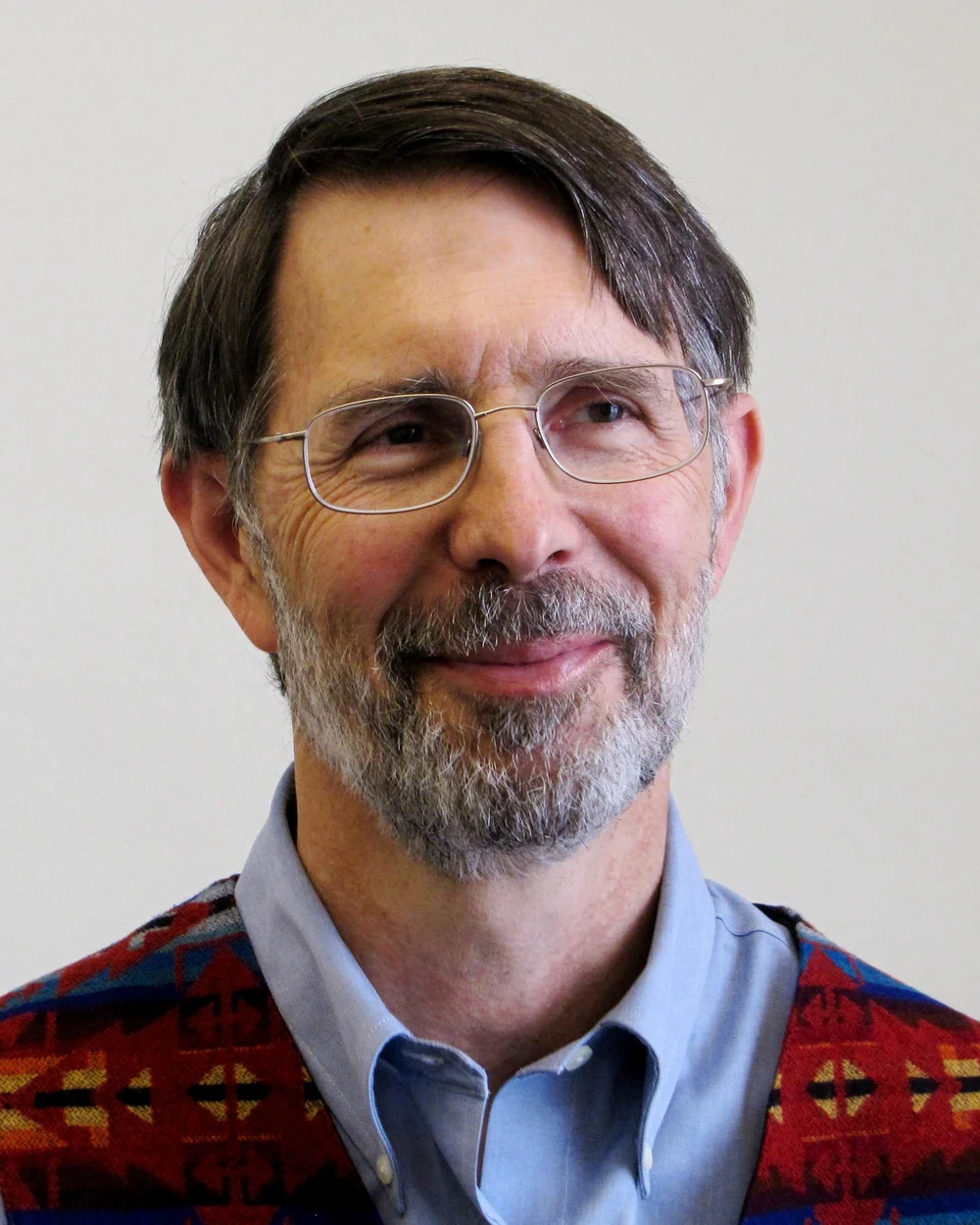 About the Author: The Rev. Canon Charles P. Gibbs is an Episcopal priest, a visionary and a poet who has
COMMUNITY REFLECTIONS
SHARE YOUR REFLECTION
9 PAST RESPONSES