 It Was Thanks to Artist Walter Gabrielson That I Was Able to Get in Touch Wit

wrote-- Wind, Sand, and Stars, and Night Flight and Flight to Arras —this has great imaginative appeal.
As you fly, you do see space that is determined not so much by physical confines, but by atmospheric and light phenomena within the space. I've seen sometimes a contrail that goes through the sky where you can see its shadow come down through the sky, the shadow of the contrail. This beautiful shadow actually divides the space in an amazing way. And so for me, sitting up there in this cockpit, I've seen so many things that reminded me of this other way of seeing, where light is the material and this makes the space.
Of course it can in other ways too. When you stand on the stage you often have so much light from the footlights that you can't see the audience. Even though you're in the same architectural space as the audience, you don't see them. And so this light divides the space. Of course, if you dim these lights, that audience comes out just like the stars come out when the sun goes down. This can happen in rather near spaces, this use of light to build space, or to end vision-as much as you can end vision with a wall.
RW: I remember reading somewhere where you described flying between two cloud layers and a jet punched through leaving a contrail between these two layers. And I thought, "that must have been such a beautiful space to be in."
JT: Well, these are spaces that we do inhabit. I think for instance of the Hopis and some of the Southwest Indians, who live on the mesas. They are essentially "sky people," as the Zuni call themselves. Sky city at Acama. And also the Hopis live in that situation. They actually live in the sky. Certainly the Tibetans felt they were living in the sky. They really felt that.
Now you begin to live in the sky when you fly. And it is a different perspective. Many pilots are rather derisive of what they call, "ground pounders" ...[laughs]... and people who live in the maze, where you learn almost by memorizing the turns in the maze. Many people, when they first fly-you can see for hundreds of miles-get lost. You know, they can't find the airport. And when you learn to fly, finding the airport is an important function [laughs].
It's surprising how you can lose yourself when you can see so far. You are no longer down in the maze, no longer what pilots would call, "a bottom dweller." This is a new kind of perception. It's no different than say, if you become a diver and go into the sea, and experience that. You get "rapture of the deep." You get "rapture of the heights." It's something that does occur. And it is a joy-this opening up of perception.
Then you find there many ways we do perceive that are not good for flying, especially when you get visibility at dusk when things are not clearly defined. You start to get a loss of horizon. This is when many of the perceptions we have can not be trusted.
So you actually learn not to trust how we have learned to perceive. Pilots actually have to do this, especially for instrument flight. Night flight is like flying in an ink well. When you get away from the city, and you have no horizon the little dots of light from the farmhouses can, at times, look like the stars. You can really get confused.
One of the most interesting times I had occurred when I was training. I came down over Pyramid lake near Tahoe, and it was an absolutely still morning. I could see the reflection of the sky in the lake. I rolled upside down, and it looked perfect upside down. I rolled right side up, and it looked just the same. Of course, you can feel gravity, but when you do a barrel roll, you take that gravity into the roll. So you have to remember whether you're right side up, or right side down in relation to the real world. There is this beauty of the reflection.
RW: So there are many moments in flying that are a world apart.
JT: Well, it's a world within our world, but it is something to pay attention to, just as in orienting to light. I use light by isolating it, and often not very much of it. I try to do it without a heavy hand, as in the piece you saw at the Einsteins which is seemingly a very simple situation, but it does have something to do with our perception and our relationship to this ocean of air.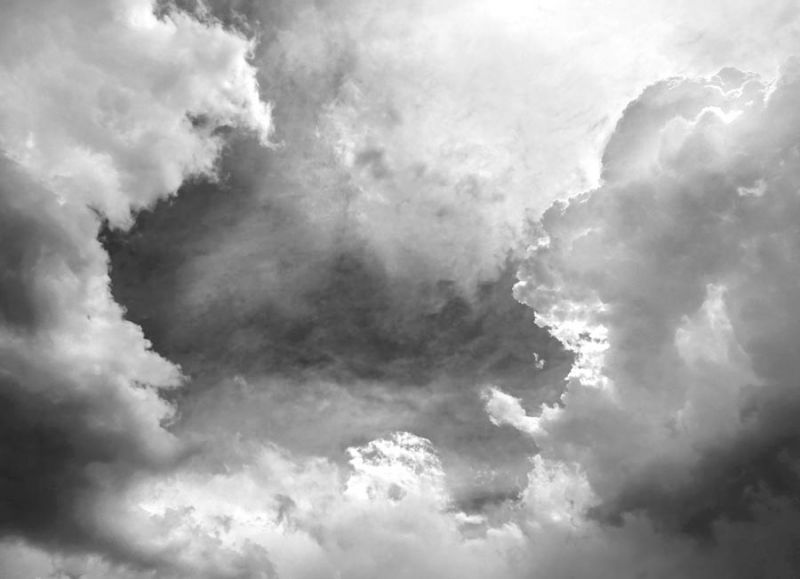
RW: I found it startling, really, to experience the intensity of the two colors that developed as the light decreased.
JT: And it gets to be an extreme color that we don't normally see.
RW: I just thought it was amazing, really. The only other piece of yours that I've seen is in the San Jose Museum of art. I think it's projected light. And I was touched by that also, but in a different way. I think I have a fairly strong relationship to light. I'm not sure where it came from, but I've had very intense experiences with light including the so-called "after death" experience of light. There is a golden light, as people report. And what I experienced with that, and I can't really get back to it-- it's such an extreme state, but it was a golden light and it was also, at the same time, full of feeling. It wasn't just the light, but it was feeling too. I would say the feeling was love. I don't know what else to call it. It was a very, very powerful experience.
JT: This work that I do is an emotional work. I don't think there is any doubt of that.
RW: Yes. I certainly feel that, but I think the way you talk about it doesn't always reveal the reality of the feeling part of it.
JT: Well, it's unusual to see this kind of work. We're very primitive and have very little vocabulary in terms of light. And also, in terms of the instruments of light-absolutely primitive!
If I'm a painter, I don't need to be a chemist to get thousands of colors. But I can't go down and buy a light anywhere that I can dial through infrared, red, orange, yellow, green into blue, violet, and into ultraviolet. I can't buy a light like that.
We are a primitive culture in terms of light. We are just beginning. So I have to make the instruments, as well as to make the symphony with it.
You know, when we first made the clavier and the piano, and someone sat down to play that, they didn't say, "O my God, what a machine!" It is a machine-quite complex, really-but it's more than that. It is something through which emotion can come, freely.
When I have a work, it doesn't have the hand, but I sacrifice only that in being fully involved in a direct emotional way. And for me, it's a very powerful way. So, I have not lost a thing by taking out the hand.
RW: I was going to ask you- Over the years what has evolved? And I suppose it must go back all the way to your early experiences of light as a child.
JT: Well, the kind of experience you were talking about has been very important to me. I think the descriptions of near-death experience, descriptions of light phenomena in the dream, and in waking... I don't pretend to have a religious art, but I have to say, it is artists who worked that territory from the very beginning. So this is not an arena that we have been out of.
I think that even when you go into gothic cathedrals, where the light and the space have such a way of engendering awe, that, in a way, what the artists have made for you in this place is almost a better connection to things beyond us than anything the preacher can say. Although music, at times, can really approach that too. I think this is a place where artists have always been involved.
It's not new territory. I really do like this sensibility of at least coming close to how we see in this other way, how this light is encountered in this dream, in the meditation. And I can say, I only had this experience once, as a child. Then later, in Ireland I had it, where the physicality of the situation I was in was like the dream. That was really powerful.
I was out in a garden when I was a child, and things took on a life and a luminance that was like this near-death experience, with eyes open. Then once, in Ireland I was coming in a boat, in from Fastnet toward Whitehall. It was absolutely still. A silver light came about that bathed everything. This was an experience I had in a conscious, awake state.
Most of these experiences that people talk about are generally in altered states that are like a dream, or at least, like a daydream.
I would like to have the physicality of my light at least remind you of this other way of seeing. That's as best I can do. It's terrible hubris to say this is a religious art. But it is something that does reminds us of that way we are when we are thinking of things beyond us.
RW: You must find that, over and over, people do resonate to your work in ways that really do remind them of these kinds of experiences.
JT: That's true. And to that degree I suppose that's a success for me. But it's not my light. It's not my remembrances to trigger. They are yours. That can only come from a direct experience by you. So that, in some way, removes some of that distance between you and me, because we both stand before this, equally.
RW: Yes. I think it's an experience many people have had to one degree or another.
JT: I'm sure of that, actually.
RW: I don't know what one does with that, but it's an important fact. I say "important." But then, if someone says, "well, why is it important?" To say why is not so easy.
JT: It's not mine to say. It's enough for me to say, that the flower is for the plant. If bees and florists are interested in it too, fine. I hope to make something that is important to you, but I have to make something that is important to me.
It's not my business, or even my intent to, in any way, affirm your taste. And that's a difficult thing when people think of art. People are thinking of something they can take home, that in some way, affirms what they believe, or how they think-and boy, it's not the job description of the artist to do that. If anything, it's to challenge that, and expand it.
As you fly, you do see space that is determined not so much by physical confines, but by atmospheric and light phenomena within the space. I've seen sometimes a contrail that goes through the sky where you can see its shadow come down through the sky, the shadow of the contrail. This beautiful shadow actually divides the space in an amazing way. And so for me, sitting up there in this cockpit, I've seen so many things that reminded me of this other way of seeing, where light is the material and this makes the space.
Of course it can in other ways too. When you stand on the stage you often have so much light from the footlights that you can't see the audience. Even though you're in the same architectural space as the audience, you don't see them. And so this light divides the space. Of course, if you dim these lights, that audience comes out just like the stars come out when the sun goes down. This can happen in rather near spaces, this use of light to build space, or to end vision-as much as you can end vision with a wall.
RW: I remember reading somewhere where you described flying between two cloud layers and a jet punched through leaving a contrail between these two layers. And I thought, "that must have been such a beautiful space to be in."
JT: Well, these are spaces that we do inhabit. I think for instance of the Hopis and some of the Southwest Indians, who live on the mesas. They are essentially "sky people," as the Zuni call themselves. Sky city at Acama. And also the Hopis live in that situation. They actually live in the sky. Certainly the Tibetans felt they were living in the sky. They really felt that.
Now you begin to live in the sky when you fly. And it is a different perspective. Many pilots are rather derisive of what they call, "ground pounders" ...[laughs]... and people who live in the maze, where you learn almost by memorizing the turns in the maze. Many people, when they first fly-you can see for hundreds of miles-get lost. You know, they can't find the airport. And when you learn to fly, finding the airport is an important function [laughs].
It's surprising how you can lose yourself when you can see so far. You are no longer down in the maze, no longer what pilots would call, "a bottom dweller." This is a new kind of perception. It's no different than say, if you become a diver and go into the sea, and experience that. You get "rapture of the deep." You get "rapture of the heights." It's something that does occur. And it is a joy-this opening up of perception.
Then you find there many ways we do perceive that are not good for flying, especially when you get visibility at dusk when things are not clearly defined. You start to get a loss of horizon. This is when many of the perceptions we have can not be trusted.
So you actually learn not to trust how we have learned to perceive. Pilots actually have to do this, especially for instrument flight. Night flight is like flying in an ink well. When you get away from the city, and you have no horizon the little dots of light from the farmhouses can, at times, look like the stars. You can really get confused.
One of the most interesting times I had occurred when I was training. I came down over Pyramid lake near Tahoe, and it was an absolutely still morning. I could see the reflection of the sky in the lake. I rolled upside down, and it looked perfect upside down. I rolled right side up, and it looked just the same. Of course, you can feel gravity, but when you do a barrel roll, you take that gravity into the roll. So you have to remember whether you're right side up, or right side down in relation to the real world. There is this beauty of the reflection.
RW: So there are many moments in flying that are a world apart.
JT: Well, it's a world within our world, but it is something to pay attention to, just as in orienting to light. I use light by isolating it, and often not very much of it. I try to do it without a heavy hand, as in the piece you saw at the Einsteins which is seemingly a very simple situation, but it does have something to do with our perception and our relationship to this ocean of air.
RW: I found it startling, really, to experience the intensity of the two colors that developed as the light decreased.
JT: And it gets to be an extreme color that we don't normally see.
RW: I just thought it was amazing, really. The only other piece of yours that I've seen is in the San Jose Museum of art. I think it's projected light. And I was touched by that also, but in a different way. I think I have a fairly strong relationship to light. I'm not sure where it came from, but I've had very intense experiences with light including the so-called "after death" experience of light. There is a golden light, as people report. And what I experienced with that, and I can't really get back to it-- it's such an extreme state, but it was a golden light and it was also, at the same time, full of feeling. It wasn't just the light, but it was feeling too. I would say the feeling was love. I don't know what else to call it. It was a very, very powerful experience.
JT: This work that I do is an emotional work. I don't think there is any doubt of that.
RW: Yes. I certainly feel that, but I think the way you talk about it doesn't always reveal the reality of the feeling part of it.
JT: Well, it's unusual to see this kind of work. We're very primitive and have very little vocabulary in terms of light. And also, in terms of the instruments of light-absolutely primitive!
If I'm a painter, I don't need to be a chemist to get thousands of colors. But I can't go down and buy a light anywhere that I can dial through infrared, red, orange, yellow, green into blue, violet, and into ultraviolet. I can't buy a light like that.
We are a primitive culture in terms of light. We are just beginning. So I have to make the instruments, as well as to make the symphony with it.
You know, when we first made the clavier and the piano, and someone sat down to play that, they didn't say, "O my God, what a machine!" It is a machine-quite complex, really-but it's more than that. It is something through which emotion can come, freely.
When I have a work, it doesn't have the hand, but I sacrifice only that in being fully involved in a direct emotional way. And for me, it's a very powerful way. So, I have not lost a thing by taking out the hand.
RW: I was going to ask you- Over the years what has evolved? And I suppose it must go back all the way to your early experiences of light as a child.
JT: Well, the kind of experience you were talking about has been very important to me. I think the descriptions of near-death experience, descriptions of light phenomena in the dream, and in waking... I don't pretend to have a religious art, but I have to say, it is artists who worked that territory from the very beginning. So this is not an arena that we have been out of.
I think that even when you go into gothic cathedrals, where the light and the space have such a way of engendering awe, that, in a way, what the artists have made for you in this place is almost a better connection to things beyond us than anything the preacher can say. Although music, at times, can really approach that too. I think this is a place where artists have always been involved.
It's not new territory. I really do like this sensibility of at least coming close to how we see in this other way, how this light is encountered in this dream, in the meditation. And I can say, I only had this experience once, as a child. Then later, in Ireland I had it, where the physicality of the situation I was in was like the dream. That was really powerful.
I was out in a garden when I was a child, and things took on a life and a luminance that was like this near-death experience, with eyes open. Then once, in Ireland I was coming in a boat, in from Fastnet toward Whitehall. It was absolutely still. A silver light came about that bathed everything. This was an experience I had in a conscious, awake state.
Most of these experiences that people talk about are generally in altered states that are like a dream, or at least, like a daydream.
I would like to have the physicality of my light at least remind you of this other way of seeing. That's as best I can do. It's terrible hubris to say this is a religious art. But it is something that does reminds us of that way we are when we are thinking of things beyond us.
RW: You must find that, over and over, people do resonate to your work in ways that really do remind them of these kinds of experiences.
JT: That's true. And to that degree I suppose that's a success for me. But it's not my light. It's not my remembrances to trigger. They are yours. That can only come from a direct experience by you. So that, in some way, removes some of that distance between you and me, because we both stand before this, equally.
RW: Yes. I think it's an experience many people have had to one degree or another.
JT: I'm sure of that, actually.
RW: I don't know what one does with that, but it's an important fact. I say "important." But then, if someone says, "well, why is it important?" To say why is not so easy.
JT: It's not mine to say. It's enough for me to say, that the flower is for the plant. If bees and florists are interested in it too, fine. I hope to make something that is important to you, but I have to make something that is important to me.
It's not my business, or even my intent to, in any way, affirm your taste. And that's a difficult thing when people think of art. People are thinking of something they can take home, that in some way, affirms what they believe, or how they think-and boy, it's not the job description of the artist to do that. If anything, it's to challenge that, and expand it.
COMMUNITY REFLECTIONS
SHARE YOUR REFLECTION