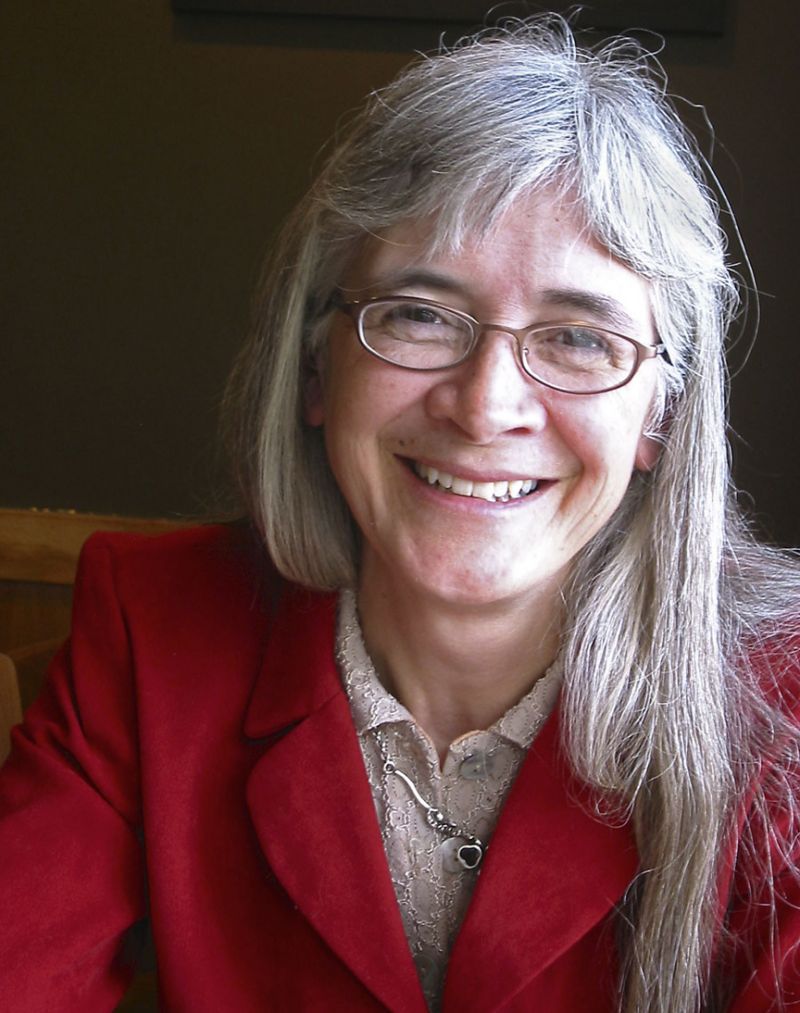

This is not something that is in my control and I want to just keep showing up and hoping that I can continue to be useful to whatever those forces are that are operating through me.
Aryae: Do you have an inner spiritual practice other than the circle practice for tuning into those forces?
Kay: I've been inspired over the years by a lot of native practice, but I don't subscribe in a structured way. I've also been inspired by Buddhist writing particularly western Buddhist writers. The writings, about interconnectedness and sitting with the question rather than looking for the answer, resonates with me. My sense is that profound interconnectedness, that which is bigger than me I'm a part of and we bow to each other. I don't bow to something above.
I was raised Catholic and have rejected that as a very young adult. I decided that the purpose of life was to love and be loved and that was sufficient to motivate the right kind of behavior. Beyond that, I didn't know and I was okay with that. I thought I was an atheist or an agnostic. I didn't know which because I didn't know the difference and I didn't bother to look it up. Then I was raising my children and I began to feel that spirituality was important. I couldn't tell you what it was. And then when I got into this work it was very clear to me that spirituality has meaning to me, but to doesn't fit into any particular structure or discipline.
Preeta: This question came from our live stream—from Sebastopol, California, who said she is a restorative practice educator, trainer and training designer. Do you have examples of working with some conservative religious communities that may be turned off by some of the Native ceremonial activities? And are there ways in which you communicate with different communities about the practice?
Kay: Yes! I was trained by First Nations People who always opened with smudging; burning of sage. But as soon as I began to practice, I knew that it was not something I could do in most places. I loved it myself—but it would not be appropriate in most of the places I would train. First of all I could be seen as copying another culture or secondly, I could be seen as imposing another faith system. So I thought about what was it that we were trying to achieve with the ceremony? What is the ceremony about? It's about cleansing, it's about the pause, it's about orienting toward the positive, taking deep breaths to let go and release the unrelated tensions and then I began to think about what other things I could do. I think it's absolutely essential that you perform an opening ceremony. It's absolutely essential that you not throw up barriers to people with what you do as an opening ceremony. I began to look for what would work for this group of people. Sometimes it's a little bit of breathing or it could be silence. In training I do an activity called group juggle; it is playful, but definitely achieves all those things I talked about in terms of beginning to connect people, and helping people bring themselves to be fully present and be centered in the space. It releases other distractions. A big part of circle is to slow down—so a few deep breaths, poetry and inspirational readings are very helpful.
If I am working with a conservative religious group, in fact, if I am working with a group that's all from the same religion, I can draw from their religion because that will be the most meaningful to them in terms of achieving those things that you are trying to do with an opening ceremony. The thing is that you really have to pay attention. It's a question of safety. If I am doing something that's uncomfortable for people I am actually making it less safe. That means that I have to do more work in the oracle to try to regain that sense of safety. It's really about designing opening and closing ceremonies. If it's an ongoing group you can involve the group in designing the opening and closing ceremonies.
We have a lot of information at the back of both books, “Heart of Hope” and “Circle Forward” in terms of reading and getting a few activity ideas.
Michelle (caller) from San Jose: I'm very grateful and fascinated by your work! I have been exploring what I call transformational global leadership for a number of years. I'm looking at how we can create alignment at the global level of humanity. I have no clue but just exploring. You said that you are focusing on the community social justice and not just the individual. Do you have any thoughts about taking it to communities of communities and maybe applying this to a global level?
Kay: Exactly. I talk about this as taking it to scale. Because I also talk about circle as much more fundamentally democratic. In the process I use, decisions are made by consensus, which means everybody has to be able to say I can live with it. I see it as much more fundamentally democratic than majority rule. And that it would be wonderful if we could begin to expand our understanding of democracy and make more decisions like this because, no one can be run over in a consensus decision making process. It's not a question of numbers. So I think often about how to take it to scale. I can see how you do that in a group of 25 people making a decision together. It becomes more difficult when you are talking about a thousand people and some kind of city planning process. Although we are exploring and experimenting with that in some places, how to take this process into public decision making around municipal planning; I am pretty sure that if we keep practicing at the local level, we will figure it out.
One piece for me is that we start practicing this; making decisions in our families, making decisions in our organizations, making decision in our work places, etc. We begin practicing sitting in circle as a way of making sure all voices are included and all the stories are heard and understood at some level in order to understand where people are coming from. As we do this, we will figure out how to take it to scale in a more structured way. In the meantime, the other thing that we are doing is sit in circle, and you practice the social and emotional literacy skills. In the end, the point is not to get good at doing those in circle for the sake of circle; the point is to develop those skills so we can take them out into every other arena of our lives. So that we can listen to the nightly news and try to listen with a more open heart and more open mind. The more we have people sitting in circle, the more we can get people to think in those ways and begin to struggle with the larger global questions—because all of the global questions are also very personal.
The other side of all of this for me that is really challenging is to hold compassion for those who are coming from a different place I see is causing a lot of harm. To be willing to assume that they have the same best self as all these other people that I sit in circle with and that they have a story that would explain. Because I got introduced to this process in the justice system, we were sitting in circle with people who were seen to have caused harm, sometimes a great harm. There is always a story that helps you understand how it came to be. It does not justify doing it, but helps you understand how it came to be. And the same thing we need to begin to apply at the political level. For instance for the people who are very attached to the confederate flag. Can we understand the story of how they came to be attached to that flag? And it's not necessarily the same thing we impute it to waving that flag around. How do we take these seven core assumptions in our thinking and begin to project something different than we have. Generally, certainly for myself in the past, for people who politically disagree with me, and try to look for the story, even when I deeply disagree with the conclusion that people have come to, out of their story.
It's that kind of wrestling with our own demons that I think is going to be necessary. It's very personal and at the same time we need to be talking out loud about it because when we talk out loud, we can take it to another level. We can encourage others who maybe are thinking the same thing but didn't see a way to bring it forward. Then we start to bring those energies together.
Michelle: I can see that this would be really useful to apply at a community of communities’ level. If you would be interested in furthering this conversation about how to take it global I would love to be in conversation with you about how to apply it at a global level, how do we contact you?
Kay: My contact information is in the back of “The Little Book of Circle Processes”. I am always happy to be connected.
Preeta: Very true to ServiceSpace model; how to shift the world—first start with a small shift within yourself.
Kay: The kind of undertakings that came for me through restorative justice and circle process, I see those same ideas in lots of different movements and it is part of what really excites me. These ideas are not unique to circle. They are very ancient understandings and there are lots of different impulses, and some of them very organized impulses that are happening around the globe, it is, for me, one of the signs that shift is coming. These wonderful ideas are surfacing independently in lots of different places at the same time.
Preeta: How wonderful!
Janelle (a caller) from New York: This is a comment for Kay. I actually came to the same path of not knowing and then my path crossed with yours. We did a lot of foundational work in New York State; sixteen years ago it was looked at with a side eye. You know, like what's going on here. So I just want to say thanks to Kay for helping us to lay a really amazing foundation for the future of juvenile and criminal justice in New York State. A lot of work was done through your influence—so thank you Kay!
Kay: Thank you and so wonderful to hear your voice!
Preeta: As someone who has read several of Kay's books and participated in one of her trainings, I would really encourage all of you and take a look at her rich and varied body of work, not only with respect to restorative justice but also school communities. “The Little Book of Circle Practices”, which Kay mentioned is a wonderful primer on how to hold circle. As we wrap up Kay, one question we typically ask our guests is: how can we, as the larger ServiceSpace community, support your work?
Kay: Hmm. You've caught me off guard. I feel so lucky about my work. As it happened so unplanned, I have no plans, and so that's a hard question to answer.
For me it is to do what you can do where you are with these core ideas. I think they emerge from our genes, the really core ideas we are talking about here, I think are in all of us. Part of my understanding is that we all have the wisdom; I have nothing new to teach anybody. But what we lack are the spaces where we can be in touch with our own wisdom and the collective wisdom. I guess the best thing would be to, wherever you can, to just cultivate spaces where you can be in touch with your own wisdom and support the collective wisdom.
Preeta: That's so fantastic. I love everything you said, especially starting with the notion that we have everything we need within us and it's just a matter of tapping into it. You said at the start, the true self in everyone is good, wise and powerful.
Kay: And once we know that, we can relax and we don't need to control others and lots of good things fall from that.
*****
Join this Saturday's Awakin Call with generosity entrepreneur Joserra Gonzalez. RSVP and learn more here.
COMMUNITY REFLECTIONS
SHARE YOUR REFLECTION
1 PAST RESPONSES
As a Christian, a follower of Jesus, I see much of God's Truth here. I also "see" in Jesus, the Christ of God, the perfect epitome of restorative justice for all of Creation.
While I too abandoned Christianity in my youth as Kay Pranis did, I have found, no, rather it, "He", has found me in this season, and that changes everything. The Desmond Tutu quote is gently appropriate as he believes likewise.
}:- ❤️