
A leading development economist speaks on the virtues and limitations of a data-driven approach to healing the world's most intractable problems
 Reuters
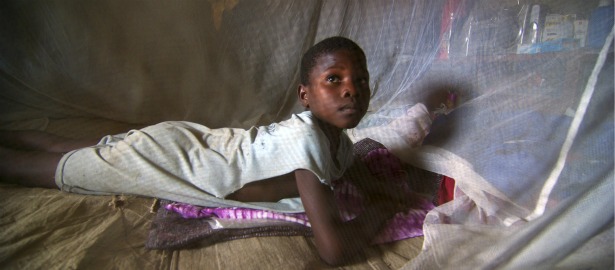
Do free bed nets in some countries lead to more cases of malaria? Could anti-parasite pills raise school attendance in one country and have no effect in another? How cheap does preventative care have to be for low-income families to see the doctor?
There might not be a perfect way to answer these thorny questions on a country-by-country basis. But some leading scientists think the most rigorous answer comes from what they call "randomized controlled trials."
Esther Duflo is widely recognized as the world's leading advocate of randomized controlled trials in development economics. As a methodology, RCTs have been used for over a half-century in clinical medicine, where the effect of a drug or medical procedure is confirmed or denied in scientific experiments involving control and treatment groups. The use of RCTs to address global poverty is a phenomenon of the last decade, but it has caught on with the force of a paradigm shift in economics, public policy, and other disciplines.
Last year, Duflo* and her co-conspirator at J-PAL, Abhijit Banerjee, published a book called Poor Economics: A Radical Rehinking of the Way to Fight Global Poverty. The book overviews much of what they have learned through RCTs and otherwise, and it stakes a larger claim against "grand universal answers" and "sweeping conclusions" about poverty. Instead, they recommend a data-driven approach that seeks specific, targeted answers to what actually works, what works better, and what works cost-effectively.Esther Duflo is widely recognized as the world's leading advocate of randomized controlled trials in development economics. As a methodology, RCTs have been used for over a half-century in clinical medicine, where the effect of a drug or medical procedure is confirmed or denied in scientific experiments involving control and treatment groups. The use of RCTs to address global poverty is a phenomenon of the last decade, but it has caught on with the force of a paradigm shift in economics, public policy, and other disciplines.
Having been trained as a physicist and an engineer, I appreciate and support Duflo's scientific approach to fighting poverty. (Full disclosure: I'm on the board of Innovations for Poverty Action, a close J-PAL partner.) Yet, reading the book, two things repeatedly came to mind: First, the best science requires theory as much as experimentation. Data without good theory is only measurement, not knowledge, and powerful theory is often sweeping. Purely as a practical matter, theory helps to sustain us when we lack data. Second, Duflo and Banerjee seem uncomfortable with their own stance against grand answers. Most of the book's chapters conclude with sections that make general pronouncements about public health, education, microfinance, and entrepreneurship, often not entirely backed up by experiment. Their final chapter, titled "In Place of a Sweeping Conclusion," nevertheless offers five broad statements about poor people worldwide.
I asked Duflo some questions about RCTs and her book over e-mail...
KT: What do you think is the greatest contribution of RCTs so far in international development?
ED: First, we have made a lot of progress on debates that we would probably still be endlessly debating: Does giving bed nets away for free discourage usage? Do non-zero prices discourage use of preventive care? Second, we have identified some promising interventions, and those are starting to be scaled up, with deworming being a prime example. [KT: Deworming refers to anti-parasite pills which when given to children have been shown to increase school attendance.] Third, we have accumulated enough knowledge in some domains (primary education, for example) that we are beginning to have a broad systemic view of problems and solutions. Fourth, perhaps most importantly, the importance of trying things out under rigorous observation, of leaving open the possibility of failure, is now more recognized within governments and organizations. I think this shift in culture could turn out to be the biggest contribution in the long run.
KT: What is the greatest challenge in the way that RCTs are actually conducted, interpreted, or talked about in practice? Or, to ask the question a different way, what dominant practice within the community of people who run or read about RCTs would you most want to change?
ED: I don't have much to complain about actually. I think at the moment, people are being very creative, trying to push the boundaries in many directions: incorporating more theory, combining structural models and experiment, combining "lab experiment" with RCT, trying really bold things such as randomizing the wages for civil servants.
I am also encouraged by how the use of RCTs is entering policy circles, but there I have one problem: I think policy makers are willing to use experiments to justify doing something, but what we are not seeing yet, is a serious use of experiment to prune policies.
KT: When I took economics courses as an undergraduate, I remember thinking that much of econometrics was an attempt to extract causal explanations from data exactly in those cases when RCTs were impractical. The implicit assumption seemed to be that RCTs would have been ideal, but in their absence, complex econometrics was necessary. Is this a reasonable interpretation of economic methodology, and if so, why do you think it's taken so long for development economics to embrace RCTs?
ED: I think, partly, we as a field may have assumed it was more difficult or more expensive than it really was. Michael Kremer's true stroke of genius was to try RCTs on a small budget. Then, when many of us, encouraged by his example, started doing similar work, we progressively learnt what people have long known in other scientific fields: that there are possibilities to raise money for academic studies. So we started raising more money. These two insights combined opened the entire field.
KT: In your book, you argue strongly against overarching theories of international development, which could be interpreted as an implicit acknowledgement of the sheer complexity of development. Yet, RCTs in development economics are often RCTs of human behavior in particular contexts. Are you, then, implying that there can't be overarching theories of human behavior?
ED: There can definitely be theoretical insights, we conclude with some in the book. But there is not one big framework that is going to be able to explain everything, or a big solution for everything.
KT: Although there is rough agreement on the goals of international development, individuals often have different ideas as to the ultimate ends. Some people think it's some level of economic achievement for every country; others think it's universal healthcare and education; still others think it's social justice; etc. Do you have a final goal in mind that you work towards?
ED: I am not sure I have really an opinion on this, or that I should. I think the goals should be set by the political process, by what a society at some point wish is important. I may have my own view on what is important in life, but I am not a philosopher, and I don't feel it is my job to tell people what they should think is important. I think the job of an economist should be to help individuals or societies (via their policy makers) reach these goals, once they have been set.
***
In any case, Poor Economics is a must-read for anyone interested in international development, and it has just been released in paperback. Whether you believe in grand theories or not, it's hard to deny the value of data and careful observation. Banerjee and Duflo fill their book with hard-won insights from personal experience and scientific study. And, despite Duflo's ceding of her moral objectives to philosophy and the public sphere, her rationally tempered passion for helping poor communities around the world is felt on every page.
______
*Duflo generously credits her colleague, Harvard economist Michael Kremer, with kick-starting the recent wave of RCTs in international development, but it's her tireless efforts, with a boost from the eponymous donor of the Abdul Latif Jameel Poverty Action Lab (J-PAL) at MIT that have made RCTs all but mainstream.
COMMUNITY REFLECTIONS
SHARE YOUR REFLECTION
5 PAST RESPONSES
They all necessary. there was another comment disappeared before I made reply. I know there are a lot of things that make harder things. To point first one is trust and it is the backbone of everything. So without going long way of trying tiresome points, tell simplest and reason. Not doing so is lack of trust of the simple ways.
"we prefer the NGO work to be this way because that way is not best for such...such...such.."
You can put it like that way but if you go as far as 1 million pages is lack of trust.
If there are certain ways of doing things and you know works best then say the.
You didn't cause any problem but some fear and it happens because of authority.
I really don't tolerate violence but when I look the feelings of my actions I feel what innocent Asians would feel like. It was intended the woman who spoke up to be in as cases would be worked. So that she would learn how to respect human feelings and laws but money launderer might saved.
Well, I am not complaining anything. I just want to satisfy all parts and expect some peace.
[Hide Full Comment]A couple of things: if you have no food and shelter, you die. If you have no access to health care and hygiene, your life span is severely shortened. If you have no access to education, it's almost impossible to be a part of the solution. So from a purely 'common sense' point of view, I wouldn't have thought the basic necessities of life such as food, shelter, health and education were basics that could be left out of any RTCs. Do we really need to spend time and money figuring out if a 'society' really wants these things?
Well, it seems there had been misunderstandings about what to be done and how to be done. Woman is repressed and if she would have known that it is as simple as this she would have owned google seach "N.A" long ago. Well, we teach only what you say and only how you say. Just make next step, it is that I was called today by someone I last knew was in Nairobi and now is very far, Finland. I recognized her voice before I changed mine because I was in Sale and couldn't ask money nor could I let her know it was me. So I had 3 feeling at one time...So i started to feel shame.
Anyway, our NGO can teach Buddhism, Jews and whatever else you like. Make a progress and I don't mind much about it. All I need is to be on google search for dignity and make something that has value.
Are we together? It is just that simple if you can make and understand people who are left behind.
More information please contact us:
enkosariverschool@gmail.com
WELCOME FRIENDS
saladgsÞwgvtþRBH\nÞekasa
ENKOSA RIVER SCHOOL
We are all
very happy to welcome you all to Enkosa River School, Enkosa Buddhist Pagoda,
Siem Reap.
The School
is for ALL local children, teenagers and adults completely free of charge.
They come to
lessons 5 days a week to learn and improve their foreign language
skills...mainly the English Language...to give them better opportunities of a
good job in tourism in the future here or maybe work or study abroad.
1. THE SCHOOL
Opened in
November 2010 and currently has 8 classes nightly and around 150 regular happy
students
ranging from
3 years of age to 30!
We employ 3
Part Time Khmer Teachers on a modest salary and rely on volunteer native
speakers...now 100 per cent English Native Speakers , usually students who stay
a week or two or sometimes fully qualified teachers who have some free time who
live in Siem Reap.
Educating
the students in a mature, interesting and fun way.
We receive
no funding from either the Cambodian Goverment nor the Local Siem Reap
Administration or any NGO's.
We TOTALLY
100% rely on donations, mainly small donations from tourists who visit the
Pagoda on their way back from Angkor Wat and some small donations from mainly
good hearted individuals from overseas.
We ALWAYS in
NEED of DONATIONS either, financial assistance for the everyday running costs (
e.g. electricity, computer and internet
access for knowledge and lesson plans, water for the children, marker pens, ink
printer,books, pencils, crayons, first aid supplies, etc etc) and volunteer
helpers time.
Currently
our monthly running costs are roughly 270 US Dollars.
This breaks
down as such:
3 khmer Part
Time Trainer Teachers Salaries $30 each......$90
Electricity..Internet
Access Printer Ink PC's ...... $80..
water, marker
pens ink paper exercise books etc...$70
Emergency
Monies...Repairs First Aid Supplies..Possible sickness of a pupil or volunteer
etc... $30 …This budget needs at least doubling as a recent event in the
emergency treatment and hospitalization of one of our regular and more
experienced volunteers, high lighted a problem that needs
addressing..Thankfully he is back with us Teaching and helping train volunteers
and some development work.
THE School Moving Forward
We have put our TRUST IN BUDDHA , to help us improve the
facilities here for our beloved Children and Students.
Although
they receive a very good basic and
beyond education in a safe, friendly, loving environment, truthfully our class
rooms are totally inadequate especially in the monsoon season, where classes
could only take place on dry evenings last year.
Also there
is no reason what so ever with the right structure that the Education our
Students receive, can and will be just as good if not better than any offered
by the fee paying English Language Schools for the Children of the elite here
in Siem Reap.
Now hopefully
sooner than later we want to rebuild the Class rooms providing spacious
comfortable inside class rooms on the second floor with a multi purpose meeting
and performance room, School office and modern toilets on the ground floor,
extended to 9 metres by 28 metres, the architects plans will be finished for
April 24th.
The cost was
$180 after a 10% discount..money we need to recoup quickly.
Once again
we would like to thank the wonderful students of Students Against Poverty Group
Huonville High School Tasmania, for
leaving a cash donation of 1,400 Australian Dollars towards the new School’s
foundations.
The toilets
will also be a great help as possible sponsors at the moment have no decent
toilet facilities to use here, maybe needing to go back to their hotels when
with decent modern facilities here they may have had more time to get a feel
for our good work.
As you are
aware both materials and construction and labour costs here are very very low
compared to 1st World Countries.
2. THE LIBARY
Built in
July 2011 mostly funded and supported by Students Against Poverty Group
Huonville High School Tasmania.
It has been a
marvellous success helping all the students and volunteers to prepare
interesting lesson plans.
We currently have two
computers for student use and development, we need at least 2 more.
We are in
urgent need of more relevant English books especially 2 or 3 editions of up to date text books, The Mega
Goal Series, a major success in both Thai Government Schools and now the more
Modern Language Schools in Phom Penh swear by them, general English Language
reading material and also more Khmer books both for the little ones and
teenagers, are always appreciated.
More World
Maps are a PRIORITY.......Cambodian Children and most Adults have NO idea about
Geography...if they hopefully secure a good safe career in Tourism here, they
need to know a lot about outside of SE Asia.
3. OUT REACH
There is also a REAL
NEED for more OUT REACH work in this Province, the local authorities regularly
displace small shanty squatter communities from here to the Countryside with
little regard for their children’s education or well being. Recently around 300
shanty businesses some thriving and their homes either side of the river
outside our Pagoda were dismantled and the families in the main resettled in a
new barren land village,Kontrok 8km from
Siem Reap where there is no School whatsoever and parents are expected to pay
gasoline or motor bike or tuk tuk fares for the daily 16 km return journey , as
the local authorities have not even given the displaced families any cash for
boats..this area will flood badly in monsoon, the massive well,(reservoir) is
already full..the chances of the kids parents funding these long school
journeys and fares are worrying.
On this
point along with another local small NGO on the invitation of a representative
from a local Bank , we are looking at ways in which we can provide some kind of
immediate Educational help and hopefully long term assistance. All these
projects will need funding.
Also we would like to
continue when financially feasible practical outreach projects such as the well ( reservour) and water pumps and
labor we provided in FEB 2010 at a small poor rural village, Ornlongkrahn
in Stoung District around 100 km from here in the direction of Phnom Penh,
totally funded by two kind Australians and an American for less than $1300.
We are very
excited about starting a new project here for local women, teaching them how to
sew, make and repair clothes and crafts...enabling them to earn money for their
families and pass their skills on. Making School uniforms etc. will help
massively the 400 children attending the very basic local school with only 3
Khmer teachers!
We
desperately need to build a basic work shop for the Sewing Cooperative and some
basic accommodation for English Language Native Speaking Volunteers to assist
at the School….as soon as possible.
Once again
our friend’s Students Against Poverty Group Huonville High School Tasmania,
Have made a
1000 Australian Dollar donation to start work on a workshop for the Sewing
Cooperative but we will need more sponsorship and assistance.
As you are
aware both materials and construction and labour costs here are very very low
compared to 1st World Countries.
Finally with
the growing number of foreign tourists it is very important to secure a
training budget..so for example we could invite an NGO drama workshop to
educate the children that NOT all foreigners are NICE men ( or women), and
other relevant training and workshops for both the children and Khmer Teachers
So we have a
lot of good work to do
We are in
the process of producing proposals for all the Projects that Need Completing.
Thank you
for your friendship and help ...you are
always welcome..on behalf of all our wonderful Children ..Orgun chran
Your Kindest regards
DEPOSIT
INFORMATION
ACLEDA BANK
Phone: (+855)
23994444
Fax: (+855)
23430555
Swift Code: ACLBKHPP Chips
UID: 415637
Yorn Chea -
ACCOUNT NUMBER: 3451-20-752208-1-0
Yorn Chea and all at Enkosa River School
cdf
[Hide Full Comment]