
Seorang ekonom pembangunan terkemuka berbicara tentang keunggulan dan keterbatasan pendekatan berbasis data untuk mengatasi masalah-masalah paling pelik di dunia
 Reuters
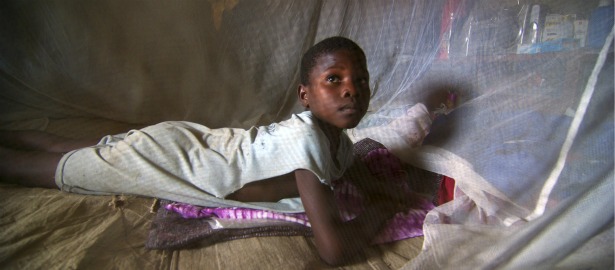
Apakah kelambu gratis di beberapa negara menyebabkan lebih banyak kasus malaria? Dapatkah pil antiparasit meningkatkan angka kehadiran di sekolah di satu negara dan tidak berpengaruh di negara lain? Seberapa murahkah biaya perawatan pencegahan bagi keluarga berpenghasilan rendah untuk memeriksakan diri ke dokter?
Mungkin tidak ada cara yang sempurna untuk menjawab pertanyaan pelik ini berdasarkan negara per negara. Namun, beberapa ilmuwan terkemuka menganggap jawaban yang paling akurat berasal dari apa yang mereka sebut "uji coba terkontrol acak".
Esther Duflo dikenal luas sebagai pendukung utama uji coba terkontrol acak dalam ekonomi pembangunan. Sebagai sebuah metodologi, uji coba terkontrol acak telah digunakan selama lebih dari setengah abad dalam pengobatan klinis, di mana efek obat atau prosedur medis dikonfirmasi atau ditolak dalam eksperimen ilmiah yang melibatkan kelompok kontrol dan kelompok perlakuan. Penggunaan uji coba terkontrol acak untuk mengatasi kemiskinan global merupakan fenomena dekade terakhir, tetapi telah berkembang seiring dengan kekuatan pergeseran paradigma dalam ekonomi, kebijakan publik, dan disiplin ilmu lainnya.
Tahun lalu, Duflo* dan rekan konspiratornya di J-PAL, Abhijit Banerjee, menerbitkan buku berjudul Poor Economics: A Radical Rehinking of the Way to Fight Global Poverty . Buku ini mengulas banyak hal yang telah mereka pelajari melalui RCT dan lainnya, dan buku ini lebih menentang "jawaban universal yang agung" dan "kesimpulan yang luas" tentang kemiskinan. Sebaliknya, mereka merekomendasikan pendekatan berbasis data yang mencari jawaban spesifik dan terarah untuk apa yang benar-benar berhasil, apa yang lebih berhasil, dan apa yang berhasil dengan biaya yang efektif. Esther Duflo dikenal luas sebagai pendukung utama uji coba terkontrol acak dalam ekonomi pembangunan. Sebagai sebuah metodologi, RCT telah digunakan selama lebih dari setengah abad dalam pengobatan klinis, di mana efek obat atau prosedur medis dikonfirmasi atau ditolak dalam eksperimen ilmiah yang melibatkan kelompok kontrol dan perawatan. Penggunaan RCT untuk mengatasi kemiskinan global merupakan fenomena dekade terakhir, tetapi telah berkembang dengan kekuatan pergeseran paradigma dalam ekonomi, kebijakan publik, dan disiplin ilmu lainnya.
Setelah menjalani pendidikan sebagai fisikawan dan insinyur, saya menghargai dan mendukung pendekatan ilmiah Duflo dalam memerangi kemiskinan. (Pengungkapan penuh: Saya menjadi anggota dewan Innovations for Poverty Action, mitra dekat J-PAL.) Namun, saat membaca buku ini, dua hal berulang kali muncul di benak saya: Pertama, sains terbaik membutuhkan teori dan eksperimen. Data tanpa teori yang baik hanyalah pengukuran, bukan pengetahuan, dan teori yang kuat sering kali bersifat menyeluruh. Semata-mata sebagai masalah praktis, teori membantu kita bertahan saat kita kekurangan data. Kedua, Duflo dan Banerjee tampak tidak nyaman dengan pendirian mereka sendiri terhadap jawaban-jawaban yang muluk. Sebagian besar bab buku ini diakhiri dengan bagian-bagian yang membuat pernyataan umum tentang kesehatan masyarakat, pendidikan, keuangan mikro, dan kewirausahaan, yang sering kali tidak sepenuhnya didukung oleh eksperimen. Bab terakhir mereka, yang berjudul "Sebagai Pengganti Kesimpulan yang Menyapu," tetap saja menawarkan lima pernyataan umum tentang orang-orang miskin di seluruh dunia.
Saya mengajukan beberapa pertanyaan kepada Duflo tentang RCT dan bukunya melalui e-mail...
KT : Menurut Anda apa kontribusi terbesar RCT sejauh ini dalam pembangunan internasional?
ED : Pertama, kami telah membuat banyak kemajuan dalam perdebatan yang mungkin masih akan terus kami perdebatkan: Apakah pemberian kelambu gratis menghambat penggunaan? Apakah harga yang tidak nol menghambat penggunaan perawatan pencegahan? Kedua, kami telah mengidentifikasi beberapa intervensi yang menjanjikan, dan itu mulai ditingkatkan, dengan pemberantasan cacing sebagai contoh utama. [KT: Pemberantasan cacing mengacu pada pil anti-parasit yang bila diberikan kepada anak-anak telah terbukti meningkatkan kehadiran di sekolah.] Ketiga, kami telah mengumpulkan cukup banyak pengetahuan dalam beberapa domain (pendidikan dasar, misalnya) sehingga kami mulai memiliki pandangan sistemik yang luas tentang masalah dan solusi. Keempat, mungkin yang paling penting, pentingnya mencoba berbagai hal di bawah pengamatan yang ketat, dengan membiarkan kemungkinan kegagalan tetap terbuka, sekarang lebih diakui dalam pemerintahan dan organisasi. Saya pikir perubahan budaya ini bisa menjadi kontribusi terbesar dalam jangka panjang.
KT : Apa tantangan terbesar dalam cara RCT benar-benar dilakukan, ditafsirkan, atau dibicarakan dalam praktik? Atau, untuk mengajukan pertanyaan dengan cara yang berbeda, praktik dominan apa dalam komunitas orang-orang yang menjalankan atau membaca tentang RCT yang paling ingin Anda ubah?
ED : Sebenarnya saya tidak punya banyak hal untuk dikeluhkan. Saya pikir saat ini, orang-orang menjadi sangat kreatif, mencoba mendorong batasan dalam banyak arah: menggabungkan lebih banyak teori, menggabungkan model struktural dan eksperimen, menggabungkan "eksperimen laboratorium" dengan RCT, mencoba hal-hal yang sangat berani seperti mengacak gaji pegawai negeri.
Saya juga terdorong oleh bagaimana penggunaan RCT memasuki lingkaran kebijakan, tetapi di situlah saya punya satu masalah: Saya pikir para pembuat kebijakan bersedia menggunakan eksperimen untuk membenarkan melakukan sesuatu, tetapi apa yang belum kita lihat, adalah penggunaan eksperimen yang serius untuk memangkas kebijakan.
KT : Ketika saya mengambil mata kuliah ekonomi sebagai mahasiswa S1, saya ingat berpikir bahwa sebagian besar ekonometrika merupakan upaya untuk mengekstrak penjelasan kausal dari data secara tepat dalam kasus-kasus ketika RCT tidak praktis. Asumsi implisitnya adalah bahwa RCT akan ideal, tetapi jika tidak ada, ekonometrika kompleks diperlukan. Apakah ini interpretasi metodologi ekonomi yang wajar, dan jika demikian, menurut Anda mengapa butuh waktu lama bagi ekonomi pembangunan untuk merangkul RCT?
ED : Saya pikir, sebagian, kita sebagai sebuah bidang mungkin berasumsi bahwa hal itu lebih sulit atau lebih mahal daripada yang sebenarnya. Kejeniusan sejati Michael Kremer adalah mencoba uji coba terandomisasi dengan anggaran yang kecil. Kemudian, ketika banyak dari kita, yang terdorong oleh teladannya, mulai melakukan pekerjaan serupa, kita secara bertahap mempelajari apa yang telah lama diketahui orang-orang di bidang ilmiah lainnya: bahwa ada kemungkinan untuk mengumpulkan dana untuk penelitian akademis. Jadi, kita mulai mengumpulkan lebih banyak dana. Gabungan kedua wawasan ini membuka seluruh bidang tersebut.
KT : Dalam buku Anda, Anda menentang keras teori-teori menyeluruh tentang pembangunan internasional, yang dapat diartikan sebagai pengakuan implisit atas kompleksitas pembangunan. Namun, RCT dalam ekonomi pembangunan sering kali merupakan RCT tentang perilaku manusia dalam konteks tertentu. Jadi, apakah Anda menyiratkan bahwa tidak mungkin ada teori menyeluruh tentang perilaku manusia?
ED : Tentu saja ada wawasan teoritis, kami simpulkan dengan beberapa di antaranya dalam buku ini. Namun, tidak ada satu kerangka kerja besar yang dapat menjelaskan semuanya, atau solusi besar untuk semuanya.
KT : Meskipun ada kesepakatan umum mengenai tujuan pembangunan internasional, individu sering kali memiliki gagasan yang berbeda mengenai tujuan akhirnya. Sebagian orang menganggapnya sebagai pencapaian ekonomi tertentu untuk setiap negara; yang lain menganggapnya sebagai layanan kesehatan dan pendidikan universal; yang lain lagi menganggapnya sebagai keadilan sosial; dst. Apakah Anda memiliki tujuan akhir yang ingin Anda capai?
ED : Saya tidak yakin apakah saya benar-benar punya pendapat tentang ini, atau apakah saya harus punya pendapat. Saya pikir tujuan harus ditetapkan oleh proses politik, oleh apa yang masyarakat pada suatu saat anggap penting. Saya mungkin punya pandangan sendiri tentang apa yang penting dalam hidup, tetapi saya bukan filsuf, dan saya tidak merasa bahwa tugas saya adalah memberi tahu orang-orang apa yang menurut mereka penting. Saya pikir tugas seorang ekonom seharusnya membantu individu atau masyarakat (melalui pembuat kebijakan mereka) mencapai tujuan-tujuan ini, setelah tujuan-tujuan itu ditetapkan.
***
Bagaimanapun, Poor Economics wajib dibaca oleh siapa pun yang tertarik dengan pembangunan internasional, dan baru saja dirilis dalam bentuk buku saku. Percaya atau tidak pada teori-teori besar, sulit untuk menyangkal nilai data dan pengamatan yang cermat. Banerjee dan Duflo mengisi buku mereka dengan wawasan yang diperoleh dengan susah payah dari pengalaman pribadi dan studi ilmiah. Dan, meskipun Duflo menyerahkan tujuan moralnya kepada filsafat dan ranah publik, hasratnya yang diimbangi secara rasional untuk membantu masyarakat miskin di seluruh dunia terasa di setiap halaman.
Bahasa Indonesia: ______
*Duflo dengan murah hati memberikan penghargaan kepada rekannya, ekonom Harvard Michael Kremer, yang telah memulai gelombang RCT terkini dalam pembangunan internasional, namun usahanya yang tak kenal lelah, dengan dorongan dari donor eponim Abdul Latif Jameel Poverty Action Lab (J-PAL) di MIT-lah yang telah membuat RCT menjadi arus utama.
COMMUNITY REFLECTIONS
SHARE YOUR REFLECTION
5 PAST RESPONSES
They all necessary. there was another comment disappeared before I made reply. I know there are a lot of things that make harder things. To point first one is trust and it is the backbone of everything. So without going long way of trying tiresome points, tell simplest and reason. Not doing so is lack of trust of the simple ways.
"we prefer the NGO work to be this way because that way is not best for such...such...such.."
You can put it like that way but if you go as far as 1 million pages is lack of trust.
If there are certain ways of doing things and you know works best then say the.
You didn't cause any problem but some fear and it happens because of authority.
I really don't tolerate violence but when I look the feelings of my actions I feel what innocent Asians would feel like. It was intended the woman who spoke up to be in as cases would be worked. So that she would learn how to respect human feelings and laws but money launderer might saved.
Well, I am not complaining anything. I just want to satisfy all parts and expect some peace.
[Hide Full Comment]A couple of things: if you have no food and shelter, you die. If you have no access to health care and hygiene, your life span is severely shortened. If you have no access to education, it's almost impossible to be a part of the solution. So from a purely 'common sense' point of view, I wouldn't have thought the basic necessities of life such as food, shelter, health and education were basics that could be left out of any RTCs. Do we really need to spend time and money figuring out if a 'society' really wants these things?
Well, it seems there had been misunderstandings about what to be done and how to be done. Woman is repressed and if she would have known that it is as simple as this she would have owned google seach "N.A" long ago. Well, we teach only what you say and only how you say. Just make next step, it is that I was called today by someone I last knew was in Nairobi and now is very far, Finland. I recognized her voice before I changed mine because I was in Sale and couldn't ask money nor could I let her know it was me. So I had 3 feeling at one time...So i started to feel shame.
Anyway, our NGO can teach Buddhism, Jews and whatever else you like. Make a progress and I don't mind much about it. All I need is to be on google search for dignity and make something that has value.
Are we together? It is just that simple if you can make and understand people who are left behind.
More information please contact us:
enkosariverschool@gmail.com
WELCOME FRIENDS
saladgsÞwgvtþRBH\nÞekasa
ENKOSA RIVER SCHOOL
We are all
very happy to welcome you all to Enkosa River School, Enkosa Buddhist Pagoda,
Siem Reap.
The School
is for ALL local children, teenagers and adults completely free of charge.
They come to
lessons 5 days a week to learn and improve their foreign language
skills...mainly the English Language...to give them better opportunities of a
good job in tourism in the future here or maybe work or study abroad.
1. THE SCHOOL
Opened in
November 2010 and currently has 8 classes nightly and around 150 regular happy
students
ranging from
3 years of age to 30!
We employ 3
Part Time Khmer Teachers on a modest salary and rely on volunteer native
speakers...now 100 per cent English Native Speakers , usually students who stay
a week or two or sometimes fully qualified teachers who have some free time who
live in Siem Reap.
Educating
the students in a mature, interesting and fun way.
We receive
no funding from either the Cambodian Goverment nor the Local Siem Reap
Administration or any NGO's.
We TOTALLY
100% rely on donations, mainly small donations from tourists who visit the
Pagoda on their way back from Angkor Wat and some small donations from mainly
good hearted individuals from overseas.
We ALWAYS in
NEED of DONATIONS either, financial assistance for the everyday running costs (
e.g. electricity, computer and internet
access for knowledge and lesson plans, water for the children, marker pens, ink
printer,books, pencils, crayons, first aid supplies, etc etc) and volunteer
helpers time.
Currently
our monthly running costs are roughly 270 US Dollars.
This breaks
down as such:
3 khmer Part
Time Trainer Teachers Salaries $30 each......$90
Electricity..Internet
Access Printer Ink PC's ...... $80..
water, marker
pens ink paper exercise books etc...$70
Emergency
Monies...Repairs First Aid Supplies..Possible sickness of a pupil or volunteer
etc... $30 …This budget needs at least doubling as a recent event in the
emergency treatment and hospitalization of one of our regular and more
experienced volunteers, high lighted a problem that needs
addressing..Thankfully he is back with us Teaching and helping train volunteers
and some development work.
THE School Moving Forward
We have put our TRUST IN BUDDHA , to help us improve the
facilities here for our beloved Children and Students.
Although
they receive a very good basic and
beyond education in a safe, friendly, loving environment, truthfully our class
rooms are totally inadequate especially in the monsoon season, where classes
could only take place on dry evenings last year.
Also there
is no reason what so ever with the right structure that the Education our
Students receive, can and will be just as good if not better than any offered
by the fee paying English Language Schools for the Children of the elite here
in Siem Reap.
Now hopefully
sooner than later we want to rebuild the Class rooms providing spacious
comfortable inside class rooms on the second floor with a multi purpose meeting
and performance room, School office and modern toilets on the ground floor,
extended to 9 metres by 28 metres, the architects plans will be finished for
April 24th.
The cost was
$180 after a 10% discount..money we need to recoup quickly.
Once again
we would like to thank the wonderful students of Students Against Poverty Group
Huonville High School Tasmania, for
leaving a cash donation of 1,400 Australian Dollars towards the new School’s
foundations.
The toilets
will also be a great help as possible sponsors at the moment have no decent
toilet facilities to use here, maybe needing to go back to their hotels when
with decent modern facilities here they may have had more time to get a feel
for our good work.
As you are
aware both materials and construction and labour costs here are very very low
compared to 1st World Countries.
2. THE LIBARY
Built in
July 2011 mostly funded and supported by Students Against Poverty Group
Huonville High School Tasmania.
It has been a
marvellous success helping all the students and volunteers to prepare
interesting lesson plans.
We currently have two
computers for student use and development, we need at least 2 more.
We are in
urgent need of more relevant English books especially 2 or 3 editions of up to date text books, The Mega
Goal Series, a major success in both Thai Government Schools and now the more
Modern Language Schools in Phom Penh swear by them, general English Language
reading material and also more Khmer books both for the little ones and
teenagers, are always appreciated.
More World
Maps are a PRIORITY.......Cambodian Children and most Adults have NO idea about
Geography...if they hopefully secure a good safe career in Tourism here, they
need to know a lot about outside of SE Asia.
3. OUT REACH
There is also a REAL
NEED for more OUT REACH work in this Province, the local authorities regularly
displace small shanty squatter communities from here to the Countryside with
little regard for their children’s education or well being. Recently around 300
shanty businesses some thriving and their homes either side of the river
outside our Pagoda were dismantled and the families in the main resettled in a
new barren land village,Kontrok 8km from
Siem Reap where there is no School whatsoever and parents are expected to pay
gasoline or motor bike or tuk tuk fares for the daily 16 km return journey , as
the local authorities have not even given the displaced families any cash for
boats..this area will flood badly in monsoon, the massive well,(reservoir) is
already full..the chances of the kids parents funding these long school
journeys and fares are worrying.
On this
point along with another local small NGO on the invitation of a representative
from a local Bank , we are looking at ways in which we can provide some kind of
immediate Educational help and hopefully long term assistance. All these
projects will need funding.
Also we would like to
continue when financially feasible practical outreach projects such as the well ( reservour) and water pumps and
labor we provided in FEB 2010 at a small poor rural village, Ornlongkrahn
in Stoung District around 100 km from here in the direction of Phnom Penh,
totally funded by two kind Australians and an American for less than $1300.
We are very
excited about starting a new project here for local women, teaching them how to
sew, make and repair clothes and crafts...enabling them to earn money for their
families and pass their skills on. Making School uniforms etc. will help
massively the 400 children attending the very basic local school with only 3
Khmer teachers!
We
desperately need to build a basic work shop for the Sewing Cooperative and some
basic accommodation for English Language Native Speaking Volunteers to assist
at the School….as soon as possible.
Once again
our friend’s Students Against Poverty Group Huonville High School Tasmania,
Have made a
1000 Australian Dollar donation to start work on a workshop for the Sewing
Cooperative but we will need more sponsorship and assistance.
As you are
aware both materials and construction and labour costs here are very very low
compared to 1st World Countries.
Finally with
the growing number of foreign tourists it is very important to secure a
training budget..so for example we could invite an NGO drama workshop to
educate the children that NOT all foreigners are NICE men ( or women), and
other relevant training and workshops for both the children and Khmer Teachers
So we have a
lot of good work to do
We are in
the process of producing proposals for all the Projects that Need Completing.
Thank you
for your friendship and help ...you are
always welcome..on behalf of all our wonderful Children ..Orgun chran
Your Kindest regards
DEPOSIT
INFORMATION
ACLEDA BANK
Phone: (+855)
23994444
Fax: (+855)
23430555
Swift Code: ACLBKHPP Chips
UID: 415637
Yorn Chea -
ACCOUNT NUMBER: 3451-20-752208-1-0
Yorn Chea and all at Enkosa River School
cdf
[Hide Full Comment]