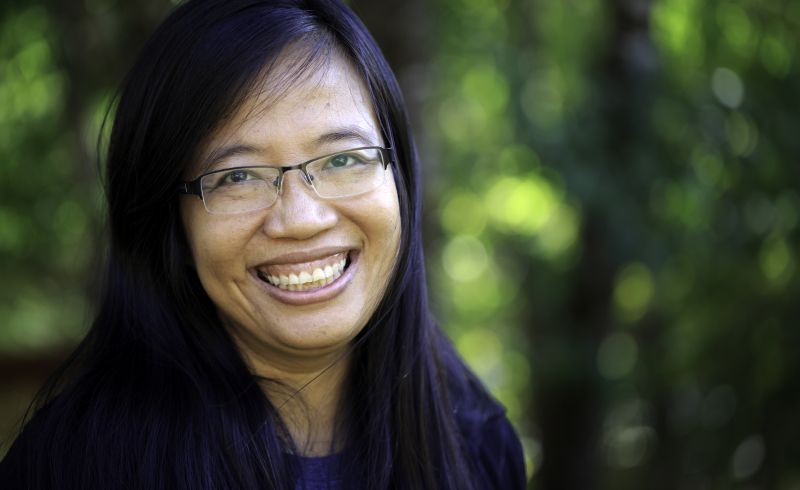

different like-minded organizations. So number one is that we don't have a big public profile. Having said that, we are known in some areas to some people, but not at the national level. In a city, different cities where we work, there are different reactions from local government. In the positive way, like in the case of Hoi An, we have support from local government. Local government in Hoi An see us as their allies. They see that we can do things that they can't do. We can be in their community, we bring the voice and we understand the needs of the community. We can create dialog in the community in a way that government officials can't. So in that town, we are welcome.
On the other hand, in Hanoi, the capital of Vietnam, we are really not welcome at all. We try to have the movement to save the parks from being turned into a commercial center, or a parking garage. And we were seen as a threat to them. In that case, our response was to diversify the stakeholders in our park campaign. So the government doesn't let us in since we're activist, but they will listen to other respected scientists. So we were able to bring those voices that doesn't seem threatening to the government, while we move into the backstage, supporting these different network and different individuals to bring out the voice and further the cause.
Like that, we have different situation happening in different places, and in each case we find a different solution.
Caller: Thank you so much for this conversation, this very inspiring conversation. What was occurring to me as I've been listening, is how important it is that we support each other as we're going through the various challenges in terms of being compassionate or making the world a better place, that we really need to be buddies for each other in terms of continuing to do this work. Is that something that you're finding with the groups that you're working with? That there's a lot of mutual support? And how does that manifest?
Giang: I absolutely agree with you about being buddies to each other, and mutual support. As I mentioned before, for example, how different organization shifted from competition to cooperation and helping each other. One other thing that really works for us is building organization who are close friends. Like human beings, organizations can also be close friends to each other. We develop understanding. We have our team member work together on different projects. We share with each other, we support each other, we share know-how and new inputs and at the same time share resources. It's like a personal friendship. But it takes time for organizational friendship as well. Yes, we definitely have that side of the ecosystem where we act from. We have really good friends, organizational friends, or friendship with different organization. That allows us to sometimes step back and let others be in the leading role, depending on the situation. Have good buddies in organizations out there not only helps us to feel connected and strong, but actually provide a lot of practical support -- like sharing staff, doing some work together. It's a kind of long-term partnership, where we're saying "We are really together in this." Fortunately, we have a number of organizations like that.
Bela: How are women are perceived in the Vietnamese culture, and the role of women in community, and how your approach to development is affected by this?
Giang: Thank you for your question. In Vietnam, in most community where we work with, women have the invisible power. But in a public sphere, they are not represented. In the public sphere, it's the man who attends meetings, who makes decisions. But it's the woman who really run things. It's almost like saying, "Okay. We don't need to be counted for our effort and power, as long as you leave us alone to run family and run communities." So that's how I see women. They have that power and they don't care that that power is being recognized publicly. However, there is still a lot of gender issues, in particular, violence against women associated with alcoholism and discrimination against girls. So those do exist.
Talking about how we work with community on such issues ... first of all, we do not make it a big deal. Unlike other organizations, we do not start coming to the community and say, "Hey, this need to be changed." The woman need to go to the meeting, and the man cannot do this or that. What we did is actually, first, invite a woman to the meeting but not make a big deal out of it. For example in the organic garden project, it's the men who also wanted to be part of it, and so we accepted it. Not accept, but in a gentle way -- without confrontation -- included them while also focusing on encouraging women to come.
And the interesting thing is, once the space is created for women, the women stick around and stay interested -- while the men (not all, but some of them) are not interested in gardening, not interested in creating a playground for kids. So over time, some of the men naturally drop out. On the other hand, woman who first came (not as the leader but just a participant), she and her friends became more and more interested, contributed great ideas, and naturally people listened to them. And they became the leaders of the initiative. In several cases we found that creating the space, the condition in which the women can demonstrate the ability, the capacity to demonstrate what they can do, the man has to give up because it becomes obvious that they should be out of the way. Let the woman do it.
So we do not try to emphasize the conflict, instead, create the space and the activity in which women can demonstrate their wonderful talent.
Bela: Have you seen that shift of some of the dynamics in communities over time? Maybe in subtle ways, or maybe in more significant ways?
Giang: Over time, yes. It's not immediately. But over time yes. I can see one of the clear impact is in the confidence of the young women. The young women, seeing this example of the older women getting respect from the community, it changes them. It doesn't have always to be that the woman keeps silent and let the man run the show. They can see that women are totally capable and gain respect for what they are doing. These young women gain a lot of confidence ...
Bela: Hello? Hello? Did we lose the call connection, Giang? I think we have. While we wait, Xiao, hearing about Giang's story, what are some of your thoughts and reflections?
Xiao: For me to hear Giang talking about it with such confidence and high spirit is really inspiring. She mentioned about her deep trust in community and life itself -- that strikes me strongly.
Giang: This is me coming back. Sorry, I lost my internet connection.
Bela: Thank you for rejoining us. I'd just like to express my gratitude to you for being with us so late at night over there, and sharing with us your journey and your work. It's truly inspiring. When you dropped off for a little while, one of our callers was just expressing what happened in Paris, and just the violence that's constantly happening around the world, and if only there were more people like you that were working to build relationships, and starting with friendship first. And letting that lead to projects organically, and how that's so powerful. I just applaud you for doing the work that you're doing, and continuing to do it despite the challenges.
Xiao: Thank you, Giang. I think you've planted so many wonderful seeds in so many hearts now. Like you said, it's so simple -- just go out and make friends in a community and then see what small things we can do. Just that simple. And we can gradually change by working together. That really gives me a lot of hope and trust in this universe. Thank you!
Giang: Thank you, all, so much.
On the other hand, in Hanoi, the capital of Vietnam, we are really not welcome at all. We try to have the movement to save the parks from being turned into a commercial center, or a parking garage. And we were seen as a threat to them. In that case, our response was to diversify the stakeholders in our park campaign. So the government doesn't let us in since we're activist, but they will listen to other respected scientists. So we were able to bring those voices that doesn't seem threatening to the government, while we move into the backstage, supporting these different network and different individuals to bring out the voice and further the cause.
Like that, we have different situation happening in different places, and in each case we find a different solution.
Caller: Thank you so much for this conversation, this very inspiring conversation. What was occurring to me as I've been listening, is how important it is that we support each other as we're going through the various challenges in terms of being compassionate or making the world a better place, that we really need to be buddies for each other in terms of continuing to do this work. Is that something that you're finding with the groups that you're working with? That there's a lot of mutual support? And how does that manifest?
Giang: I absolutely agree with you about being buddies to each other, and mutual support. As I mentioned before, for example, how different organization shifted from competition to cooperation and helping each other. One other thing that really works for us is building organization who are close friends. Like human beings, organizations can also be close friends to each other. We develop understanding. We have our team member work together on different projects. We share with each other, we support each other, we share know-how and new inputs and at the same time share resources. It's like a personal friendship. But it takes time for organizational friendship as well. Yes, we definitely have that side of the ecosystem where we act from. We have really good friends, organizational friends, or friendship with different organization. That allows us to sometimes step back and let others be in the leading role, depending on the situation. Have good buddies in organizations out there not only helps us to feel connected and strong, but actually provide a lot of practical support -- like sharing staff, doing some work together. It's a kind of long-term partnership, where we're saying "We are really together in this." Fortunately, we have a number of organizations like that.
Bela: How are women are perceived in the Vietnamese culture, and the role of women in community, and how your approach to development is affected by this?
Giang: Thank you for your question. In Vietnam, in most community where we work with, women have the invisible power. But in a public sphere, they are not represented. In the public sphere, it's the man who attends meetings, who makes decisions. But it's the woman who really run things. It's almost like saying, "Okay. We don't need to be counted for our effort and power, as long as you leave us alone to run family and run communities." So that's how I see women. They have that power and they don't care that that power is being recognized publicly. However, there is still a lot of gender issues, in particular, violence against women associated with alcoholism and discrimination against girls. So those do exist.
Talking about how we work with community on such issues ... first of all, we do not make it a big deal. Unlike other organizations, we do not start coming to the community and say, "Hey, this need to be changed." The woman need to go to the meeting, and the man cannot do this or that. What we did is actually, first, invite a woman to the meeting but not make a big deal out of it. For example in the organic garden project, it's the men who also wanted to be part of it, and so we accepted it. Not accept, but in a gentle way -- without confrontation -- included them while also focusing on encouraging women to come.
And the interesting thing is, once the space is created for women, the women stick around and stay interested -- while the men (not all, but some of them) are not interested in gardening, not interested in creating a playground for kids. So over time, some of the men naturally drop out. On the other hand, woman who first came (not as the leader but just a participant), she and her friends became more and more interested, contributed great ideas, and naturally people listened to them. And they became the leaders of the initiative. In several cases we found that creating the space, the condition in which the women can demonstrate the ability, the capacity to demonstrate what they can do, the man has to give up because it becomes obvious that they should be out of the way. Let the woman do it.
So we do not try to emphasize the conflict, instead, create the space and the activity in which women can demonstrate their wonderful talent.
Bela: Have you seen that shift of some of the dynamics in communities over time? Maybe in subtle ways, or maybe in more significant ways?
Giang: Over time, yes. It's not immediately. But over time yes. I can see one of the clear impact is in the confidence of the young women. The young women, seeing this example of the older women getting respect from the community, it changes them. It doesn't have always to be that the woman keeps silent and let the man run the show. They can see that women are totally capable and gain respect for what they are doing. These young women gain a lot of confidence ...
Bela: Hello? Hello? Did we lose the call connection, Giang? I think we have. While we wait, Xiao, hearing about Giang's story, what are some of your thoughts and reflections?
Xiao: For me to hear Giang talking about it with such confidence and high spirit is really inspiring. She mentioned about her deep trust in community and life itself -- that strikes me strongly.
Giang: This is me coming back. Sorry, I lost my internet connection.
Bela: Thank you for rejoining us. I'd just like to express my gratitude to you for being with us so late at night over there, and sharing with us your journey and your work. It's truly inspiring. When you dropped off for a little while, one of our callers was just expressing what happened in Paris, and just the violence that's constantly happening around the world, and if only there were more people like you that were working to build relationships, and starting with friendship first. And letting that lead to projects organically, and how that's so powerful. I just applaud you for doing the work that you're doing, and continuing to do it despite the challenges.
Xiao: Thank you, Giang. I think you've planted so many wonderful seeds in so many hearts now. Like you said, it's so simple -- just go out and make friends in a community and then see what small things we can do. Just that simple. And we can gradually change by working together. That really gives me a lot of hope and trust in this universe. Thank you!
Giang: Thank you, all, so much.
COMMUNITY REFLECTIONS
SHARE YOUR REFLECTION
1 PAST RESPONSES
Wonderful to read this, and relate to the years when we worked together with Giang. I think a big challenge for those wanting to follow her example is to find new economic paths. Giang several times mentions their 'staff', which presupposes salaries and an office. It's a big thing: to trust that building bridges of friendship will provide a solid income basis. It takes more than meditation, friendship and trust: it also requires a creative and entrepreneurial spirit.