
What 25 years of research reveal about the cognitive skills of happiness and finding life’s greater purpose.
 “The illiterate of the 21st century,” Alvin Toffler famously said, “will not be those who cannot read and write, but those who cannot learn, unlearn, and relearn.” Our outlook on the world and our daily choices of disposition and behavior are in many ways learned patterns to which Toffler’s insight applies with all the greater urgency — the capacity to “learn, unlearn, and relearn” emotional behaviors and psychological patterns is, indeed, a form of existential literacy.
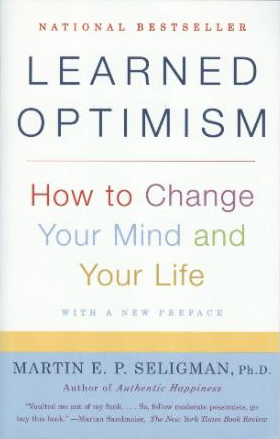
Last week, Oliver Burkeman’s provocatively titled new book, The Antidote: Happiness for People Who Can’t Stand Positive Thinking, prompted me to revisit an old favorite by Dr. Martin Seligman, father of the Positive Psychology movement, who was once elected President of the American Psychological Association by the largest vote in the organization’s history and under whom I studied in my college days. Learned Optimism: How to Change Your Mind and Your Life (public library), one of these 7 must-read books on optimism, was originally published 20 years ago and remains an indispensable tool for learning the cognitive skills that decades of research have shown to be essential to well-being — an unlearning those that hold us back from authentic happiness.
Seligman begins by identifying the three types of happiness of which our favorite psychology grab-bag term is composed:
 ‘Happiness’ is a scientifically unwieldy notion, but there are three different forms of it if you can pursue. For the ‘Pleasant Life,’ you aim to have as much positive emotion as possible and learn the skills to amplify positive emotion. For the ‘Engaged Life,’ you identify your highest strengths and talents and recraft your life to use them as much as you can in work, love, friendship, parenting, and leisure. For the ‘Meaningful Life,’ you use your highest strengths and talents to belong to and serve something you believe is larger than the self.
He then defines optimism and pessimism, pointing out the challenge to self-identify as either, and offers a heartening, heavily researched reassurance:
The optimists and the pessimists: I have been studying them for the past twenty-five years. The defining characteristic of pessimists is that they tend to believe bad events will last a long time, will undermine everything they do, and are their own fault. The optimists, who are confronted with the same hard knocks of this world, think about misfortune in the opposite way. They tend to believe defeat is just a temporary setback, that its causes are confined to this one case. The optimists believe defeat is not their fault: Circumstances, bad luck, or other people brought it about. Such people are unfazed by defeat. Confronted by a bad situation, they perceive it as a challenge and try harder.Seligman, however, also corroborates what’s perhaps Burkeman’s most central admonition — that the extreme individualism and ambition our society worships has created a culture in which the fear of failure dictates all. As Seligman puts it:
Depression is a disorder of the ‘I,’ failing in your own eyes relative to your goals. In a society in which individualism is becoming rampant, people more and more believe that they are the center of the world. Such a belief system makes individual failure almost inconsolable.Ultimately, Seligman points to optimism not only as a means to individual well-being, but also as a powerful aid in finding your purpose and contributing to the world:
Optimism is invaluable for the meaningful life. With a firm belief in a positive future you can throw yourself into the service of that which is larger than you are.
Learned Optimism: How to Change Your Mind and Your Life was followed by Authentic Happiness and Flourish, which was among best psychology and philosophy books of 2011
COMMUNITY REFLECTIONS
SHARE YOUR REFLECTION
2 PAST RESPONSES
TOTALLY enjoy these articles ... EXCEPT FOR ONE THING ... The graphics of " " over the text makes it difficult to read, causing me to not read the whole thing...FRUSTRATING.
I don't want to miss any part of it.
Interesting and thought provoking, as always :) I have a technical query though... would it be possible for you tone down (or even turn off) the decorative pattern behind the quotes? It makes my eyes go all squiggly and I can't read those bits without cut and pasting int a word doc!